Omnissa Horizon 8 VDI on Dell PowerFlex
Executive summary
Overview
Omnissa Horizon 8 provides IT teams with a modern, streamlined approach to deliver, protect, and manage Windows and Linux virtual desktops and published applications. It allows end users to work anytime and anywhere, on any device.
This white paper discusses the deployment of Horizon 8 on a two-layer PowerFlex system. It covers the performance characterization and analysis of Horizon using Login Enterprise Platform from Login VSI, an industry standard performance benchmarking tool, to demonstrate the effortless scalability offered by PowerFlex.
This white paper also provides details about best practices for deploying Horizon 8 on PowerFlex for a high-quality user experience.
Introduction
Revisions
Table 1. Revisions
|
Date |
Description |
|
June 2025 |
Initial release |
Audience
This white paper is intended for sales engineers, field consultants, IT administrators, customers, and anyone interested in configuring and deploying Omnissa Horizon 8 with PowerFlex as the underlying software-defined storage.
You are expected to have a working knowledge of PowerFlex, VMware vSphere, desktop virtualization technology, and Horizon 8.
Terminology
The following table provides definitions for some of the terms that are used in this document.
Table 2. Terminology
|
Term |
Definition |
|
ITOM |
IT Operations Management |
|
LCM |
Life Cycle Management |
|
SLA |
Service Level Agreements |
|
GPU |
Graphics Processing Unit |
|
ROI |
Return on Investment |
|
RDS |
Remote Desktop Session |
|
VDI |
Virtual Desktop Infrastructure |
|
DNS |
Domain Name System |
|
DHCP |
Dynamic Host Configuration Protocol |
|
DaaS |
Desktop as a Service |
|
AD |
Active Directory |
|
AZ |
Availability Zone |
|
SSO |
Single Sign-On |
|
OS |
Operating System |
|
OSOT |
OS Optimization Tool |
|
EUX |
End User Experience |
|
SDC |
Storage Data Client for PowerFlex |
|
SDS |
Storage Data Server for PowerFlex |
|
MDM |
Metadata Manager for PowerFlex |
We value your feedback
Dell Technologies and the authors of this document welcome your feedback on the solution and the solution documentation. Contact the Dell Technologies Solutions team by email.
Author: Ananthakrishnan S
Contributor: Blair Parkhill, Director of Technical Alliances, Login VSI Inc.
Note: For links to additional documentation for this solution, see Dell Technologies Solutions Info Hub for PowerFlex.
Product overview
PowerFlex family
PowerFlex software-defined infrastructure enables broad consolidation across the data center, encompassing most workloads. The software-first architecture enables automation and programmability of the complete infrastructure stack. PowerFlex provides scalability, performance, and resiliency to enable effortless adherence to stringent workload SLAs.
The PowerFlex family provides a foundation that combines compute and high-performance storage resources in a managed unified fabric. PowerFlex comes in flexible consumption options (rack, appliance, custom nodes, or in the public cloud) that enable independent (disaggregated) architectures. PowerFlex is ideal for high-performance applications and databases, building an agile private or hybrid cloud, or consolidating resources in heterogeneous environments.
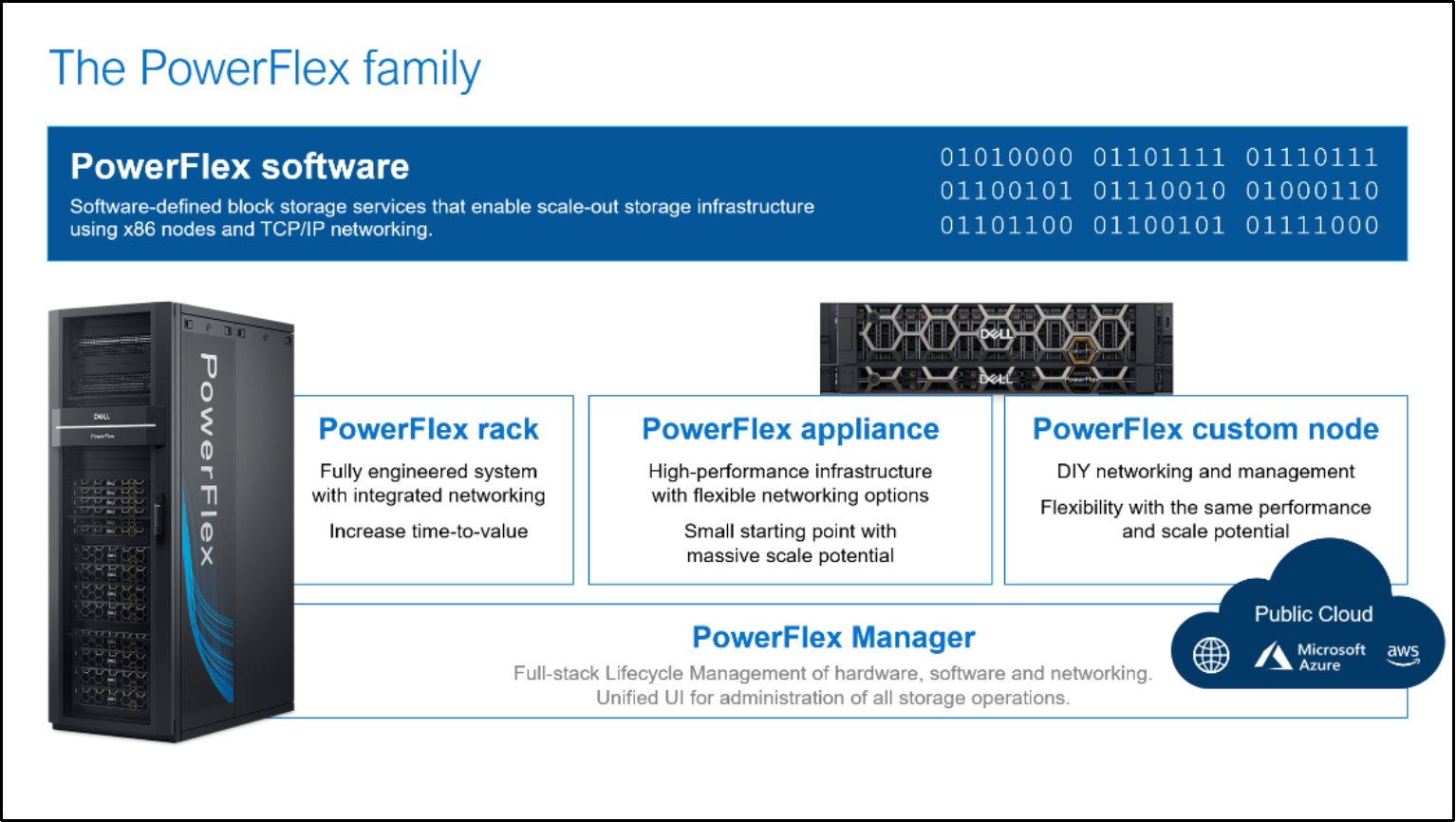
Figure 1. PowerFlex family
PowerFlex software components
Software is the key differentiator in the PowerFlex offering. PowerFlex software components not only provide the distributed software-defined storage services but also help simplify infrastructure management and orchestration. The management software enables comprehensive IT Operational Management (ITOM) and Life Cycle Management (LCM) capabilities that span compute as well as storage infrastructure, from BIOS and firmware to nodes, software, and networking.
PowerFlex core software
PowerFlex is a software-defined scale-out block storage service that is designed to deliver flexibility, elasticity, and simplicity with predictable high performance and resiliency at scale.
For more details, see PowerFlex Specification Sheet.
PowerFlex Manager
PowerFlex Manager enables ITOM automation and LCM capabilities for PowerFlex systems. The unified PowerFlex Manager brings together three separate components used in previous releases: PowerFlex Manager, the core PowerFlex UI, and the PowerFlex gateway. The PowerFlex UI runs in Kubernetes and embraces a modern development framework.
PowerFlex deployment architectures
PowerFlex software-defined storage can be deployed in disaggregated (independent compute and storage layers) architectures.
Independent architecture
In an independent architecture, or disaggregated architecture, some nodes provide storage capacity for data in applications, while other separate and independent nodes provide compute resources for applications and workloads. Compute and storage resources can be scaled independently by adding nodes to the cluster while it remains active. This separation of compute and storage resources helps to minimize software licensing costs in certain situations. This architecture can be ideal for high-performance databases and application workloads.
Disaggregation gives organizations the freedom to choose different LCM options that best align with their operational models. Not only can PowerFlex Manager manage the LCM of the PowerFlex storage infrastructure, it can also manage the LCM of PowerFlex compute nodes. With this freedom, there is also the choice to manage compute estates that connect to PowerFlex with other tooling; for example, VxRail Dynamic Nodes connected to PowerFlex using VxRail Manager automation.
PowerFlex consumption options
PowerFlex rack
PowerFlex rack is a software-defined infrastructure platform that combines compute as well as high-performance storage resources in a managed unified network. This rack-based engineered system, with integrated networking, enables customers to achieve the scalability and management requirements of a modern data center.
PowerFlex appliance
PowerFlex appliance is a PowerEdge-based server that has been configured to be a node in a software-defined storage deployment that runs PowerFlex software components. This offering allows customers the flexibility and savings to bring their own compatible networking or make use of full network automation using a supported set of Dell or Cisco switches.
PowerFlex custom nodes
PowerFlex custom nodes are validated server building blocks that are configured for use with PowerFlex. They are available with thousands of configuration options and are available for customers who prefer to build their own environments.
PowerFlex in the public cloud
PowerFlex software storage services can be deployed on recommended instances (with attached storage) in Amazon Web Services or Microsoft Azure. Only the medium-granularity data layout and Independent (disaggregated) architecture are supported. Fault Sets can be used to distribute the cluster across multiple Availability Zones (AZ), improving resiliency even during AZ disruptions. Native asynchronous replication can be used to migrate data between cloud and on-premises PowerFlex systems, or to establish cloud-based BC/DR data protection schemes.
PowerFlex CSI/CSM
The PowerFlex CSI driver is an important component outside of PowerFlex. It enables a flexible consumption model for Kubernetes, developed as a part of the Dell Kubernetes strategy. After loading the CSI driver for PowerFlex into Kubernetes, it can be used to provision persistent volumes from the underlying PowerFlex storage resource. If the Kubernetes deployment is running low on PowerFlex storage resources, you can add PowerFlex storage nodes to increase the system capacity and performance.
The CSI driver connects the PowerFlex system and Kubernetes deployments. It is a storage broker that dynamically provisions volumes from PowerFlex through the PowerFlex API gateway to the Kubernetes cluster. When the volume is available on PowerFlex, it is immediately mapped to the requesting pod. If a pod is destroyed or rescheduled, the CSI plug-in ensures that the volumes are remapped upon rescheduling of that pod.
Customers running Kubernetes clusters on PowerFlex use the Dell Container Storage Modules (CSM), which extend the CSI driver capabilities. These modules:
- Provide enterprise storage capabilities to Kubernetes for cloud-native stateful applications
- Reduce management complexity so that developers can independently use enterprise storage with ease and automate daily operations.
- Extends storage functionality and capabilities beyond using the CSI driver alone
These modules include replication, observability, authorization, application mobility, and resiliency.
PowerFlex supports multiple operating systems. PowerFlex is validated with the leading Kubernetes distributions, as shown in the following figure:
Figure 2. PowerFlex for different Kubernetes distributions
VMware vSphere
vSphere, a product of VMware by Broadcom, is VMware's virtualization platform, that transforms data centers into aggregated computing infrastructures that include CPU, storage, and networking resources. vSphere manages these infrastructures as a unified operating environment and provides customers with tools to administer the data centers that participate in that environment.
VMware vSphere 8
vSphere 8 brings the benefits of cloud to on-premises workloads. It enhances operational efficiency, seamlessly integrates with add-on hybrid cloud services, and accelerates innovation with an enterprise-ready integrated Kubernetes runtime that runs containers alongside VMs.
VMware vSphere 8 includes the following key features:
- Intelligent Operations Management─This feature maximizes capacity use and frees IT teams to focus on more strategic business initiatives with intelligent operations management and advanced analytics.
- Maximize workload performance─Throughput and latency requirements of modern workloads can be met through continued optimization, data analytics, and intent-based workload placement. vSphere 8 can boost the ROI of customer AI infrastructure with GPU-aware workload placement.
- Enhanced security─VMware vSphere delivers a secure-by-default infrastructure for all workload types to safeguard data and ensure business continuity for your organization.
- Accelerate innovation for DevOps─VMware vSphere provides the fastest way to get started with Kubernetes, enabling customers to deploy DevOps services easily to run workloads with VMs and containers and accelerate business innovation.
- Centralized life cycle management─This feature manages infrastructure software and hardware firmware through vSphere Lifecycle Manager and Update Planner
Omnissa Horizon 8
Omnissa Horizon 8 delivers virtualized Windows desktops and applications, and Linux desktops to almost any endpoint device across various form factors from data centers. End-point clients are available on Dell ThinOS, Microsoft Windows, Apple macOS, Linux, many mobile devices, and web browsers. This availability makes it possible for end users to access a secure computing environment anywhere, anytime.
Horizon 8 offers various deployment options spanning private and public clouds such as on-premises, Microsoft Azure, AWS, and Google Cloud Platform. These options allow IT teams to choose a cost-effective cloud provider that meets their specific needs. Flexible deployment options also enable scaling up or down on demand. Rapid provisioning can be performed to manage seasonal workforce fluctuations, remote work expansion, and global growth.
Key features of Horizon 8 include:
- Streamlined image management─Managing virtual desktop and application images centrally reduces administrative effort and increases availability for end users.
- Exceptional end-user experience─The Horizon Blast display protocol delivers seamless, feature-rich virtual desktops and applications. End users can instantly connect to their remote sessions and enjoy responsive, high-fidelity displays. Horizon Blast delivers consistent and reliable performance, keeping employees connected and productive.
- Application management─Seamless integration of Horizon with Omnissa App Volumes offers simplified image management and delivery of packaged applications. Applications are packaged once and then can be deployed across multiple Horizon environments. Applications can be deployed both on premises and in the cloud.
- Flexible Monitoring capability─For individual pods, Horizon offers centralized monitoring capability through the Horizon Admin Console for administrators and the Helpdesk Console for call center workers. The Horizon Control Plane services offer centralized analytics across multiple pods irrespective of their location. Workspace ONE Intelligence Integration offers customized reporting, orchestration, and remediation. Omnissa Horizon 8 integrates seamlessly with the Horizon Cloud Service and Workspace ONE Intelligence, offering new, deeper monitoring levels.
- Enterprise grade security─Horizon offers enhanced security by protecting data, implementing policies for granular control, and offering advanced security tools for virtual environments. Centralized data storage in a data center or the cloud minimizes data loss from endpoint device failure, theft, or unauthorized access. Additional policies such as screen scraping, keylogging, and script injection provide an extra layer of security to help safeguard end-user sessions.
For more information, see Omnissa Horizon 8.
Login Enterprise platform
Login Enterprise from Login VSI is the industry-standard software that is used to simulate a human-centric workload to benchmark the capacity and performance of VDI solutions. The performance testing that is documented in this white paper used the Login Enterprise benchmarking tool. The virtual user technology of Login Enterprise simulates real-world users performing real-world tasks while measuring the time required for each interaction. Login Enterprise assesses desktop performance, application performance, and user experience to determine the overall responsiveness of the VDI solution. Using Login Enterprise for VDI capacity planning helps to determine the optimal hardware configuration to support the wanted number of users and applications. For more information, see Login Enterprise Platform.
EUX score
The Login Enterprise End User Experience (EUX) score is a unique measurement that provides an accurate and realistic evaluation of the user experience in virtualized or physical desktop environments. The score is based on metrics that represent system resource use and application responsiveness. The results are then combined to produce an overall score between 1 and 10 that closely correlates with the real user experience.
VSImax
The Login Enterprise VSImax performance metric measures the maximum user capacity or scalability of a virtualized desktop infrastructure (VDI) environment. The EUX Score is used to determine the VSImax, and it represents the maximum number of virtual users that the infrastructure can support while still maintaining acceptable performance levels.
For more information, see Login Enterprise EUX score and VSImax.
Solution architecture
Overview
The Omnissa Horizon 8 solution consists of a two-layer PowerFlex storage configuration with an Horizon 8 desktop pool residing on PowerFlex compute nodes.
Logical architecture
The following diagram shows the logical architecture of the Horizon 8 VDI solution that is deployed on PowerFlex:
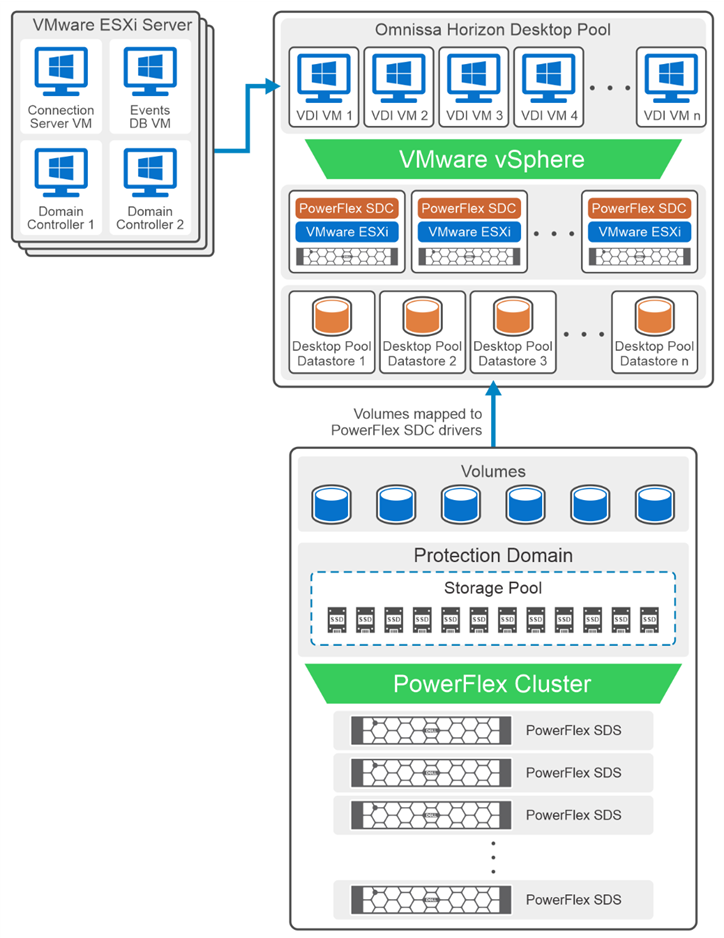
Figure 3. Logical architecture
The two-layer PowerFlex storage system consists of dedicated storage and compute nodes that are deployed using the PowerFlex Manager. PowerFlex SDS and MDM components are installed on the storage nodes and a protection domain is created. A storage pool is created in the protection domain, as shown in Figure 3. The drives from all the storage nodes are aggregated into this storage pool. Required Horizon volumes are created from this storage pool.
The VMware ESXi 8 hypervisor is installed on all compute nodes forming a VMware vSphere cluster. A vSphere cluster offers features such as vSphere High Availability, vSphere DRS, and vMotion. It also enables users to centrally manage every aspect of the cluster from the vCenter Server. The PowerFlex SDC component is installed on each ESXi host. See Appendix A for the PowerFlex hardware and software configuration that is used in the solution.
The Omnissa Horizon 8 VDI platform that is deployed in this solution serves Windows 11 VMs that are hosted on PowerFlex compute nodes. The Horizon 8 deployment includes the following components:
- Horizon Connection Server─It acts as a broker between users and VDI machines. Incoming requests from users are authenticated through Active Directory and users are connected to entitled resources.
- Horizon Agent─It runs on target VDI machines and allows the Connection Server to manage the target machines. The Horizon agent is responsible for opening VDI sessions to Horizon clients.
- Horizon Client─It is installed on endpoint devices to access resources such as virtual desktops and applications, Remote Desktop Session (RDS) Hosts, or physical machines that are available through the Horizon platform.
- Horizon Console─It is a web application that is part of the Connection Server. It allows administrators to manage the Horizon environment. You can perform tasks such as configuring connections servers, adding and managing resources, user authentication, end-user support, and so on from the Horizon Console.
- Events Database─It is an external database to store events that occur in the Horizon environment.
See Omnissa Horizon 8 Deployment Considerations for information about Horizon 8 deployment.
See Hardware and software configuration for information about the Horizon 8 software that is used in the solution.
Network architecture
The following diagram shows the network architecture of the PowerFlex system that is used in this solution:
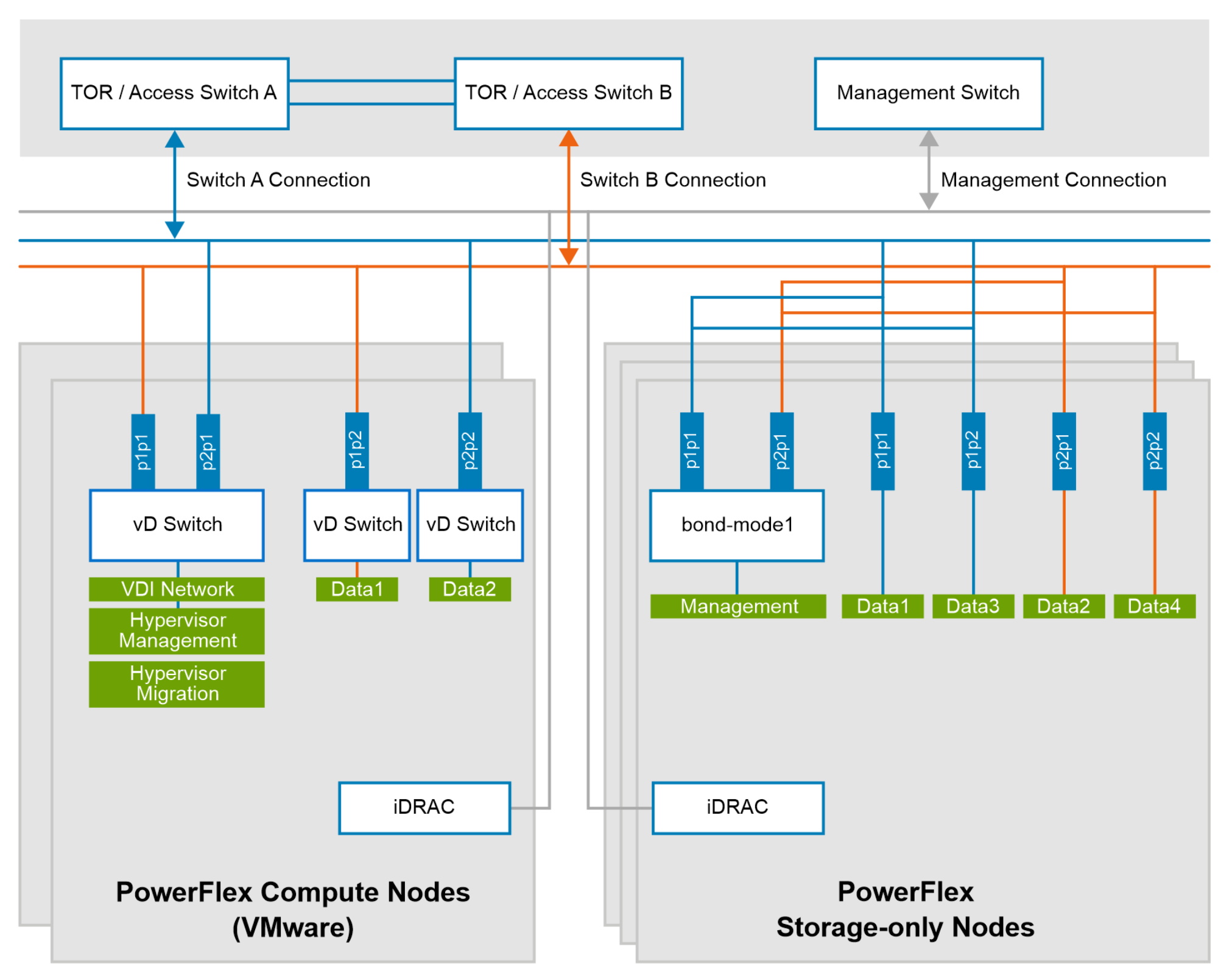
Figure 4. Network architecture
Both compute and storage nodes have two Mellanox 25 GbE dual-port Ethernet adapters. The diagram shows that each Ethernet adapter is connected to two Top of Rack (ToR) Dell switches. This configuration provides network redundancy.
Dedicated VLANs are recommended to separate management and data network traffic. Ports are dedicated to data network traffic while the management network flows through a bonded interface with the active-backup (bonding mode 1) policy enabled. A dedicated VLAN, which carries network traffic generated by Horizon components, is recommended for the VDI network. The following table lists the VLAN IDs that are used in this solution:
Table 3. VLANs types used in the solution
|
Network type |
VLAN ID |
|
PowerFlex management |
250 |
|
PowerFlex data 1 |
251 |
|
PowerFlex data 2 |
252 |
|
PowerFlex data 3 |
253 |
|
PowerFlex data 4 |
254 |
|
Hypervisor Management |
205 |
|
Hypervisor Migration |
206 |
|
VDI Workload |
205 |
For more details, see the Network Bandwidth Considerations section of the Omnissa Overview and Deployment Guide.
Omnissa Horizon 8 deployment considerations
Overview
This section describes deployment pre-requisites, installation, and first-time configuration of Horizon Connection Server, creating a Windows 11 golden image, and adding an instant clone desktop pool.
Deployment prerequisites
The core of Omnissa Horizon 8 is the Horizon Connection server. Before installing the Horizon Connection Server on a VM that meets the requirements, the following components must be available in the environment:
- An Active Directory (AD) domain. The connection server VM must be a member of this domain.
- DNS service that is present in the AD domain.
- DHCP service with a defined address scope having the required number of IP addresses.
- A database to record information about Horizon events. Microsoft SQL Server 2019 is used for this purpose. For the full list of supported databases, see the Omnissa Horizon documentation.
Configuring the AD Domain
The following steps summarize the configuration of AD to support an instant clone virtual desktop pool:
- Omnissa Horizon uses AD for user authentication and management. The AD domain should have Organizational Units (OUs) defined for virtual desktops and entitled users. This definition is helpful when applying group policies to specific users and machines.
- Create a user account in AD, called instant clone domain administrator, which Horizon uses to perform certain operations related to instant clones in AD. The Horizon Connection Server requires this account to join instant-clone virtual machines to the AD domain.
- A user account is required for Horizon to access the vCenter Server. Create a user account in AD for this purpose. In the vCenter Server, assign a role with required privileges for this user. For more information, see Configure a vCenter Server user for Horizon 8.
Using remote desktops, configuring a complex AD having multiple domains or forests, integrating authentication mechanisms, and so on come with additional prerequisites that are not in the scope for this paper. For more details, see Preparing Active Directory.
Install the Horizon Connection Server
After deployment prerequisites are met, install the Horizon Connection Server. It is recommended to install the Horizon Connection Server on a Windows Server VM that has no other running services. In this solution, a Microsoft Windows Server 2022 VM was created for this purpose. For information about the hardware, software, networking, and support software requirements of the connection server, see Omnissa Horizon Connection Server Requirements.
The following high-level steps describe how to install and configure the connection server:
- Log in to the VM as a domain user with administrator privileges.
- Go through the installation wizard step by step. For detailed instructions, see Install Horizon Connection Server with a New Configuration.
A successful installation enables the Horizon 8 Console web application.
- Access the Horizon Console UI and go to the admin page (https://<server-name>/admin) and use the account that is assigned during installation to log in.
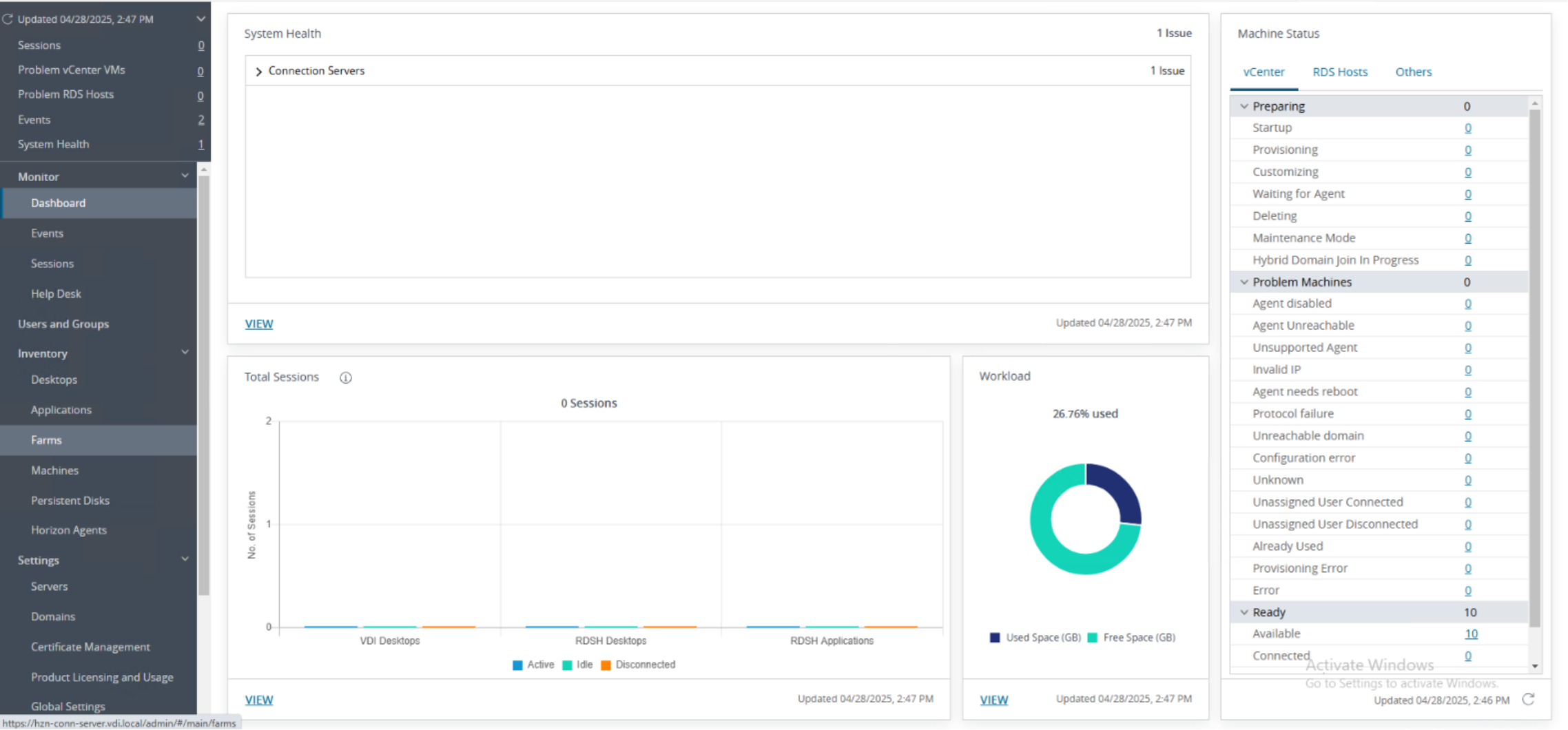
Figure 5. Horizon Console landing page after login
- When you are logged in, add a valid license and configure the events database by connecting to the external database that is configured for this purpose.
- Add vCenter server details for the vCenter on which the VDI VMs will be hosted. Provide the account details created for this purpose.
- Add an instant clone domain administrator account to enable Horizon to perform operations in AD while creating instant clone desktop pools.
For detailed instructions about configuring the Horizon Connection Server, see Configuring Horizon for the First Time in the Omnissa documentation.
The connection server is now configured to perform operational activities such as creating desktop pools, adding user entitlements, and so on.
Golden image preparation
After the Horizon Connection Server is set up, create a desktop pool. To deploy an instant clone desktop pool, a golden image is required. A golden image is a fully configured, optimized snapshot of a virtual machine that Omnissa Horizon can use as a reference to populate the desktop pool with identical desktops.
The following table provides the VM configuration of the golden image that is used in this solution:
Table 4. Sample golden image VM specifications
|
Component |
Description |
|
CPU |
2 vCPUs |
|
RAM |
4GB |
|
RAM Reserved |
2GB |
|
OS |
Windows 11 24H2 Enterprise |
A Windows 11 VM was created using this configuration and then optimized following the guidelines provided in Omnissa documentation. Omnissa provides the Horizon OS Optimization Tool (OSOT) to optimize Windows 11 and Windows Server systems. The OSOT includes customizable templates to activate or deactivate Windows system services and features, according to recommendations and best practices. Deactivating unnecessary services and features can improve performance. For more information about OSOT, see the Omnissa Horizon 8 documentation.
The following high-level steps describe how to optimize the VM:
- On the VDI compute cluster, create a VM and install Windows 11 using a Windows 11 ISO.
- After the installation is completed, enter audit mode at the first-time setup page.
Do not perform any first-time configuration. After entering audit mode, the Windows desktop is displayed on system reboot. - Install VMware tools.
- Update Windows and restart the VM. Repeat this step until no more updates are available.
- Install the Omnissa Horizon Agent.
- Install any required applications.
In this solution, Microsoft Office365 is required to run LoginVSI workloads, therefore install it in this step. - Use the OSOT tool to optimize, generalize, and finalize the image:
- Choose optimizations from the list manually or use the optimization template. Usually, the default template is sufficient.
- The generalizing process uses the sysprep utility to generalize the image and bring the system out of audit mode.
- After running finalizing operations, turn off the system.
- Optimize the VM hardware by removing unwanted components.
- Export the VM as a template, delete the VM, and then import it back to decrease the VM disk size.
- Take a snapshot of the VM, which can be used as the golden image.
For detailed instructions about how to optimize a Windows image for VDI manually, see the Omnissa Horizon 8 documentation.
Create a desktop pool
When the connection server is configured and a golden image is available, create a desktop pool. A desktop pool is a collection of VMs. In this case, they are identical and created by using a golden image. Omnissa Horizon 8 delivers desktops from the pool to Horizon Clients. The following high-level steps describe how to create an instant clone desktop pool:
- Log in to Horizon Console and go to Desktops. Click Add to start desktop pool creation wizard.
- Select Automated Desktop Pool as the pool type and click Next.
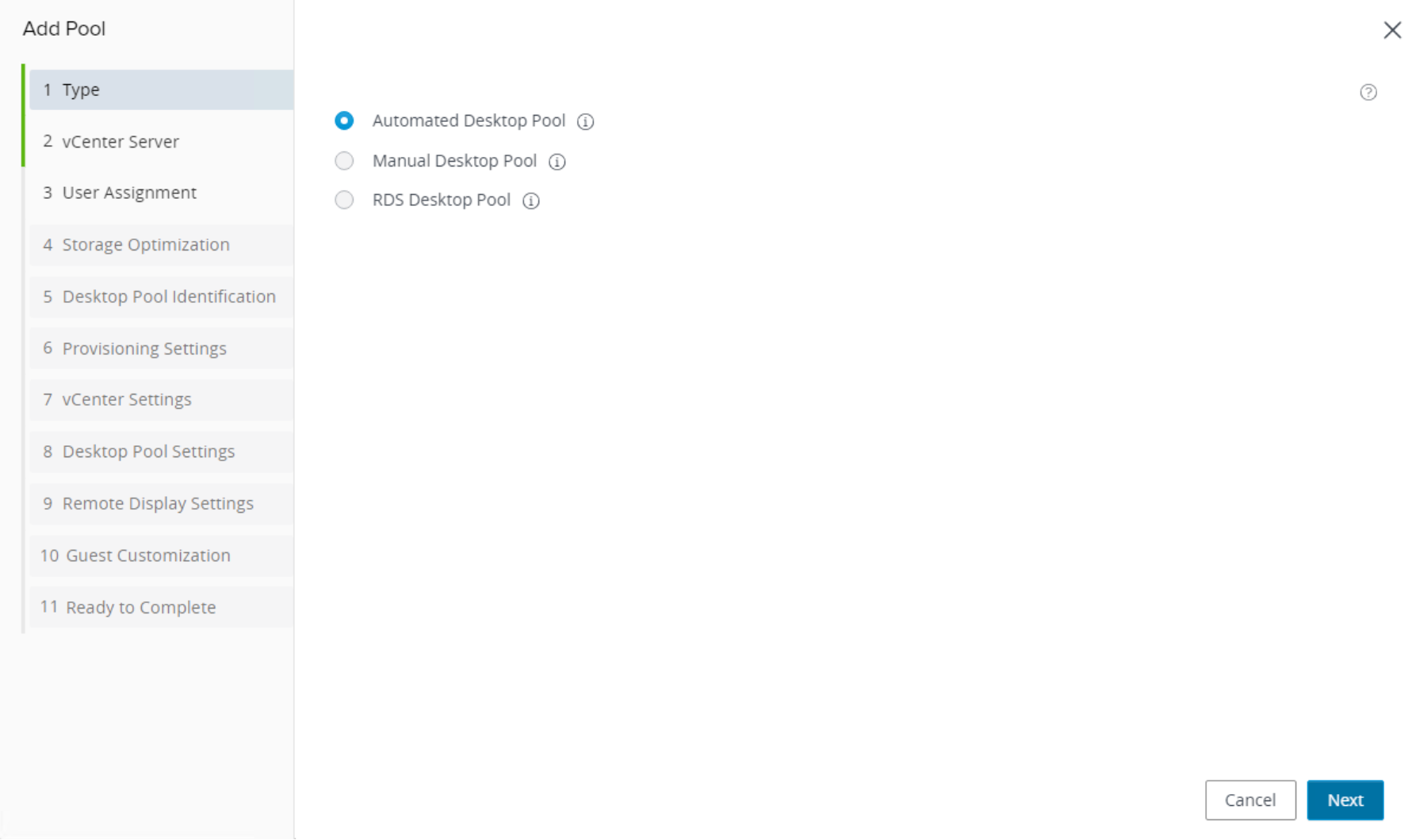
Figure 6. Choose desktop pool type
- Choose Instant Clone and then choose the vCenter Server that will be used with the pool.
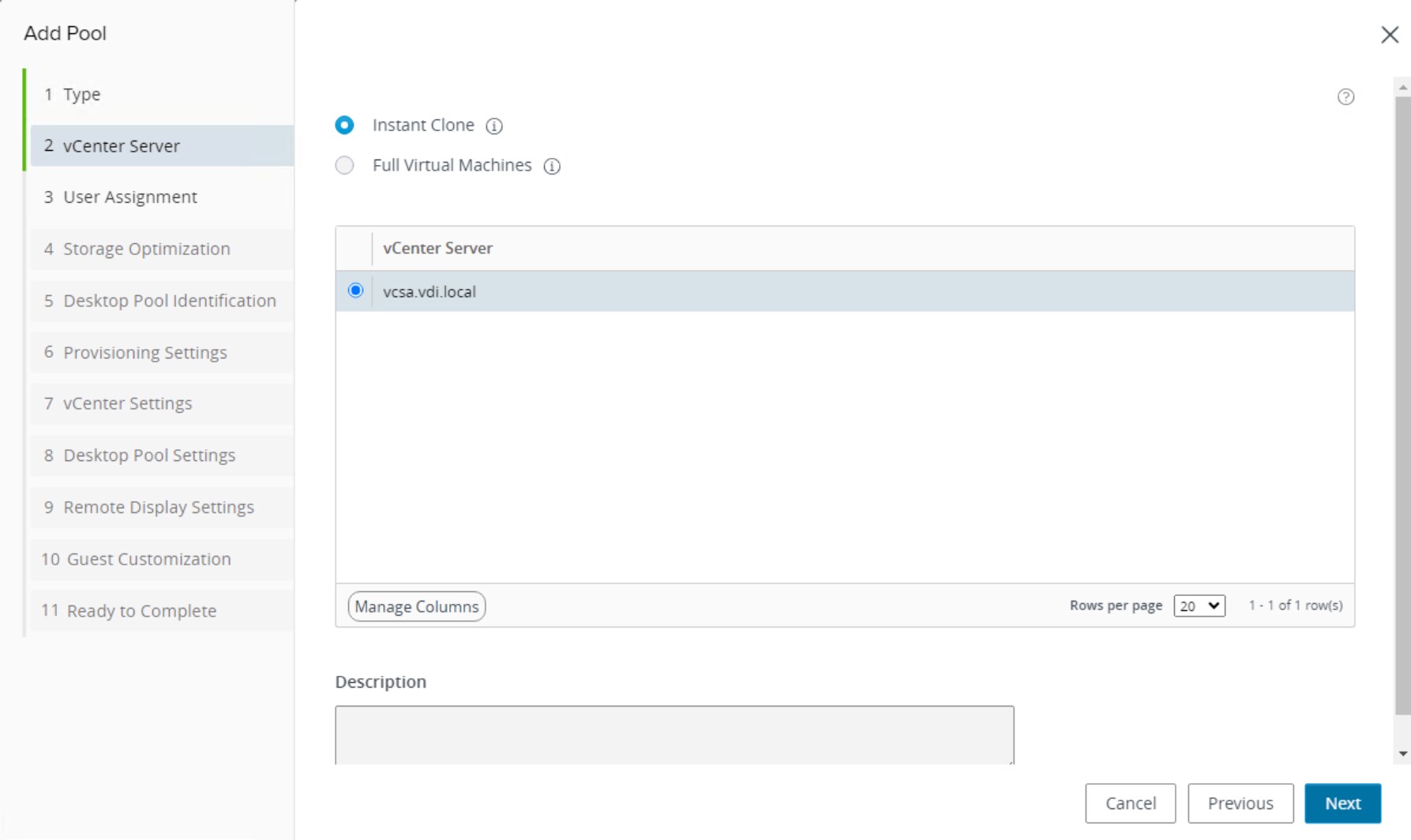
Figure 7. Choose virtual machine type and host vCenter Server
- Choose between a floating and dedicated desktop pool as required. This solution uses a floating desktop pool.
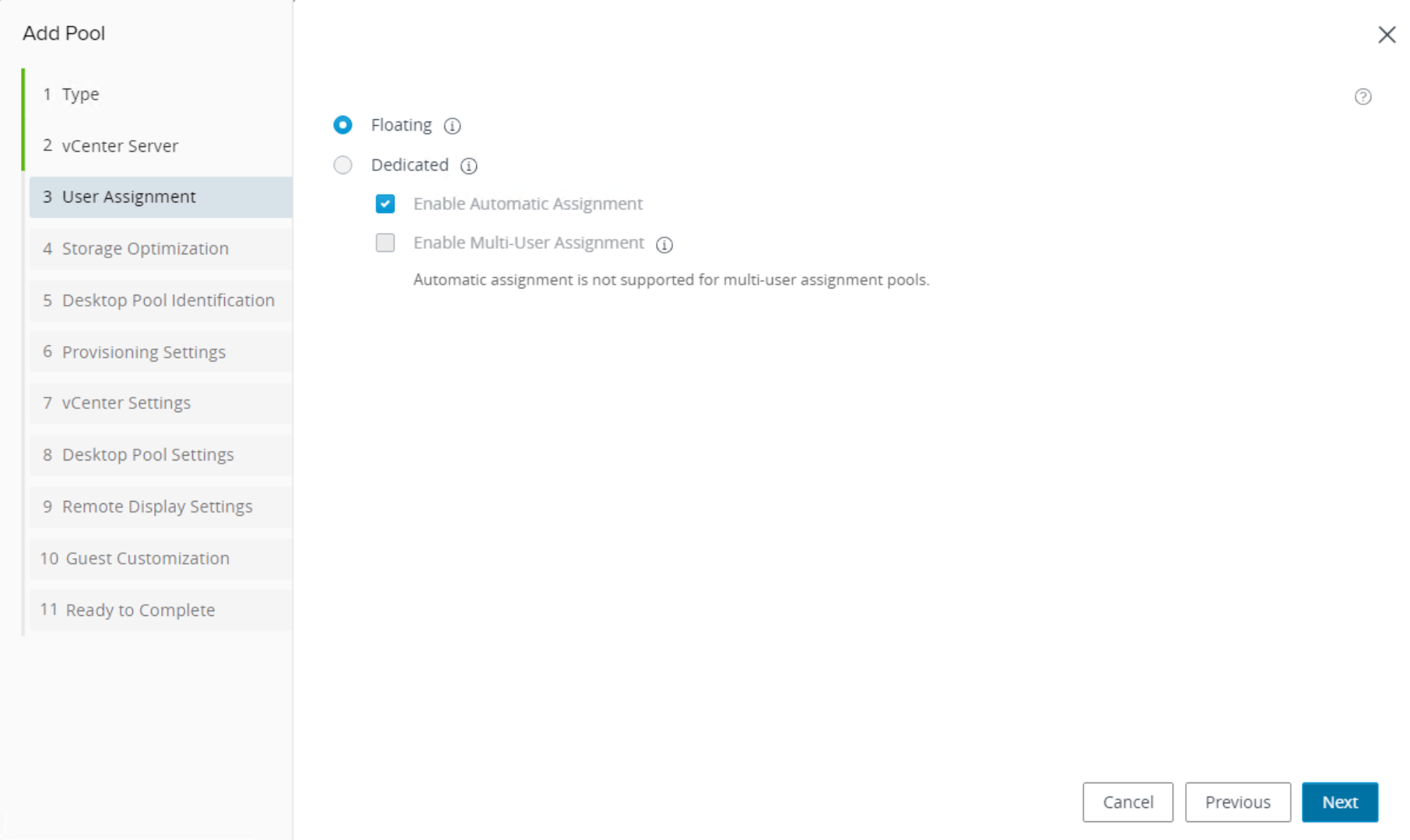
Figure 8. Choose desktop pool user assignment
- Select the preferred storage policy management. You can also configure persistent disks to store Windows profiles.
- Complete the required fields in the desktop pool identification page.
- In the provisioning settings page, provide the VM naming pattern, pool size, and so on.
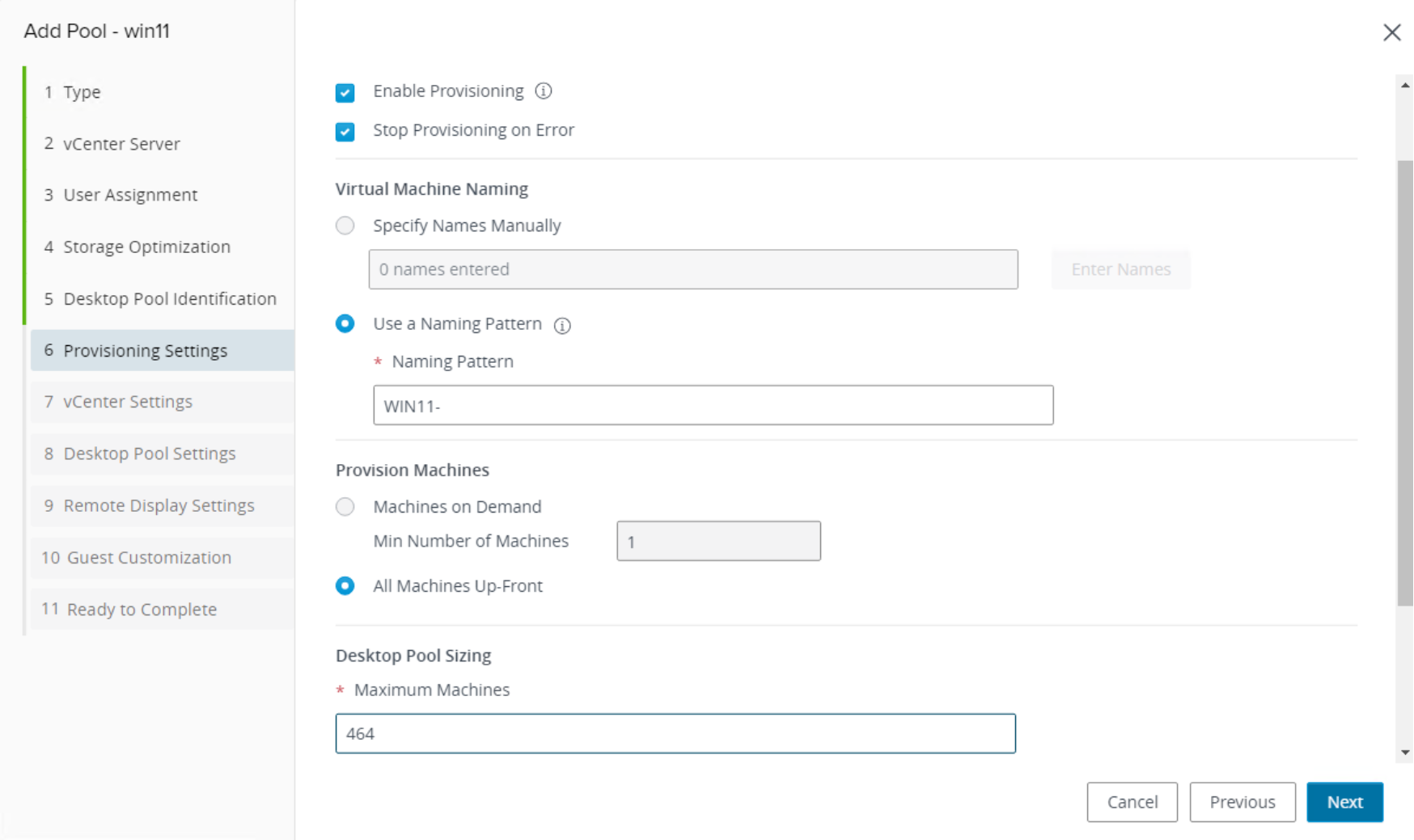
Figure 9. Configure desktop pool provisioning
- Choose the golden image, compute cluster, and datastores that the desktop pool will use. Also, modify the VM compute profile, if necessary.
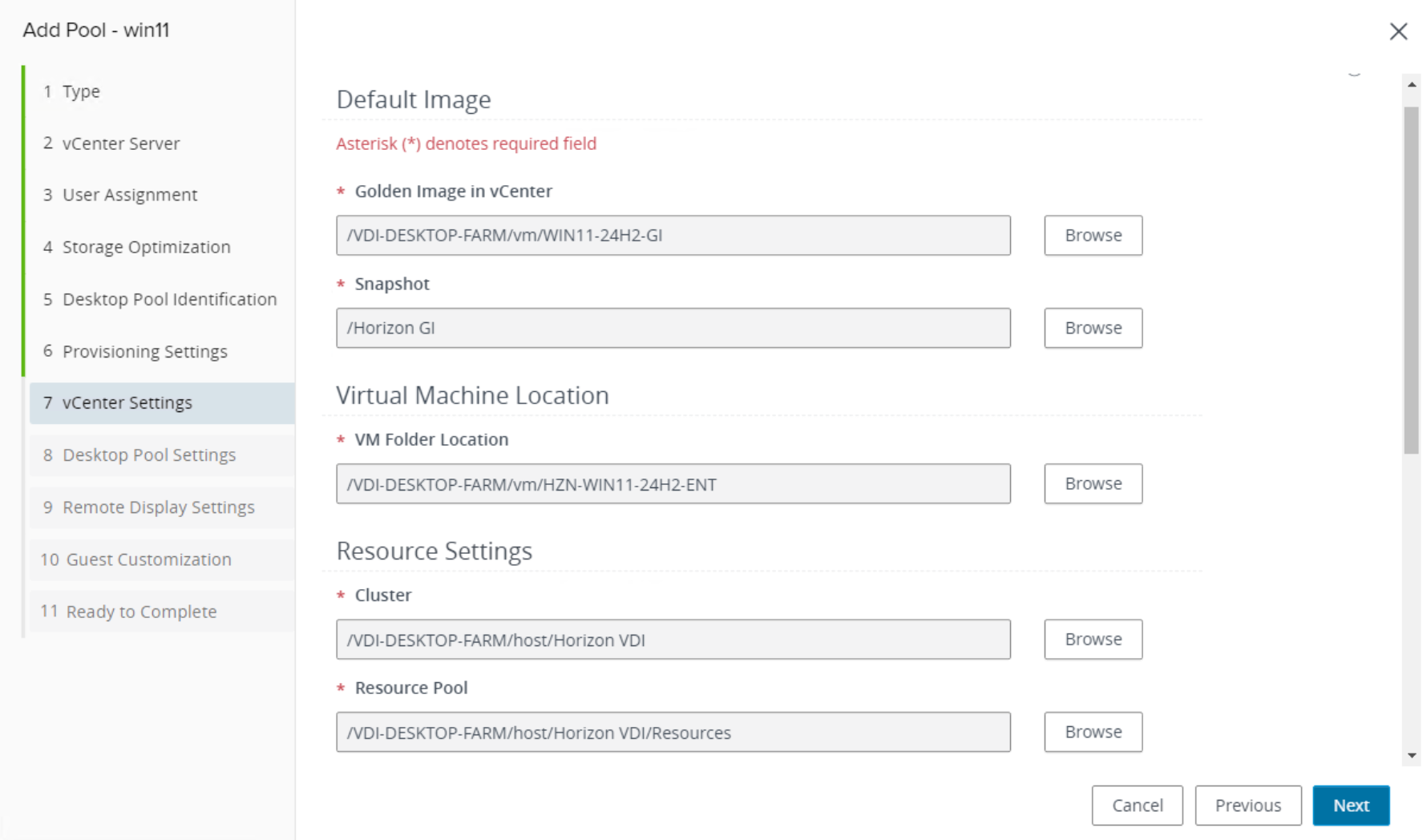
Figure 10. Choose golden image and resources for the desktop pool
- In the Desktop Pool Settings page, configure policies related to VMs, users, and sessions and then click Next.
- In the Remote Display Settings page, choose the display protocol.
- In the Guest Customization page, configure options that are related to AD domain and scripts to customize the guest OS. In this solution, guest OS customization is done using VM customization specification created in vCenter Server. The Windows sysprep utility will use the specification while creating VMs.
- Confirm the choices in the summary and complete the wizard.
Horizon 8 will start publishing the golden image. You can add user entitlements to the desktop pool. After the golden image is published, VDI VMs are brought up in the compute cluster. Entitled users in the AD domain can now start accessing VDI sessions from the Horizon client. For detailed instructions about creating desktop pools, see Creating Desktop Pools in Horizon 8.
Test and performance analysis
Overview
This section describes the test environment, workload profiles, and metrics collected for performance analysis as well as detailed analysis of how the system performed under various workloads.
PowerFlex configuration
The two-layer PowerFlex system used in this solution has four nodes, each having 10 SAS drives. These SSDs are added to a storage pool from which volumes are created. Datastores created from these volumes are added to the Horizon desktop pool.
Horizon 8 desktop pool
An automated desktop pool is created for performance benchmarking. The pool uses instant cloning to create space-efficient VMs from the published golden image. Instant clones share the same base image, and it is created using Instant Cloning technology supported by vSphere 6 and later.
The pool created in this solution is a floating desktop pool in which users are allocated a machine from the pool randomly every time they log in.
Login Enterprise Workloads
Login Enterprise Workloads are human-centric workloads designed to simulate a user interacting with predetermined applications in a human-paced way. While Login Enterprise offers vendors the facility to tailor workloads to closely match the behavior of their user base, built-in workloads are also available on the platform to generate comparable and repeatable test results. These built-in workloads are Task Worker and Knowledge Worker. Both workloads are based on the Microsoft Office suite and popular browsers used in the enterprise.
This solution uses both Task Worker and Knowledge Worker workloads to benchmark the Omnissa Horizon virtual desktop environment.
Task worker
An enterprise task worker is a light-duty productivity user that regularly uses a web browser to access static internal sites, an email client, and an application that is the basis for their task. Task workers stay focused on the task at hand and switch between apps on occasion. The task worker is tolerant of some workspace lag. Task workers often take the form of data processing workers, call center agents, tellers, and receptionists.
Knowledge worker
An enterprise knowledge worker is a medium to heavy-duty productivity user that regularly uses a web browser, an email client, and specializes in a wide range of software to create spreadsheets, documents, and presentations. It is common for knowledge workers to have multiple applications and browsers open at once, regularly switching between these applications. The knowledge worker expects a responsive user experience and has little tolerance for variation in performance.
Note: End User Experience (EUX) score collection occurs in both workloads at appropriate intervals determined by Login Enterprise Platform.
Test environment
Login Enterprise requires the following components to be installed and available in the environment:
- Login Enterprise virtual appliance─When the virtual appliance is deployed, it presents a Web UI, through which all aspects of testing, monitoring, performance evaluation as well as managing the appliance itself can be performed. The appliance must be part of the AD domain that houses the Omnissa Horizon VDI VMs and other components.
- Login Enterprise Launchers─The Login Enterprise Launcher is a machine used as an endpoint to launch sessions using the Horizon Client, providing a connection to the Omnissa Horizon VDI VMs. For this purpose, Windows Server 2022 VMs are created, and Login Enterprise Launcher software is installed on them. For more details, see The role of Launcher in Login Enterprise.
- Login Enterprise Logon Executable─This component must run when a Login Enterprise virtual user logs in to the VM. Therefore, it must be placed in a location that is accessible to all virtual users. There are several ways to perform this task. In this solution, an AD group policy with a logon script to start the executable is applied to all VDI VMs.
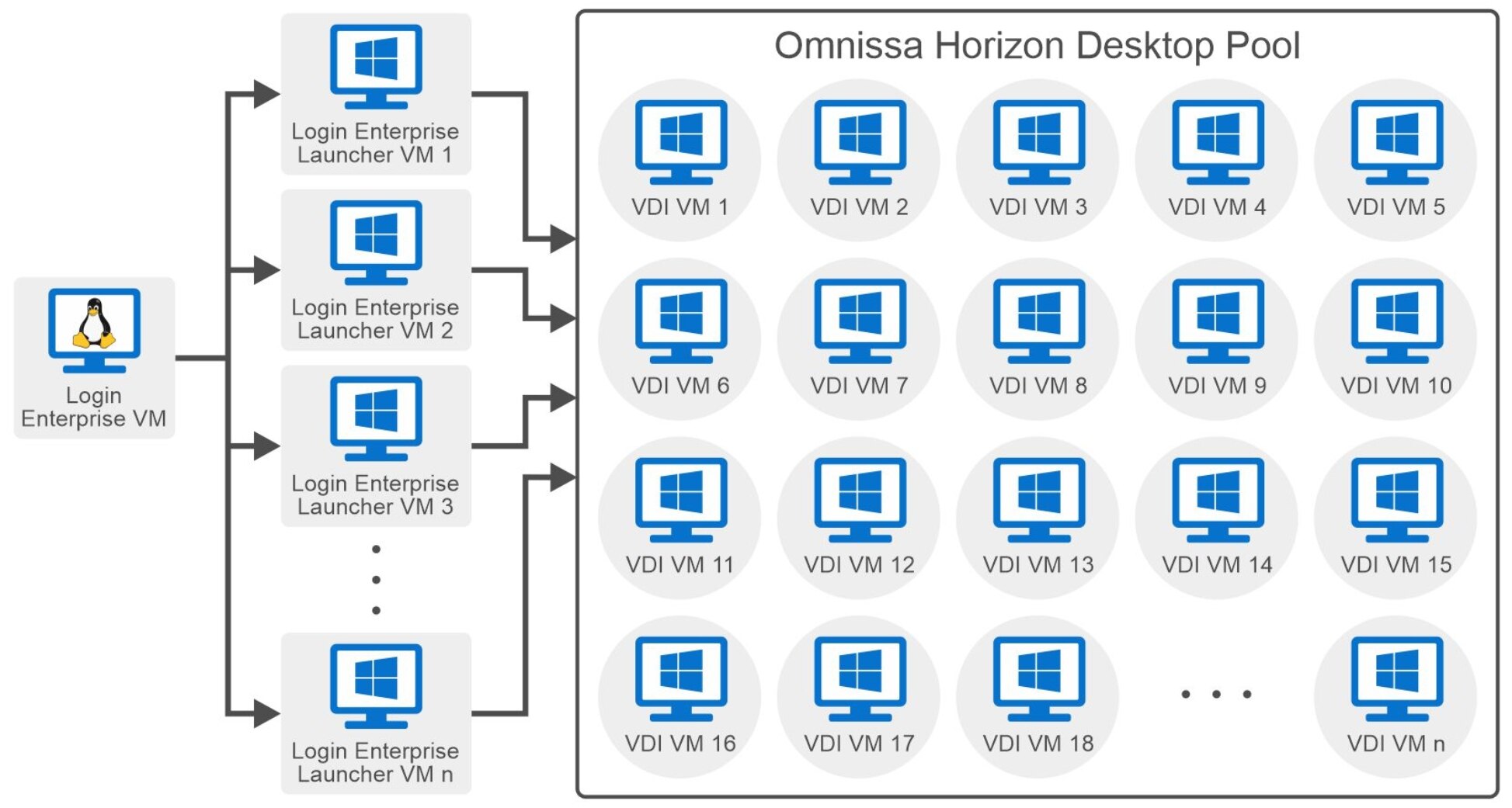
Figure 11. Performance test environment
Tests are defined using the Login Enterprise Web UI. The Task Worker and Knowledge Worker workloads are defined as load tests. They are designed to simulate multiple active users that are running concurrently, to determine the point at which an additional user noticeably impacts existing users. The following figure of Login Enterprise Web UI shows the load tests defined for both workloads:
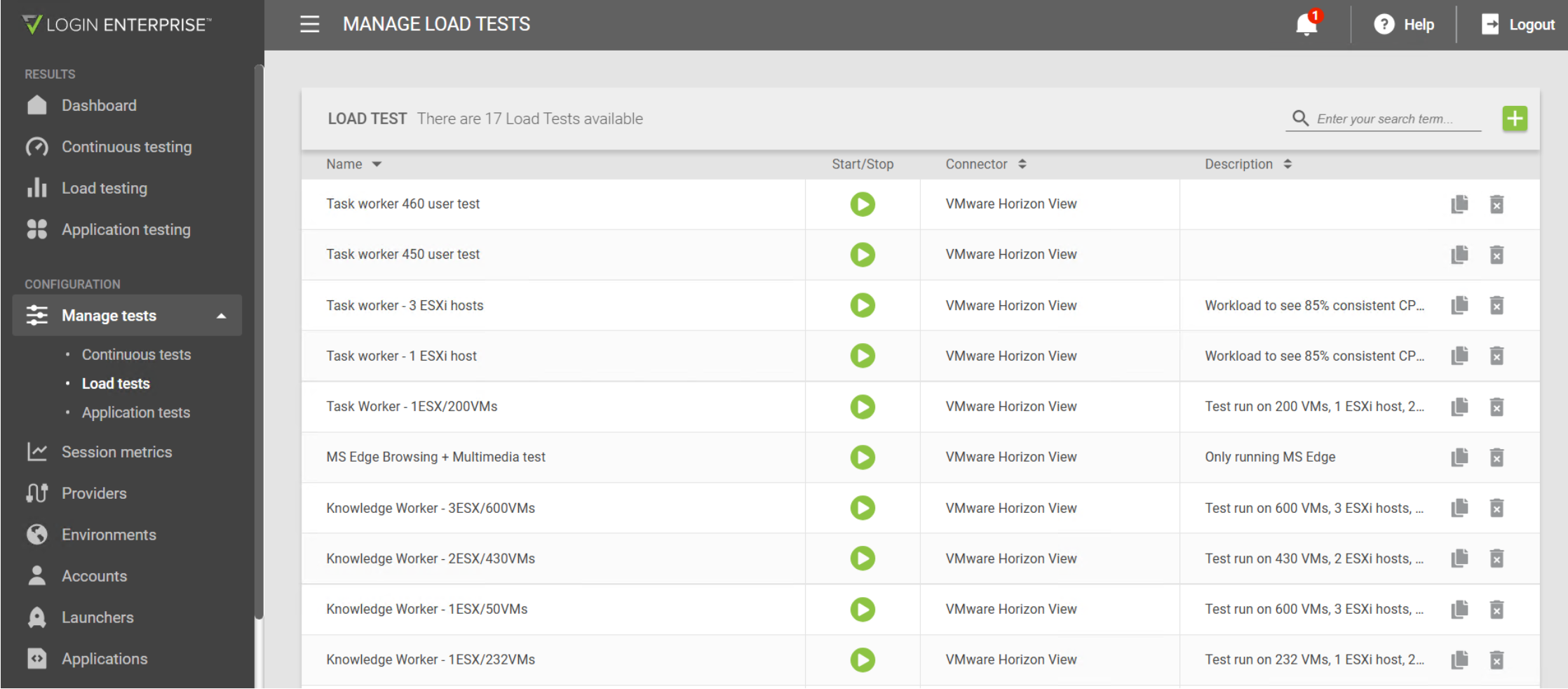
Figure 12. Load tests defined in Login Enterprise Web UI
These load tests go through the following sequence of actions:
- Launch sessions based on the number of sessions and ramp-up time defined in the test.
- When all sessions are launched, they run for a duration as defined by the test definition. If sessions fail at any point during the test, they are not restarted.
- When a session is launched, the application script test sequence is repeated on a loop for the defined test duration. EUX data, session metrics, and logs are collected during this time.
- When the test duration elapses, sessions are terminated after the current application script run is completed.
Performance metrics
Login Enterprise Platform provides several metrics related to session quality and system performance:
- EUX score─Represents the performance of VDI sessions. An EUX baseline score is calculated at the beginning of the test. The baseline score represents the performance of the system when the system is not under any stress. Adding more users to the VDI system impacts the score because a greater number of users add more stress to the system.
- VSImax─Is the maximum number of user sessions that can fit in a system before the performance degrades. VSImax is calculated during the login phase of a test and is triggered by several factors including application, CPU, and disk-related operations.
For more information, see Login Enterprise EUX score and VSImax.
As well as the Login Enterprise metrics described, metrics such as CPU usage, memory usage, and network and storage performance from both VMware vSphere and PowerFlex are tracked.
Performance analysis – Task Worker
This section describes performance analysis of various system components. For this test, 464 user sessions are provisioned in the desktop pool. VMs are evenly distributed on the two ESXi hosts. No session freezing, login failures, or Login Enterprise engine failures were reported, and the application execution rate consistently remained above 97 percent during the test. Login Enterprise recommends that the application execution rate to be at least 95 percent for any load test run on the platform.
The VSImax score achieved is 212 for the single ESXi host test and 426 for a two-ESXi host test. Tests show that performance scales linearly as compute nodes are added. The four-node PowerFlex storage system used here can handle additional VDI sessions.
ESXi Host CPU usage
The following figure shows the CPU usage of the ESXi host as a percentage during the test. CPU usage is as expected during the three test phases. CPU usage climbs in the logon phase of the test because more VDI sessions are started. CPU usage stabilizes in the steady state phase as no more users are logged in and stays almost flat. In the logoff phase, CPU usage decreases as user sessions are terminated.
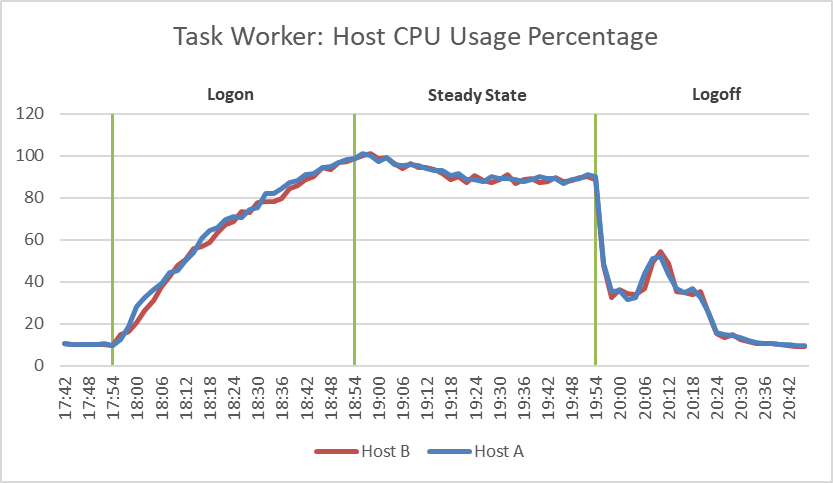
Figure 13. CPU Usage as a percent during the test
During the logoff phase, there is a slight spike in CPU usage before it goes back to idle value. This result can be attributed to the re-creation of instant clone VMs after users logoff.
Host memory usage
The following figure shows the percentage of host physical memory that has been consumed. Memory consumed by VMs before the test is slightly above 90 percent. The consumption increases to a maximum of 98 percent, and stabilizes at 97 percent during the steady state phase. There is a spike in memory usage similar to the CPU usage spike during the logoff phase that is caused by Horizon re-creating VDI VMs.
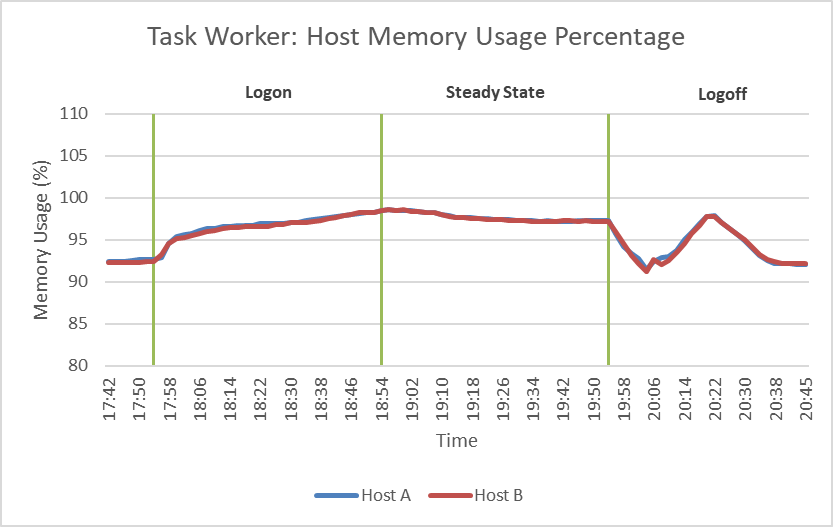
Figure 14. ESXi host memory usage during the test
The following figure shows the active memory usage of each host. Active memory is the amount of physical memory that is being actively read or written by guests. Active memory usage increases gradually in the logon phase that is caused by user logins and remains almost constant in the steady state phase. When the test is completed and sessions start terminating, active memory usage gradually decreases and returns to its original idle value. There is a spike in active memory usage that occurs when VMs are re-created after users log off.
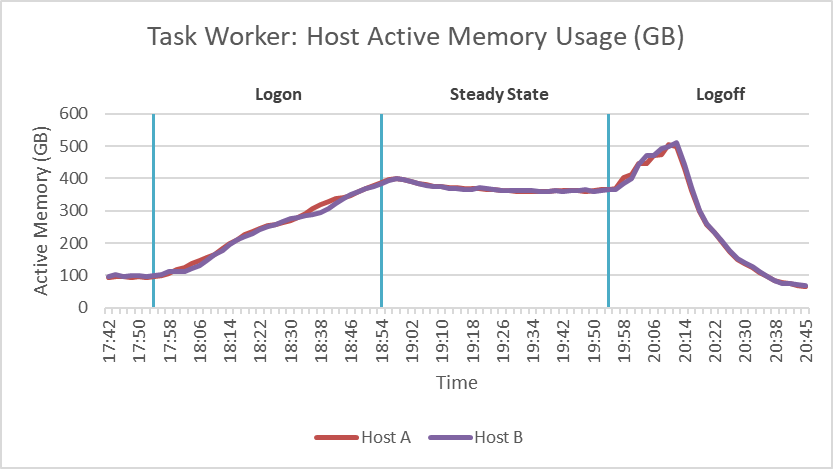
Figure 15. ESXi hosts active memory usage during the test
Host network performance
The following figure shows the network activity of ESXi hosts during the test. The usage trend is similar to other resources in which resource usage increases and peaks in the logon phase. It then settles to almost constant usage during the steady state phase and finally tapers off at the end of the logoff phase as user sessions are terminated.
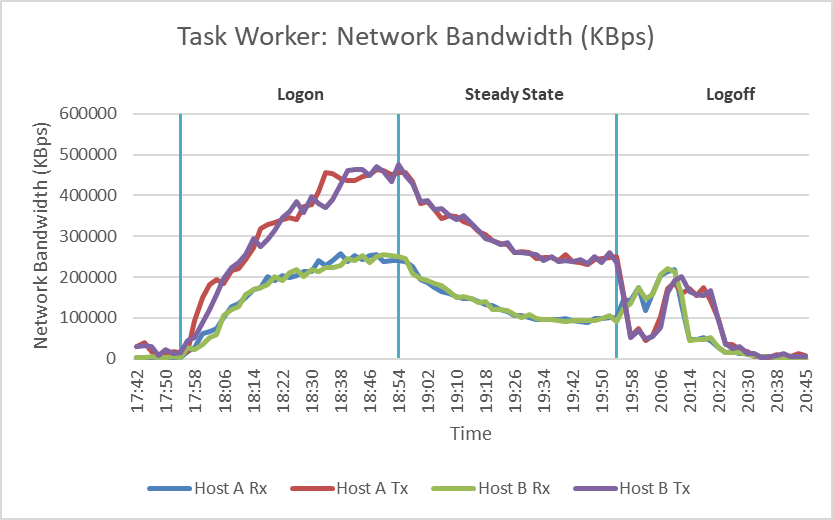
Figure 16. Host network usage during the test
PowerFlex performance
The following figure shows the performance of PowerFlex storage during the test. During the logon phase, total IOPS generated by VMs running on the two ESXi hosts gradually increase and peak slightly above 150,000 IOPS. This behavior is expected as it is synonymous with an increase in user session logons.
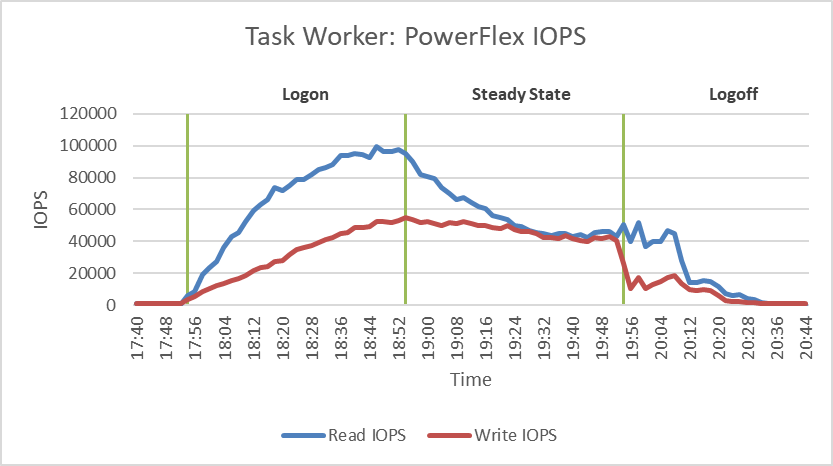
Figure 17. PowerFlex IOPS performance for the test duration
The IOPS settle to a constant rate during the steady state because all users are performing similar actions on their respective sessions throughout the test. At the start of the logoff phase, there are IOPS generated from instant clone VMs being re-created. Finally, the IOPS eventually reach the original level before the test. IOPS do not drop to zero as there is some I/O activity occurring on idling VMs in the desktop pool.
The following figure shows latency in milliseconds for the test duration. There is a slight increase in write latency at the start of the test. Write latency spikes again during the logoff phase of the test which coincides with the process of VMs getting re-created after the user logs off.
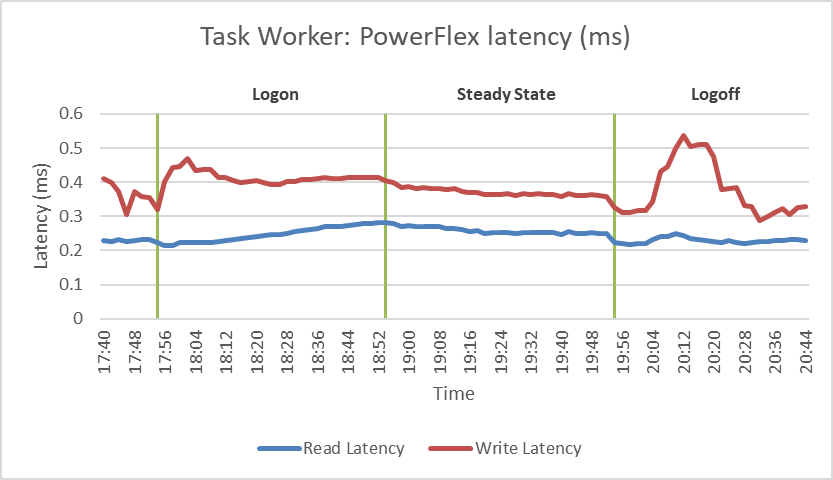
Figure 18. PowerFlex Latency during the test
The following figure shows the behavior of IOPS when the test is run on a VDI desktop pool with a single ESXi host available (232 user sessions) for provisioning and then scaled up to two ESXi hosts (464 user sessions).
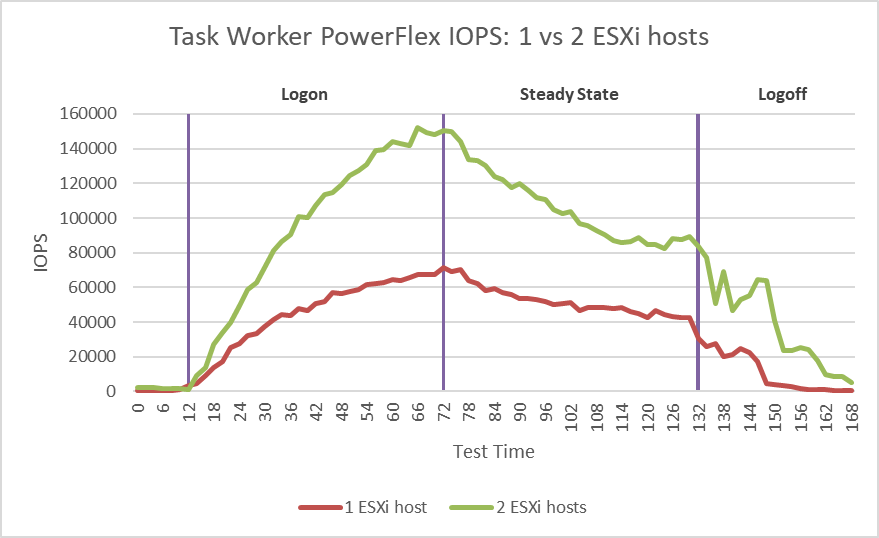
Figure 19. PowerFlex performance comparison between one- and two- ESXi host tests
The number of user sessions is doubled by introducing an additional ESXi host to the compute cluster. The figure shows that the IOPS usage pattern during the test remains the same but IOPS doubled when the cluster is scaled up. PowerFlex latency during this period for both tests remained the same; no significant change in latency was exhibited. It is possible to add even more VDI user sessions by adding more nodes to the compute cluster. From this performance comparison, it is evident that PowerFlex storage can meet the storage requirements of additional user sessions without compromising session quality.
EUX Score
The following figure shows the EUX score metric collected by the Login Enterprise virtual appliance. The EUX score in this test is 7.3.
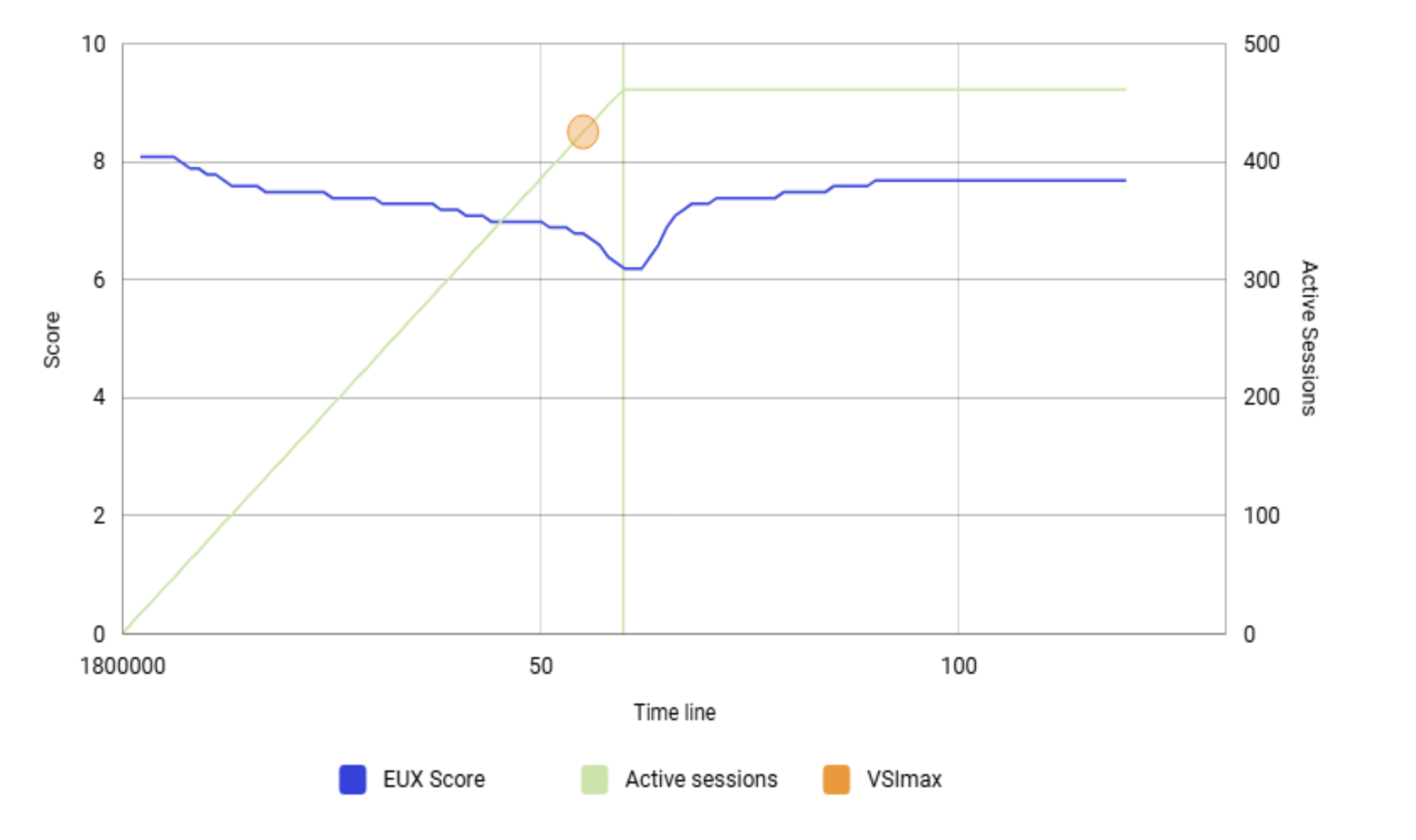
Figure 20. EUX score
Performance analysis – Knowledge Worker
This section describes the performance of the Knowledge Worker workload. For this test, 430 VMs were provisioned in the desktop pool with the VMs distributed equally across two ESXi compute nodes. A VSIMax score of 384 is achieved for this test. During the test, no login or Login Enterprise engine failures were reported, and the application execution rate consistently remained at 99 percent.
The VSIMax score achieved is 192 for a single-ESXi host test and 384 for the two-ESXi host test. This result shows that performance scales linearly as more compute nodes are added and the PowerFlex storage system can handle additional VDI sessions.
ESXi Host CPU usage
The following figure shows that both hosts exhibit similar CPU usage during the test. CPU usage during the Knowledge Worker test is almost identical to that of Task Worker with the difference being the number of VMs in the desktop pool. The CPU usage stays at 99 percent with a lower number of VMs in the pool as compared to the task worker test. This result is expected because the Knowledge Worker is a more intense workload than Task Worker.
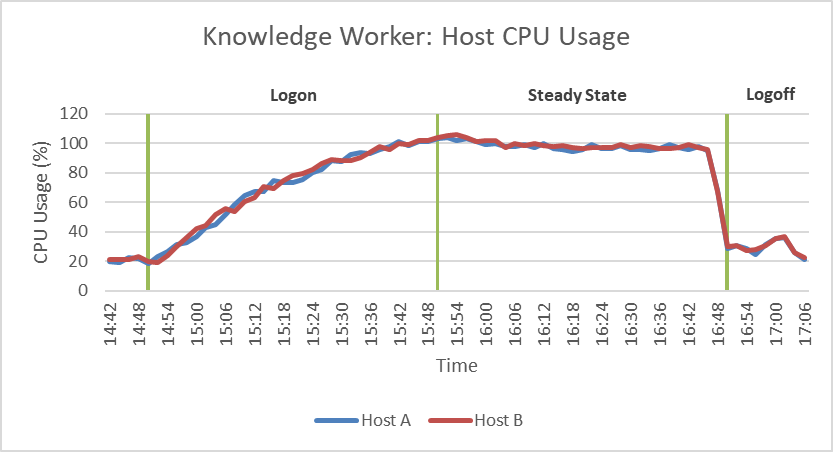
Figure 21. ESXi Host CPU usage during the test
ESXi host memory usage
The following figure shows memory usage as percentage. The usage is expected, and no anomalies were observed during the test. The usage increases from the baseline use of memory already consumed by idling VMs and stays at a near constant usage for the logon and steady state phases of the test. In the logoff phase, usage returns to idle levels after a spike caused by Horizon re-creating instant clone VMs after users logoff.
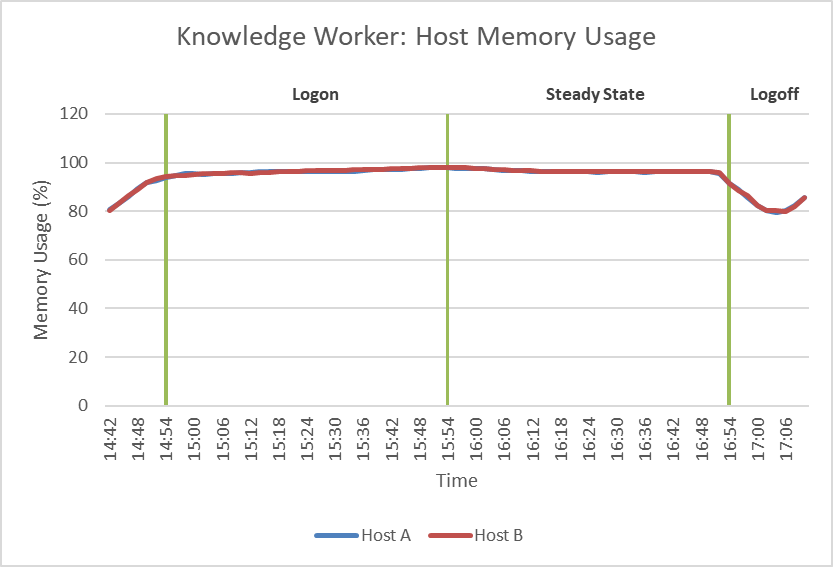
Figure 22. ESXi Host Memory Usage during the test
The following figure shows the active memory use in GB during the test. The use is in line with what is expected at each stage of the test. The linear increase observed during the logon phase is due to new users opening VDI sessions. The use holds almost steady throughout the steady state phase and decreases to its original value during the logoff phase after a small spike attributed to instant clone VM recreation.
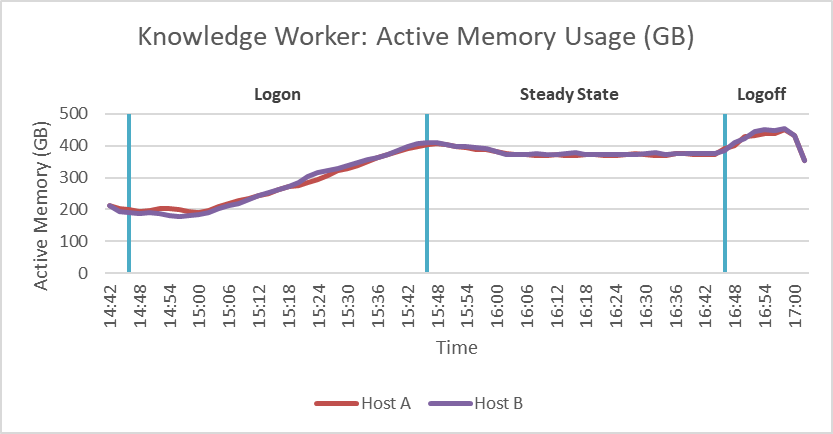
Figure 23. Active memory usage during the test
The following figure shows the network use of both ESXi hosts through the test. As expected, both hosts exhibit similar use characteristics. The use curve is similar to resource consumption of other components. There is a gradual increase in network use during the logon phase, followed by the usage settling during steady state, and tapering off to idle values on the logoff phase. There is also a usage spike in the logoff phase caused by VMs being re-created.
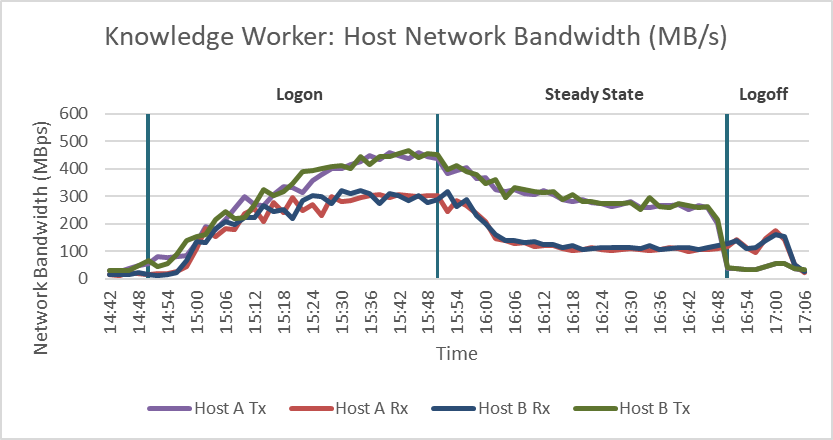
Figure 24. Host network use during the test
PowerFlex performance
This section shows the performance of PowerFlex storage. Total IOPS peaked slightly above 100,000 IOPS during the test. During the steady state, Total IOPS stabilized at approximately 60,000 IOPS, as shown in the following figure:
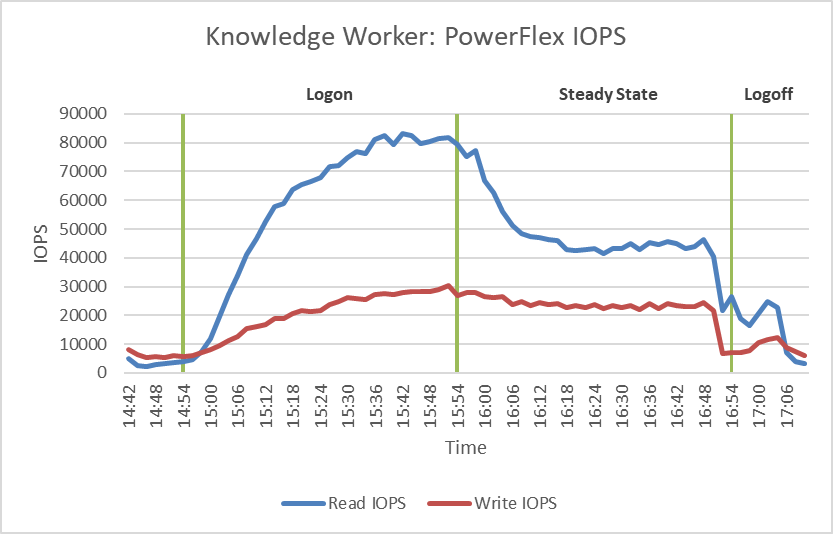
Figure 25. PowerFlex IOPS performance for the test duration
The following figure shows that PowerFlex latency remains approximately the same throughout the test.
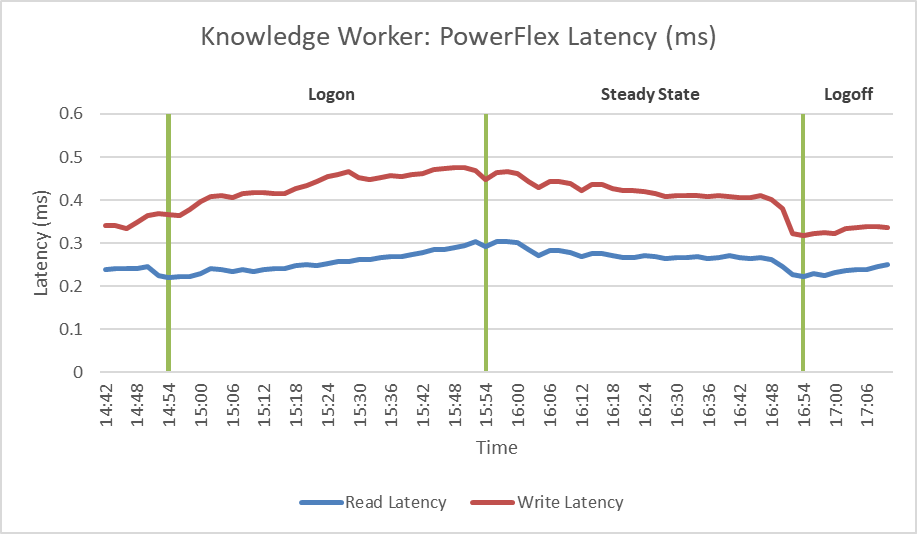
Figure 26. PowerFlex latency for the test duration
The following figure shows a comparison between PowerFlex IOPS when the VDI sessions were scaled up from 215 to 430 users by adding an additional ESXi host to the compute cluster. As expected, IOPS doubled as user sessions also doubled. The overall usage trend remains the same with an increase in IOPS throughout the logon phase and a gradual settling to a constant rate during the steady state phase. PowerFlex latency between the two tests remained the same. From these tests, it can be concluded that the underlying PowerFlex storage used can handle a greater degree of scaling, accommodating more user sessions while simultaneously delivering high quality VDI sessions to end users.
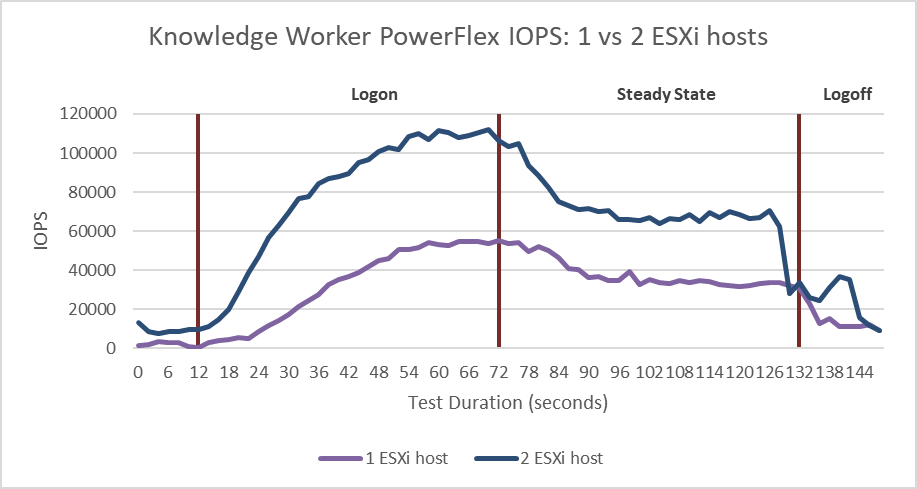
Figure 27. PowerFlex IOPS comparison between one- and two-ESXi host tests
EUX score
The following figure shows the EUX score for the test run on 430 user sessions. There is an EUX score of 7.3 during this test and a VSIMax score of 384.
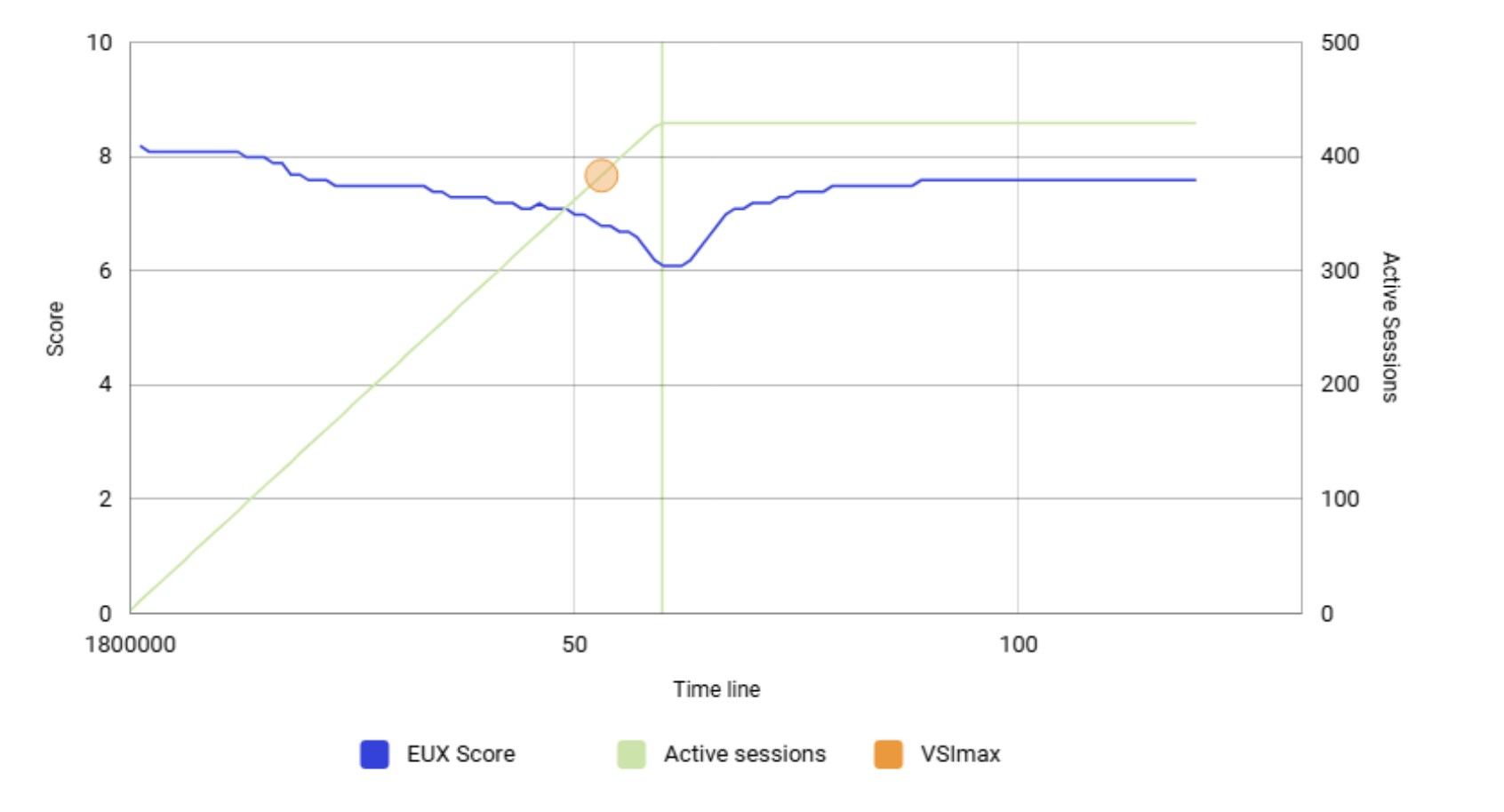
Figure 28. EUX score for the test duration
Best practices
Overview
This section provides the recommended best practices for favorable performance of the VDI solution.
Omnissa Horizon 8 golden image
Follow these best practices when preparing the golden image:
- Use the Horizon OS optimization tool to optimize golden images.
- Use thin provisioned virtual disk to maximize space savings.
- Use a paravirtual SCSI controller with the virtual disk.
- Choose VMXNET3 as the adapter type for the VM NIC.
- Choose the appropriate video memory for the VM. In this solution, 8MB of video memory is sufficient for 1920x1080p resolution.
- Create and apply recommended group policies on all VDI VMs. For more information about group policies recommended by Omnissa, see Set Other Common Group Policies.
- Deactivate local administrator on all VDI VMs through the group policy.
PowerFlex nodes
Follow these best practices on PowerFlex storage and compute nodes:
- Verify that the performance profile is set to High Performance on all PowerFlex storage nodes.
- Verify that SDS threads are set to 12. To check this value using the PowerFlex CLI, run the following command on the primary MDM node:
scli --query_performance_parameters --all_sds
- Ensure that jumbo frames are enabled on all networking components and nodes such as ToR switches, storage nodes, VMware vSphere distributed switches on compute nodes, and so on.
- For ESXi compute only nodes, use esxcli to set the No of outstanding IOs with competing worlds to 256 for all volumes provisioned from PowerFlex. Increasing this value from the default of 32 to 256 enhances performance.
Conclusion
Conclusion
Omnissa Horizon 8 provides IT teams with a modern, streamlined approach to deliver, protect, and manage virtual desktops. Features such as instant cloning and virtual applications make managing the environment a seamless process for IT teams. The performance characterization and analysis of Omnissa Horizon 8 hosted on Dell PowerFlex demonstrates the ability of the solution architecture to support large-scale VDI deployments. End-point users can perform resource intense tasks while simultaneously enjoying a high-quality end user experience. Also, ESXi hosts added to the cluster linearly increased the provisioning capabilities of the Omnissa Horizon instant clone desktop pool. The underlying PowerFlex storage can handle the additional storage requirements with minimal latency.
The white paper also describes the best practices for deploying Omnissa Horizon 8 on PowerFlex. To learn more, contact your Dell representative.
Appendix A
Hardware and software configuration
The following table lists the hardware configuration and software details that this solution uses:
Table 5. Hardware and software configuration
|
Component |
Description |
|
PowerFlex configuration |
|
|
PowerFlex storage nodes |
|
|
PowerFlex compute nodes |
|
|
Operating system |
|
|
VMware vSphere |
|
|
Omnissa Horizon |
|
|
Login Enterprise Platform |
Version 5.14.7 |
|
Horizon OS Optimization Tool |
Version 1.2 (2406) |
References
Dell Technologies documentation
The following Dell Technologies documentation provides additional and relevant information. Access to these documents depends on your login credentials. If you do not have access to a document, contact your Dell Technologies representative.
VMware vSphere 8 documentation
The following VMware documentation provides additional and relevant information:
Omnissa Horizon 8 documentation
The following Microsoft documentation provides additional and relevant information:
Login Enterprise documentation
The following Login Enterprise documentation provides additional and relevant information: