PowerEdge: How to Export the PERC Controller Log using OpenManage Server Administrator
Summary: This article explains how to export the RAID controller log (TTYlog) directly from OpenManage Server Administrator (OMSA) using the interface or using the command lines.
Instructions
In addition to this, you can also export the system's entire collection of support logs including Operating System logs, Application Data, and RAID controller logs by exporting the SupportAssist Collection via iDRAC9 or SupportAssist Collection via iDRAC7 or iDRAC8. An alternate method is to export the RAID controller log (TTY log) from RAID controller, see the detail in .
Table of content
Using the interface
-
Log in to OMSA, highlight the Controller on the left pan and click Information/Configuration (Figure 1):
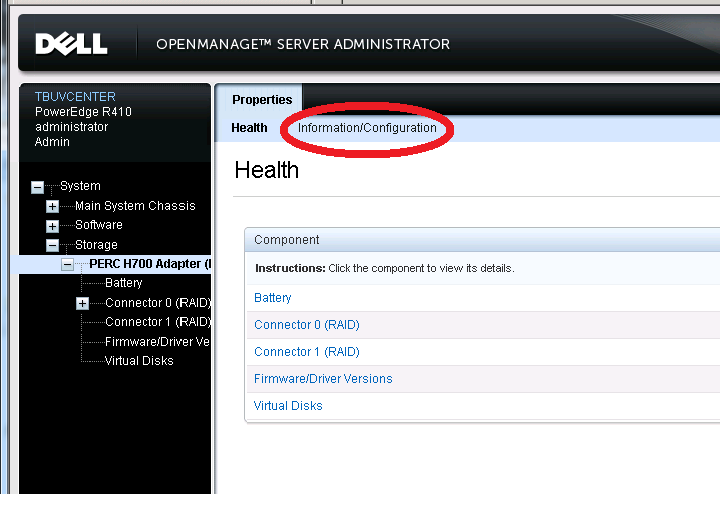
Figure 1: OMSA Controller Menu -
On the next screen (which will take several seconds to load) scroll down to controller tasks. Click the drop-down and select Export Log (Figure 2). Then click Execute.
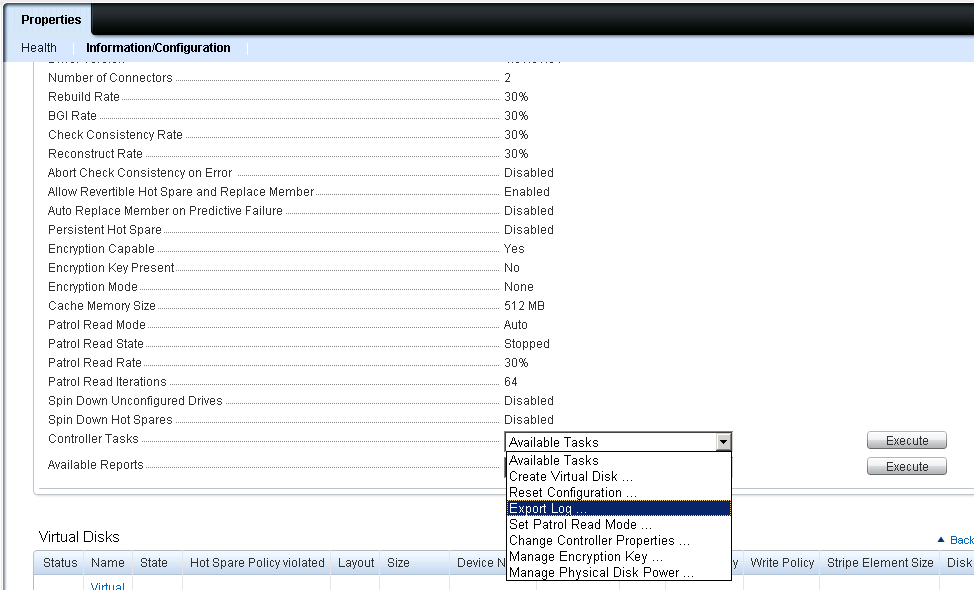
Figure 2: Drop Down Menu -
On the next screen, scroll down and click export log file (Figure 3).
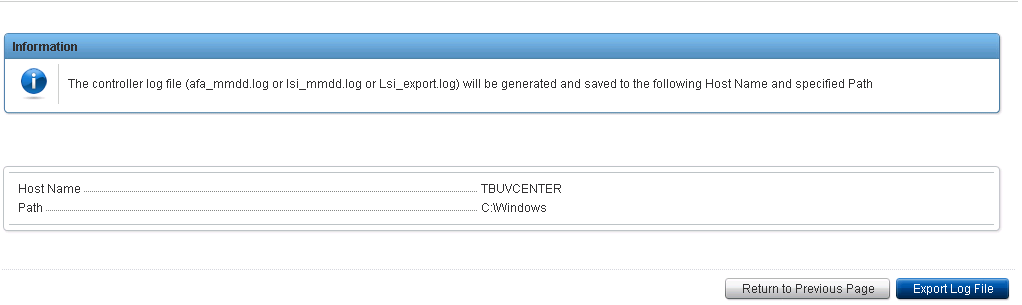
Figure 3: Export Log File -
Look for the export file in the specific folder:
- Linux:
\var\log\lsi_Date.log - Windows:
C:\Windows\lsi_Date.log - Citrix Xen Server:
\var\log\lsi_Date.log - ESX5:
\var\log\lsiexport.log
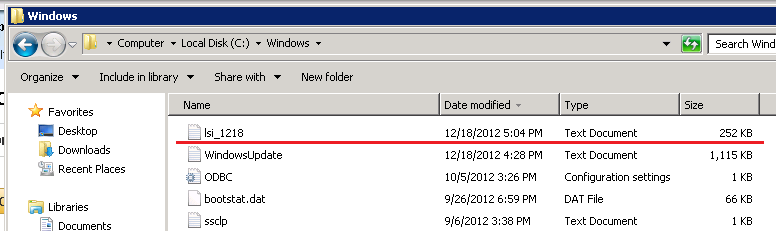
Figure 4: Example for Windows OS - Linux:
omconfig storage controller action=exportlog controller=0
Storage > PERC Controller > Information/Configuration
Available Reports drop down
Storage > PERC Controller > Information/Configuration
Available Reports drop down
Extract TTY Login OMSA Using the Command-Line Interface - CLI mode
OpenManage Server Administrator must be installed on the local server.
Steps:
- Open a Terminal (Linux) or DOS window.
- Enter the following command line to identify the « id » of the concerned controller.
omreport storage controller
- Extract the log of the controller with the following command. The ID represents the identifier of the controller, for example 0 for PERC H700 or 1 for PERCH800. If you have only one controller in the server, you can directly enter 0.
omconfig storage controller action=exportlog controller=id
For example:
omconfig storage controller action=exportlog controller=0
Once the command is ran, the log file LSI_Date.log is saved in the specified directory:
- For Windows:
C:\Windows - For Linux:
/var/log
Video (Only English):
Export RAID Controller Logs using OMSA