How to Configure Unisphere for PowerMax Remote Syslog
Summary: How to configure Unisphere for PowerMax Remote Syslog.
This article applies to
This article does not apply to
This article is not tied to any specific product.
Not all product versions are identified in this article.
Instructions
- Click Settings in the main Unisphere Dashboard:

Figure 1: Settings Unisphere Dashboard
- Click Security > Remote Syslog, add the IP Address or Host Full Name, Certificate Trust chain, then click Apply:
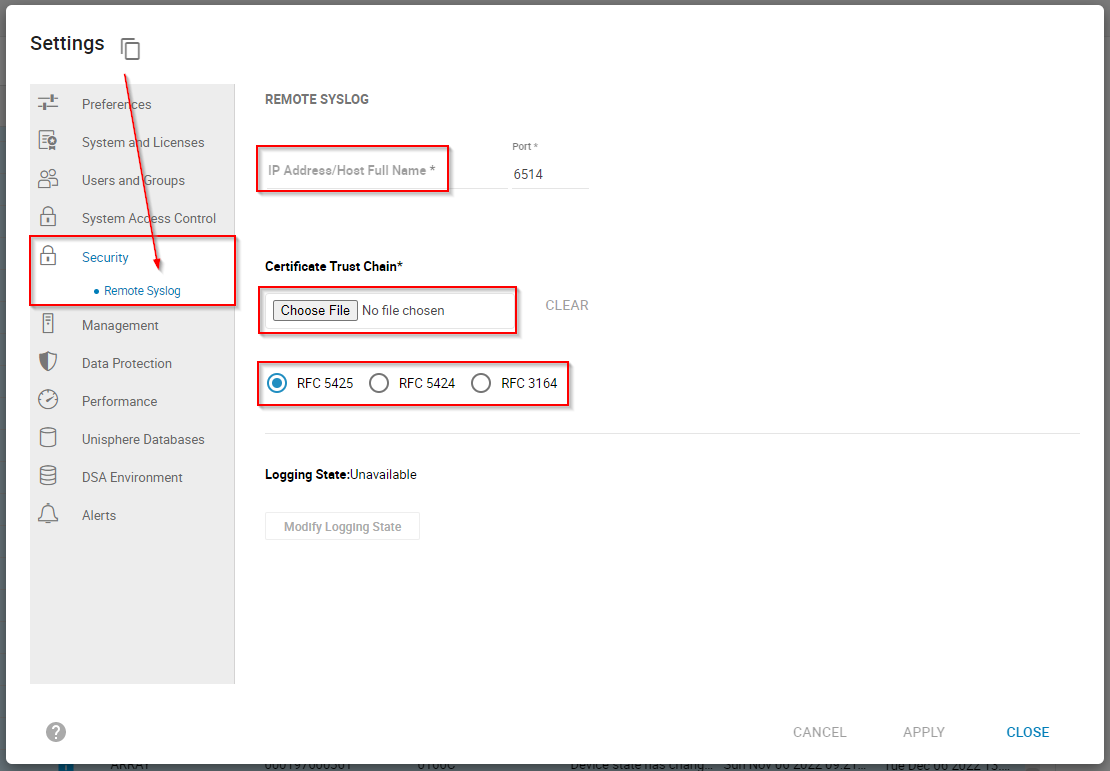
Figure 2: Add the IP Address or Host Full Name, Certificate Trust chain, and click Apply.
The default port for Secure Remote Syslog is port 6514 (syslog-tls). For secure log message transfer, then Syslog must work over TCP 6514 with secure Transport Layer Security (TLS) certificate-based authentication (RFC 5425).
RFC 5425
This RFC focuses on the transport of syslog messages over the Transmission Control Protocol (TCP).
It defines the following:
- The use of TCP as a transport protocol for syslog messages
- The syslog TLS protocol, which provides encryption and authentication for syslog messages
- The syslog Datagram Transport Layer Security (DTLS) protocol, which provides encryption and authentication for syslog messages over User Datagram Protocol (UDP).
- RFC 5425 provides a secure and reliable way to transport syslog messages over TCP, which is essential for remote syslog configurations.
RFC 5424
This RFC updates the syslog protocol to address the limitations of RFC 3164.
The main differences include:
- Improved timestamp format with millisecond resolution
- Introduction of a structured data element, which allows for more flexible and extensible logging
- Support for IPv6 and Transport Layer Security (TLS) encryption
- Enhanced security features, such as authentication and authorization
- RFC 5424 is backward compatible with RFC 3164, allowing for a smooth transition to the new protocol.
RFC 3164
This RFC describes the original syslog protocol.
It defines the syslog message format, which includes the following components:
- Priority (a combination of facility and severity)
- Timestamp
- Hostname
- Message
RFC 3164 is still widely used today, but it has some limitations, such as a lack of authentication and encryption.
When remote syslog is successfully configured, Unisphere for PowerMax sends five logs from the Unisphere host:
SMASRUNSTOREVNTDSTORSRVDSYMAPI
The content of all the above logs is tailed or sent over to the syslog host.
----------------------------------------------------------------------------------------------------------------------------------------------------
There can be confusion between secure remote syslog and standard syslog for alert notifications.
If the objective is to trap array events, then the syslog feature in Settings > Alerts > Enable Syslog should be used:
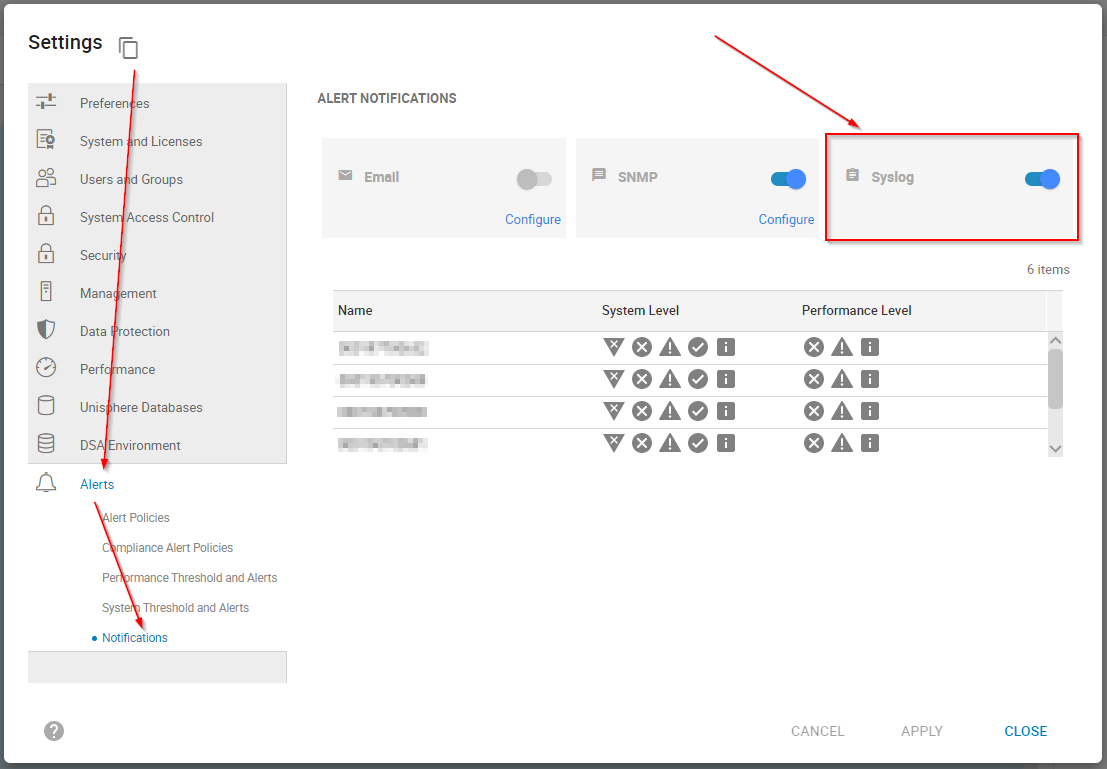
Figure 3: To trap array events.
The detailed settings explaining how to configure this standard syslog feature can be reviewed in How to configure syslog in embedded Unisphere for VMAX/PowerMax.
Go to the PowerMax Product Page on Dell Support > Knowledgebase Articles > PowerMax: InfoHub Product Documentation and Videos > Manage and Monitor Storage-Open Systems > Troubleshooting > Dell Events and Alerts for PowerMax and HYPERMAX User Guide to view helpful information about:
- Asynchronous Events
- Unisphere policy name - Alert ID mapping
Affected Products
Unisphere for PowerMaxArticle Properties
Article Number: 000206117
Article Type: How To
Last Modified: 09 Jan 2026
Version: 6
Find answers to your questions from other Dell users
Support Services
Check if your device is covered by Support Services.