How to Install Dell Data Protection Enterprise Edition Server
Summary: Learn the step-by-step basic installation process for Dell Data Protection Enterprise Edition Server.
This article applies to
This article does not apply to
This article is not tied to any specific product.
Not all product versions are identified in this article.
Instructions
Learn how to install Dell Data Protection Enterprise Edition Server.
Affected Products:
- Dell Data Protection Enterprise Edition Server
Affected Versions:
- v8.0.0 to 9.7.0
Warning:
- Before installation, ensure that the environment meets Dell Security Management Server System Requirements.
- SQL databases configured to use Windows Authentication must use the same Windows account to install Dell Security Management Server.
- Antivirus and anti-malware should be disabled while installing or upgrading the Dell Data Protection Enterprise Edition Server to avoid impacting Microsoft C++ runtime installers, Java activities (certificate creation and manipulation), and PostgreSQL modifications. Executables or scripts initiate all these items.
- As a workaround, exclude:
- <INSTALLATION PATH>
:\Dell\Enterprise Edition C:\Windows\Installer- The file path from which the installer is run.
- <INSTALLATION PATH>
- As a workaround, exclude:
Note:
- This article only covers a new backend deployment of Dell Data Protection Enterprise Edition Server.
- Client Services is required for more complex or custom deployments of Dell Data Protection Enterprise Edition Server. Client Service engagements can be purchased through your sales representative.
The process to install Dell Data Protection Enterprise Edition Server differs between versions.
Click the appropriate Dell Data Protection Enterprise Edition Server version for installation steps. For how to install the latest versions of Dell Security Management Server, reference How to Install Dell Security Management Server. For versioning information, reference How to Identify the Dell Data Security Server Version.
v9.5.0 to 9.7.0
- Right-click and Extract the server software.
 Note: For more information about how to download the server software, reference How to Download Dell Security Management Server.
 - From the installers directory of the extracted folder, copy
EnterpriseServerInstallKey.initoC:\Windows. Note: Optionally, the product key may be populated manually in Step 8.
 - Go to
Installers\Enterprise Server\x64and then double-clicksetup.exe.
- Select the language and then click OK.

- If any missing requirements are detected, click Install. Otherwise, go to Step 6.
 Note: For more information about system requirements, reference Dell Security Management Server System Requirements.
 - Click Next.

- Review the End User License Agreement (EULA). At the end of the EULA menu, select I accept the terms in the license agreement, and then click Next.

- Click Next.
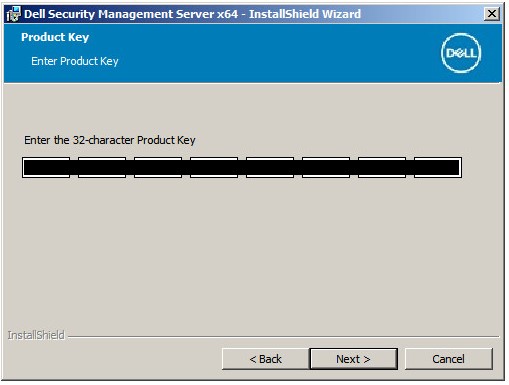 Note: The product key is autopopulated (Step 2).
 - Verify Back End Install (Full Enterprise Server Installation) is selected and then click Next.

- Optionally, Change the install directory and then click Next.

- Optionally, Change the server configuration file backup location from the default and then click Next.

- Select either:
- Import an existing certificate and then go to Step 13.
- Create a self-signed certificate and import it to key store and then go to Step 14.
 Note: This certificate is used to securely communicate data from the endpoint software to the server.
 - Browse to the path of the certificate to import and populate the Password of the certificate. Once finished, click Next. Go to Step 15.
 Note:
Note:- The certificate path and name will differ in your environment.
- For more information, reference How to Create a Domain or Third-Party Certificate for Dell Data Security.
- In the Create Self-Signed Certificate menu:
- Confirm the Fully-qualified Computer Name.
- Populate the Organization.
- Populate the Organizational Unit.
- Populate the City.
- Populate the State.
- Populate the Country as a two-letter abbreviation.
- Click Next and then go to Step 15.
 Note: All fields that are populated in the example above may differ in your environment.
 - Select either:
- Import an existing certificate and then go to Step 16.
- Create a self signed certificate and import it to key store and then go to Step 17.
 Note: This certificate is used for SSOS (Dell Encryption Enterprise for Server, formerly known as Dell Data Protection Server Encryption).
 - Browse to the path of the certificate to import and populate the Password of the certificate. Once finished, click Next. Go to Step 18.
 Note: The certificate path and name will differ in your environment.
 - In the Create Self-Signed Certificate menu:
- Confirm the Fully-qualified Computer Name.
- Populate the Organization.
- Populate the Organizational Unit.
- Populate the City.
- Populate the State.
- Populate the Country as a two-letter abbreviation.
- Click Next and then go to Step 18.
 Note: All fields that are populated in the example above may differ in your environment.
 - In the Back End Server Install Setup menu:
- Optionally, click Edit Hostnames and go to Step 19.
- Optionally, click Edit Ports and go to Step 20.
- Optionally, check Works with Front End and then populate the Front End Security Server hostname and Port.
- Click Next and go to Step 21.

- If Edit Hostnames was clicked (Step 18), optionally, change hostnames and then click OK to return to Step 18.
 Note:
Note:- The hostname that is used must match the server name that is referenced in the certificate (Step 12).
- The hostnames in the screenshot examples will differ in your environment.
- If Edit Ports was clicked (Step 18), optionally, change ports, click OK, and return to Step 18.
 Note:
Note:- It is highly recommended to only change ports when there is a conflict in your environment.
- Due to the complexity of the software, ports can only be modified during the installation process.
- In the Database Server menu:
- Populate a Database Server and, optionally, an Instance Name.
- Optionally, populate a port.
- Select either Windows authentication or SQL server authentication.
- If SQL server authentication was selected, populate a Login ID and Password.
- Populate the database catalog name.
- Click Next.
 Note:
Note:- If a port is not specified, the default SQL Server port of 1433 is used.
- Install-time credentials require the account chosen to have the sysadmin role assigned in SQL Server. For more information, reference How to Configure SQL for Dell Security Management Server.
- If a database server and authentication is populated, but a database catalog name is given that does not exist, the Dell Enterprise Server installer prompts to create that database for you. Click Yes to create the database, or No to return to Step 21.
- The database server and database catalog will differ in your environment.
- Populate a User name and Password for the service account Dell services will use to access SQL and then click Next.
 Note: If the database was created before the installation of Dell Security Management Server, the credentials that are populated here require
db_ownerrights. For more information, reference How to Configure SQL for Dell Security Management Server. - Click Install.

- Optionally, check Launch Remote Management Console and then click Finish.
 Note: Upon completion, the Administration Console must be configured. For more information, reference How to Configure the Dell Data Security Server Administration Console.
v9.4.0 to 9.4.1
- Right-click and Extract the server software.
 Note: For more information about how to download the server software, reference How to Download Dell Security Management Server.
 - From the extracted root folder, copy
EnterpriseServerInstallKey.initoC:\Windows. Note: Optionally, the product key may be populated manually in Step 8.
 - Go to
Installers\Enterprise Server\x64and then double-clicksetup.exe.
- Select the language and then click OK.

- If any missing requirements are detected, click Install. Otherwise, go to Step 6.
 Note: For more information about system requirements, reference Dell Security Management Server System Requirements.
 - Click Next.

- Review the End User License Agreement (EULA). At the end of the EULA menu, select I accept the terms in the license agreement, and then click Next.

- Click Next.
 Note: The product key is autopopulated (Step 2).
 - Verify Back End Install (Full Enterprise Server Installation) is selected and then click Next.

- Optionally, Change the install directory and then click Next.

- Optionally, Change the server configuration file backup location from the default and then click Next.

- Select either:
- Import an existing certificate and then go to Step 13.
- Create a self signed certificate and import it to key store and then go to Step 14.
 Note: This certificate is used to securely communicate data from the endpoint software to the server.
 - Browse to the path of the certificate to import and populate the Password of the certificate. Once finished, click Next. Go to Step 15.
 Note:
Note:- The certificate path and name will differ in your environment.
- For more information, reference How to Create a Domain or Third-Party Certificate for Dell Data Security.
- In the Create Self-Signed Certificate menu:
- Confirm the Fully-qualified Computer Name.
- Populate the Organization.
- Populate the Organizational Unit.
- Populate the City.
- Populate the State.
- Populate the Country as a two-letter abbreviation.
- Click Next and then go to Step 15.
 Note: All fields that are populated in the example above may differ in your environment.
 - Select either:
- Import an existing certificate and then go to Step 16.
- Create a self signed certificate and import it to key store and then go to Step 17.
 Note: This certificate is used for SSOS (Dell Encryption Enterprise for Server, formerly known as Dell Data Protection Server Encryption).
 - Browse to the path of the certificate to import and populate the Password of the certificate. Once finished, click Next. Go to Step 18.
 Note: The certificate path and name will differ in your environment.
 - In the Create Self-Signed Certificate menu:
- Confirm the Fully-qualified Computer Name.
- Populate the Organization.
- Populate the Organizational Unit.
- Populate the City.
- Populate the State.
- Populate the Country as a two-letter abbreviation.
- Click Next and then go to Step 18.
 Note: All fields that are populated in the example above may differ in your environment.
 - In the Back End Server Install Setup menu:
- Optionally, click Edit Hostnames and go to Step 19.
- Optionally, click Edit Ports and go to Step 20.
- Optionally, check Works with Front End and then populate the Front End Security Server hostname and Port.
- Click Next and go to Step 21.

- If Edit Hostnames was clicked (Step 18), optionally, change hostnames and then click OK to return to Step 18.
 Note:
Note:- The hostname that is used must match the server name that is referenced in the certificate (Step 12).
- The hostnames in the screenshot examples will differ in your environment.
- If Edit Ports was clicked (Step 18), optionally, change ports, click OK, and return to Step 18.
 Note:
Note:- It is highly recommended to only change ports when there is a conflict in your environment.
- Due to the complexity of the software, ports can only be modified during the installation process.
- In the Database Server menu:
- Populate a Database Server and, optionally, an Instance Name.
- Optionally, populate a Port.
- Select either Windows authentication or SQL server authentication.
- If SQL server authentication was selected, populate a Login ID and Password.
- Populate the database catalog name.
- Click Next.
 Note:
Note:- If a port is not specified, the default SQL Server port of 1433 is used.
- Install-time credentials require the account chosen to have the sysadmin role assigned in SQL Server. For more information, reference How to Configure SQL for Dell Security Management Server.
- If a database server and authentication is populated, but a database catalog name is given that does not exist, the Dell Enterprise Server installer prompts to create that database for you. Click Yes to create the database, or No to return to Step 21.
- The database server and database catalog will differ in your environment.
- Populate a User name and Password for the service account Dell services will use to access SQL and then click Next.
 Note: If the database was created before the installation of Dell Security Management Server, the credentials that are populated here require
db_ownerrights. For more information, reference How to Configure SQL for Dell Security Management Server. - Click Install.

- Optionally, check Launch Remote Management Console and then click Finish.
 Note: Upon completion, the Administration Console must be configured. For more information, reference How to Configure the Dell Data Security Server Administration Console.
v9.1.0 to 9.2.0
- Right-click and Extract the server software.
 Note: For more information about how to download the server software, reference How to Download Dell Security Management Server.
 - From the extracted root folder, copy
EnterpriseServerInstallKey.initoC:\Windows. Note: Optionally, the product key may be populated manually in Step 8.
 - Go to
Installers\Enterprise Server\<BIT>and then double-clicksetup.exe. Note:
Note:<BIT>= x64 or x86 - Select the language and then click OK.

- If any missing requirements are detected, click Install. Otherwise, go to Step 6.
 Note: For more information about system requirements, reference Dell Security Management Server System Requirements.
 - Click Next.

- Review the End User License Agreement (EULA). At the end of the EULA menu, select I accept the terms in the license agreement, and then click Next.

- Click Next.
 Note: The product key is autopopulated (Step 2).
 - Verify Back End Install (Full Enterprise Server Installation) is selected and then click Next.

- Optionally, Change the install directory and then click Next.

- Optionally, Change the server configuration file backup location from the default and then click Next.

- Select either:
- Import an existing certificate and then go to Step 13.
- Create a self signed certificate and import it to key store and then go to Step 14.
 Note: This certificate is used to securely communicate data from the endpoint software to the server.
 - Browse to the path of the certificate to import and populate the Password of the certificate. Once finished, click Next. Go to Step 15.
 Note:
Note:- The certificate path and name will differ in your environment.
- For more information, reference How to Create a Domain or Third-Party Certificate for Dell Data Security.
- In the Create Self-Signed Certificate menu:
- Confirm the Fully-qualified Computer Name.
- Populate the Organization.
- Populate the Organizational Unit.
- Populate the City.
- Populate the State.
- Populate the Country as a two-letter abbreviation.
- Click Next and then go to Step 15.
 Note: All fields that are populated in the example above may differ in your environment.
 - Select either:
- Import an existing certificate and then go to Step 16.
- Create a self signed certificate and import it to key store and then go to Step 17.
- Re-use SSL certificate for SSOS and then go to Step 18.
 Note:
Note:- This certificate is used for SSOS (Dell Encryption Enterprise for Server, formerly known as Dell Data Protection Server Encryption).
- If server encryption is not being used, Re-use SSL certificate for SSOS may be selected.
- Browse to the path of the certificate to import and populate the Password of the certificate. Once finished, click Next. Go to Step 18.
 Note: The certificate path and name will differ in your environment.
 - In the Create Self-Signed Certificate menu:
- Confirm the Fully-qualified Computer Name.
- Populate the Organization.
- Populate the Organizational Unit.
- Populate the City.
- Populate the State.
- Populate the Country as a two-letter abbreviation.
- Click Next and then go to Step 18.
 Note: All fields that are populated in the example above may differ in your environment.
 - In the Back End Server Install Setup menu:
- Optionally, click Edit Hostnames and go to Step 19.
- Optionally, click Edit Ports and go to Step 20.
- Optionally, check Works with Front End and then populate the Front End Security Server hostname and Port.
- Click Next and go to Step 21.

- If Edit Hostnames was clicked (Step 18), optionally, change hostnames and then click OK to return to Step 18.
 Note:
Note:- The hostname that is used must match the server name that is referenced in the certificate (Step 12).
- The hostnames in the screenshot examples will differ in your environment.
- If Edit Ports was clicked (Step 18), optionally, change ports, click OK, and return to Step 18.
 Note:
Note:- It is highly recommended to only change ports when there is a conflict in your environment.
- Due to the complexity of the software, ports can only be modified during the installation process.
- In the Database Server menu:
- Populate a Database Server and, optionally, an Instance Name.
- Optionally, populate a Port.
- Select either Windows authentication or SQL server authentication.
- If SQL server authentication was selected, populate a Login ID and Password.
- Populate the database catalog name.
- Click Next.
 Note:
Note:- If a port is not specified, the default SQL Server port of 1433 is used.
- Server authentication is SQL Server authentication.
- If server authentication is selected, go to Step 23.
- The credentials chosen to connect with must have the sysadmin role assigned in SQL Server. For more information, reference How to Configure SQL for Dell Security Management Server.
- If a database server and authentication is populated, but a database catalog name is given that does not exist, the Dell Enterprise Server installer prompts to create that database for you. Click Yes to create the database, or No to return to Step 21.
- The database server and database catalog will differ in your environment.
- If Windows authentication was used (Step 21), populate a User name and Password for the domain service account to access SQL and then click Next.
 Note:
Note:- If (SQL) server authorization was chosen, this screen will not be presented. Go to Step 23.
- If the database was created before the installation of Dell Security Management Server, the credentials that are populated here require
db_ownerrights. For more information, reference How to Configure SQL for Dell Security Management Server.
- Click Install.

- Optionally, check Launch Remote Management Console and then click Finish.
 Note: Upon completion, the Administration Console must be configured. For more information, reference How to Configure the Dell Data Security Server Administration Console.
v9.0.0
- Right-click and Extract the server software.
 Note: For more information about how to download the server software, reference How to Download Dell Security Management Server.
 - From the extracted root folder, copy
EnterpriseServerInstallKey.initoC:\Windows. Note: Optionally, the product key may be populated manually in Step 8.
 - Go to
Installers\Enterprise Server\<BIT>and then double-clicksetup.exe. Note:
Note:<BIT>= x64 or x86 - Select the language and then click OK.

- If any missing requirements are detected, click Install. Otherwise, go to Step 6.
 Note: For more information about system requirements, reference Dell Security Management Server System Requirements.
 - Click Next.

- Review the End User License Agreement (EULA). At the end of the EULA menu, select I accept the terms in the license agreement, and then click Next.

- Click Next.
 Note: The product key is autopopulated (Step 2).
 - Verify Back End Install (Full Enterprise Server Installation) is selected and then click Next.

- Optionally, Change the install directory and then click Next.

- Optionally, Change the server configuration file backup location from the default and then click Next.

- Select either:
- Import an existing certificate and then go to Step 13.
- Create a self signed certificate and import it to key store and then go to Step 14.
 Note: This certificate is used to securely communicate data from the endpoint software to the server.
 - Browse to the path of the certificate to import and populate the Password of the certificate. Once finished, click Next. Go to Step 15.
 Note:
Note:- The certificate path and name will differ in your environment.
- For more information, reference How to Create a Domain or Third-Party Certificate for Dell Data Security.
- In the Create Self-Signed Certificate menu:
- Confirm the Fully-qualified Computer Name.
- Populate the Organization.
- Populate the Organizational Unit.
- Populate the City.
- Populate the State.
- Populate the Country as a two-letter abbreviation.
- Click Next and then go to Step 15.
 Note: All fields that are populated in the example above may differ in your environment.
 - In the Back End Server Install Setup menu:
- Optionally, click Edit Hostnames and go to Step 16.
- Optionally, click Edit Ports and go to Step 17.
- Optionally, check Works with Front End and then populate the Front End Security Server hostname and Port.
- Click Next and go to Step 18.

- If Edit Hostnames was clicked (Step 15), optionally, change hostnames and then click OK to return to Step 15.
 Note:
Note:- The hostname that is used must match the server name that is referenced in the certificate (Step 12).
- The hostnames in the screenshot examples will differ in your environment.
- If Edit Ports was clicked (Step 15), optionally, change ports, click OK, and return to Step 15.
 Note:
Note:- It is highly recommended to only change ports when there is a conflict in your environment.
- Due to the complexity of the software, ports can only be modified during the installation process.
- In the Database Server menu:
- Populate a Database Server and, optionally, an Instance Name.
- Select either Windows authentication or Server authentication.
- If Server authentication was selected, populate a Login ID and Password.
- Populate the database catalog name.
- Click Next.
 Note:
Note:- Server authentication is SQL server authentication.
- If server authentication is selected, go to Step 20.
- The credentials chosen to connect with must have the sysadmin role assigned in SQL Server. For more information, reference How to Configure SQL for Dell Security Management Server.
- If a database server and authentication is populated, but a database catalog name is given that does not exist, the Dell Enterprise Server installer prompts to create that database for you. Click Yes to create the database, or No to return to Step 18.
- The database server and database catalog will differ in your environment.
- If Windows authentication was used (Step 18), populate a User name and Password for the domain service account to access SQL and then click Next.
 Note:
Note:- If (SQL) server authorization was chosen, this screen will not be presented. Go to Step 20.
- If the database was created before the installation of Dell Security Management Server, the credentials that are populated here require
db_ownerrights. For more information, reference How to Configure SQL for Dell Security Management Server.
- Click Install.

- Optionally, check Launch Remote Management Console and then click Finish.
 Note: Upon completion, the Administration Console must be configured. For more information, reference How to Configure the Dell Data Security Server Administration Console.
v8.3.1 to 8.5.1
- Right-click and Extract the server software.
 Note: For more information about how to download the server software, reference How to Download Dell Security Management Server.
 - From the extracted root folder, copy
EnterpriseServerInstallKey.initoC:\Windows. Note: Optionally, the product key may be populated manually in Step 8.
 - Go to
Installers\Enterprise Server\<BIT>and then double-clicksetup.exe. Note:
Note:<BIT>= x64 or x86 - Select the language and then click OK.

- If any missing requirements are detected, click Install. Otherwise, go to Step 6.
 Note: For more information about system requirements, reference Dell Security Management Server System Requirements.
 - Click Next.

- Review the End User License Agreement (EULA). At the end of the EULA menu, select I accept the terms in the license agreement, and then click Next.

- Click Next.
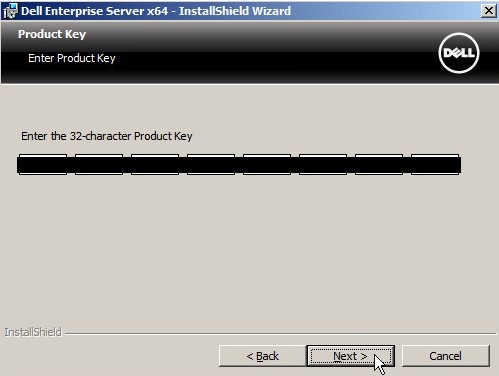 Note: The product key is autopopulated (Step 2).
 - Optionally, Change the install directory and then click Next.

- Verify Complete is selected and then click Next.

- Optionally, change host names or ports being used from the defaults and then click Next.
 Note:
Note:- It is highly recommended to only change ports when there is a conflict in your environment.
- Due to the complexity of the software, ports can only be modified during the installation process.
- The hostname that is used must match the server name that is referenced in the certificate (Step 14).
- The hostnames in the screenshot examples will differ in your environment.
- Optionally, change host names or ports being used from the defaults and then click Next.
 Note:
Note:- It is highly recommended to only change ports when there is a conflict in your environment.
- Due to the complexity of the software, ports can only be modified during the installation process.
- The hostname that is used must match the server name that is referenced in the certificate (Step 14).
- The hostnames in the screenshot examples will differ in your environment.
- If a prompt about IIS is received, click Ignore to continue.

- Select either:
- Import an existing certificate and then go to Step 15.
- Create a self signed certificate and import it to key store and then go to Step 16.
 Note: This certificate is used to securely communicate data from the endpoint software to the server.
 - Browse to the path of the certificate to import and populate the Password of the certificate. Once finished, click Next. Go to Step 17.
 Note:
Note:- The certificate path and name will differ in your environment.
- For more information, reference How to Create a Domain or Third-Party Certificate for Dell Data Security.
- In the Set up a Certificate Authority (CA) menu:
- Confirm the Fully-qualified Computer Name.
- Populate the Organization.
- Populate the Organizational Unit.
- Populate the City.
- Populate the State.
- Populate the Country as a two-letter abbreviation.
- Click Next and then go to Step 17.
 Note: All fields that are populated in the example above may differ in your environment.
 - Click Install.

- Click Finish.
 Note: Upon completion, the Dell Data Protection Enterprise Edition Server must be configured. For more information, reference How to Configure the Dell Security Management Server.
v8.3.0
- Right-click and Extract the server software.
 Note: For more information about how to download the server software, reference How to Download Dell Security Management Server.
 - Copy
EnterpriseServerInstallKey.initoC:\Windows. Note:
Note:- To obtain
EnterpriseServerInstallKey.ini, call Dell Data Security Support. For how to contact support, reference Dell Data Security International Support Phone Numbers. - Optionally, the product key may be populated manually in Step 8.
- To obtain
- Go to
\Enterprise Server\<BIT>and then double-clicksetup.exe. Note:
Note:<BIT>= x64 or x86 - Select the language and then click OK.

- If any missing requirements are detected, click Install. Otherwise, go to Step 6.
 Note: For more information about system requirements, reference Dell Security Management Server System Requirements.
 - Click Next.

- Review the End User License Agreement (EULA). At the end of the EULA menu, select I accept the terms in the license agreement, and then click Next.

- Click Next.
 Note: The product key is autopopulated (Step 2).
 - Optionally, Change the install directory and then click Next.

- Verify Complete is selected and then click Next.

- Optionally, change host names or ports being used from the defaults and then click Next.
 Note:
Note:- It is highly recommended to only change ports when there is a conflict in your environment.
- Due to the complexity of the software, ports can only be modified during the installation process.
- The hostname that is used must match the server name that is referenced in the certificate (Step 14).
- The hostnames in the screenshot examples will differ in your environment.
- Optionally change host names or ports being used from the defaults and then click Next.
 Note:
Note:- It is highly recommended to only change ports when there is a conflict in your environment.
- Due to the complexity of the software, ports can only be modified during the installation process.
- The hostname that is used must match the server name that is referenced in the certificate (Step 14).
- The hostnames in the screenshot examples will differ in your environment.
- If a prompt about IIS is received, click Ignore to continue.

- Select either:
- Import an existing certificate and then go to Step 15.
- Create a self signed certificate and import it to key store and then go to Step 16.
 Note: This certificate is used to securely communicate data from the endpoint software to the server.
 - Browse to the path of the certificate to import and populate the Password of the certificate. Once finished, click Next. Go to Step 17.
 Note:
Note:- The certificate path and name will differ in your environment.
- For more information, reference How to Create a Domain or Third-Party Certificate for Dell Data Security.
- In the Set up a Certificate Authority (CA) menu:
- Confirm the Fully-qualified Computer Name.
- Populate the Organization.
- Populate the Organizational Unit.
- Populate the City.
- Populate the State.
- Populate the Country as a two-letter abbreviation.
- Click Next and then go to Step 17.
 Note: All fields that are populated in the example above may differ in your environment.
 - Click Install.

- Click Finish.
 Note: Upon completion, the Dell Data Protection Enterprise Edition Server must be configured. For more information, reference How to Configure the Dell Security Management Server.
v8.0.0 to 8.1.0
- Right-click and Extract the server software.
 Note: For more information about how to download the server software, reference How to Download Dell Security Management Server.
 - Copy
EnterpriseServerInstallKey.initoC:\Windows. Note:
Note:- To obtain
EnterpriseServerInstallKey.ini, call Dell Data Security Support. For how to contact support, reference Dell Data Security International Support Phone Numbers. - Optionally, the product key may be populated manually in Step 8.
- To obtain
- Go to
Installers\Enterprise Server\<BIT>and then double-clicksetup.exe. Note:
Note:<BIT>= x64 or x86 - Select the language and then click OK.

- If any missing requirements are detected, click Install. Otherwise, go to Step 6.
 Note: For more information about system requirements, reference Dell Security Management Server System Requirements.
 - Click Next.

- Review the End User License Agreement (EULA). At the end of the EULA menu, select I accept the terms in the license agreement, and then click Next.

- Click Next.
 Note: The product key is autopopulated (Step 2).
 - Optionally, Change the install directory and then click Next.

- Verify Complete is selected and then click Next.

- Optionally, change host names or ports being used from the defaults and then click Next.
 Note:
Note:- It is highly recommended to only change ports when there is a conflict in your environment.
- Due to the complexity of the software, ports can only be modified during the installation process.
- The hostname that is used must match the server name that is referenced in the certificate (Step 14).
- The hostnames in the screenshot examples will differ in your environment.
- Optionally, change host names or ports being used from the defaults and then click Next.
 Note:
Note:- It is highly recommended to only change ports when there is a conflict in your environment.
- Due to the complexity of the software, ports can only be modified during the installation process.
- The hostname that is used must match the server name that is referenced in the certificate (Step 14).
- The hostnames in the screenshot examples will differ in your environment.
- If a prompt about IIS is received, click Ignore to continue.

- Select either:
- Import an existing certificate and then go to Step 15.
- Create a self signed certificate and import it to key store and then go to Step 16.
 Note: This certificate is used to securely communicate data from the endpoint software to the server.
 - Browse to the path of the certificate to import and populate the Password of the certificate. Once finished, click Next. Go to Step 17.
 Note:
Note:- The certificate path and name will differ in your environment.
- For more information, reference How to Create a Domain or Third-Party Certificate for Dell Data Security.
- In the Set up a Certificate Authority (CA) menu:
- Confirm the Fully-qualified Computer Name.
- Populate the Organization.
- Populate the Organizational Unit.
- Populate the City.
- Populate the State.
- Populate the Country as a two-letter abbreviation.
- Click Next and then go to Step 17.
 Note: All fields that are populated in the example above may differ in your environment.
 - Click Install.

- Click Finish.
 Note: Upon completion, the Dell Data Protection Enterprise Edition Server must be configured. For more information, reference How to Configure the Dell Security Management Server.
To contact support, reference Dell Data Security International Support Phone Numbers.
Go to TechDirect to generate a technical support request online.
For additional insights and resources, join the Dell Security Community Forum.
Affected Products
Dell EncryptionArticle Properties
Article Number: 000196616
Article Type: How To
Last Modified: 20 Oct 2025
Version: 5
Find answers to your questions from other Dell users
Support Services
Check if your device is covered by Support Services.