VxRail: Models to Dell PowerEdge Models

Summary: List of VxRail Models to their respective Dell PowerEdge model platform

This article applies to This article does not apply to This article is not tied to any specific product. Not all product versions are identified in this article.

Instructions

This article is to serve to better help identify the underlining PowerEdge hardware of VxRail whether to identify which drivers to pull down from Dell support or flashing the Personality Module if there is system board replacements.

16G

VxRail (Intel)VE-660 / (AMD)VE-6625
PowerEdge R660
Front View of a VxR (Intel)VE660 / (AMD)VE-6625 
Rear view of a VxR (Intel)VE660 / (AMD)VE-6625 
Notable features
  • Both Intel and AMD-based systems share the same PowerEdge model number R660
  • Suffix VE denotes a combination of V(VDI) and E(everything) as the VE-660 can be outfield with GPUs 
  • This can be shipped with all flash or hybrid storage configurations
  • Utilizes dual M.2 Boss card in RAID 1 as ESXI boot device
  • BOSS M.2 drives are hot-swappable from the rear of the system located on the rear left of the system
  • BOSS M.2 drives are installed on a "card carrier" in which is inserted from the rear into a BOSS module slot
  • iDRAC and rear USB and VGA are built into a Rear IO(RIO) module and are removable or replaceable
  • Outside of NICs provided by the OCP module a removable 2x1gb Light Out Management(LOM) is included driven by a BCM5720 chipset
  • Utilizes HBA 355e as the Storage Controller
  • Utilizes iDRAC9
  • Utilizes OCP 3.0


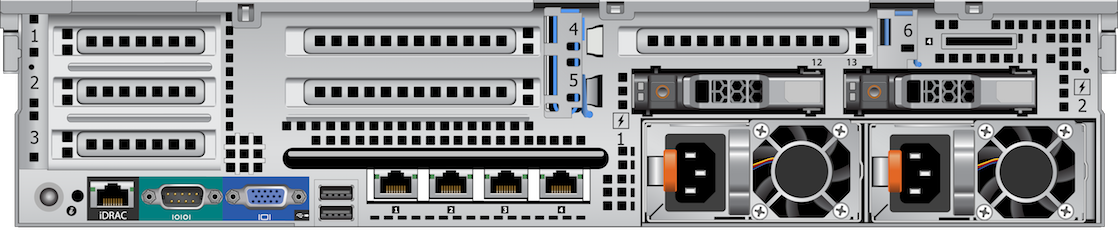
VxRail (Intel)VP-760/ (AMD)VP-7625
(Intel) PowerEdge R760 / (AMD) PowerEdge R7625
Front View of a VxR (Intel)VP-760/ (AMD)VP-7625 
Rear view of a VxR (Intel)VP-760/ (AMD)VP-7625 
Rear view of VxR (Intel)VP-760/ (AMD)VP-7625 with disk bay 
Notable features
  • In non-GPU configurations(pictured bottom) a rear 4x2.5" flex bay is added allowing an additional of 4 more drives to be installed allowing up to 28 drives
  • In the rear flex bay configuration there are an additional 3x hot-swappable fans installed in the rear flex bay
  • Only shipped in all flash-based storage
  • Suffix VE denotes the combination of V(VDI) and P(Performance)
  • Utilizes dual M.2 Boss card in RAID 1 as ESXI boot device
  • BOSS M.2 drives are hot-swappable from the rear of the system located in the middle above Half Height PCI slot 6(with rear flex bay) above Half Height PCI slot 3(W/O rear flex bay)
  • BOSS M.2 drives are installed on a "card carrier" in which is inserted from the rear into a BOSS module slot
  • iDRAC and rear USB and VGA are built into a Rear IO(RIO) module and are removable or replaceable
  • Outside of NICs provided by the OCP module a removable 2x1gb Light Out Management(LOM) is included driven by a BCM5720 chipset
  • Cache Drives are located at the rear of the system installed in the 2.5in rear flex bay
  • Utilizes HBA 355e as its Storage Controller
  • No IDSDM remote RASR only or pre-prepared RASR USB needed for RASR
  • Utilizes iDRAC9
  • Utilizes OCP 3.0


15G

VxRail E660(F)(N) / (Intel)E665(F)(N) / (AMD)E665(F)(N)
PowerEdge R650 / (Intel)PowerEdge R6515 / (AMD)PowerEdge R6525
Front view of a VxR (Intel)E660(F)(N) / (AMD)E665(F)(N) 
Rear view of a VxR (Intel)E660(F)(N) / (AMD)E665(F)(N) 
Notable features
  • Utilizes dual M.2 Boss card in RAID 1 as ESXI boot device
  • BOSS M.2 drives are hot-swappable from the rear of the system located on the rear left of the system
  • BOSS M.2 drives are installed on a "card carrier" in which is inserted from the rear into a BOSS module slot
  • iDRAC and rear USB and VGA are built into a Rear IO(RIO) module and are removable or replaceable
  • Outside of NICs provided by the OCP module a removable 2x1gb Light Out Management(LOM) is included driven by a BCM5720 chipset
  • Utilizes HBA 355e as its Storage Controller
  • Utilizes iDRAC9
  • Utilizes OCP 3.0


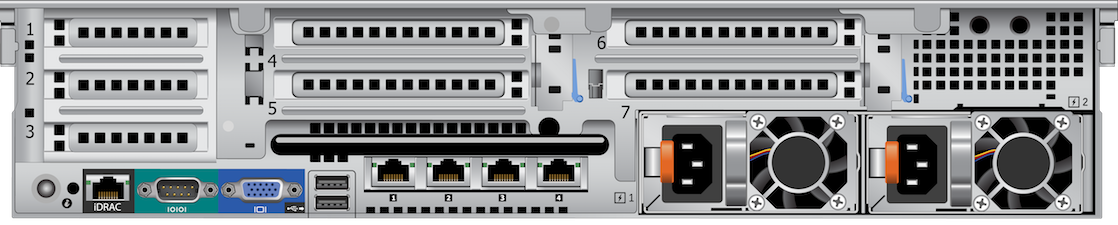
VxRail (Intel)(P)(V)670(F)(N) / (AMD)(P)675(F/N)
(Intel) PowerEdge R750 / (AMD) PowerEdge R7515
Front view of a VxR (Intel)(P)(V)670(F)(N) / (AMD)(P)675(F/N) 
Rear view of VxR (Intel)(P)(V)670(F)(N) / (AMD)(P)675(F/N) 
Notable features
  • AMD chassis are only available for the all-flash NVMe (F/N) P series
  • Utilizes dual M.2 Boss card in RAID 1 as ESXI boot device
  • BOSS M.2 drives are hot-swappable from the rear of the system located in the middle above Half Height PCI slot 3
  • BOSS M.2 drives are installed on a "card carrier" in which is inserted from the rear into a BOSS module slot
  • iDRAC and rear USB and VGA are built into a Rear IO(RIO) module and are removable or replaceable
  • Outside of NICs provided by the OCP module a removable 2x1gb Light Out Management(LOM) is included driven by a BCM5720 chipset
  • Utilizes HBA 355e as its Storage Controller
  • No IDSDM remote RASR only or pre-prepared RASR USB needed for RASR
  • Utilizes iDRAC9
  • Utilizes OCP 3.0


VxRail S670
PowerEdge R750(LFF)
Front view of a VxR S670 
Rear view of a VxR S670 
Notable features
  • Extra 3x hot-swappable fans installed in the rear flex bay
  • Utilizes dual M.2 Boss card in RAID 1 as ESXI boot device
  • BOSS M.2 drives are hot-swappable from the rear of the system
  • iDRAC and rear USB and VGA are built into a Rear IO(RIO) module and are removable or replaceable
  • Outside of NICs provided by the OCP module a removable 2x1gb Light Out Management(LOM) is included driven by a BCM5720 chipset
  • Cache Drives are located at the rear of the system installed in the 2.5in rear flex bay
  • Utilizes HBA 355e as its Storage Controller
  • No IDSDM remote RASR only or pre-prepared RASR USB needed for RASR
  • Utilizes iDRAC9
  • Utilizes OCP 3.0


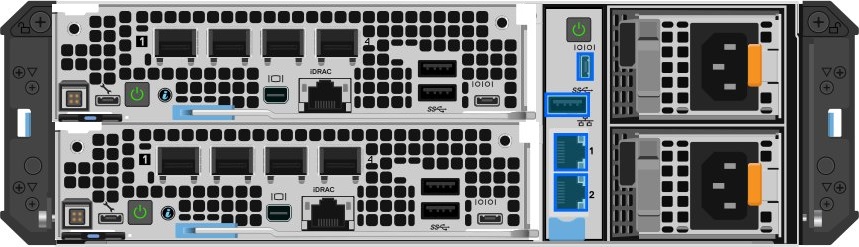
Chassis: VxRail VD-4000Z/PowerEdge XR4000Z
Compute sled: VxRail VD-4510c/PowerEdge XR4510c
View of 1u  VxR VD-4510c/Poweredge XR4510c 
 
Notable features
  • Chassis format VD-4000Z (Stackable)
  • VxRail supports the following compute sled configurations:
    ● Up to two VxRail VD-4510c 1U compute sleds
    ● One VxRail VD-4520c 2U compute sled
    One optional server (witness sled VxRail VD-4000w) is supported (located right side of the system next to redundant PSU)
  • Storage is internal to node as an internal m.2 riser module suppling up to 4 m.2 slots no front loading drives replacing drives nesstates power off and removal of affected compute sled
  • Compute sled network uses an embedded to system board intel E823-C LOM coming in either 4-port 25GB or 10GB networking
  • System fans are part of the compute sled, fan replacement would require power down and removing affected compute sled
  • Utilizes dual M.2 Boss riser as ESXI boot device
  • BOSS M.2 drives are not hot-swappable requiring to power down and remove affected compute node from chassis
  • The suffix C denotes compute sled and W denotes witness
  • Utilizes iDRAC9
 
Chassis: VxRail VD-4000R/PowerEdge XR4000R
Compute sled: VxRail VD-4520c/PowerEdge XR4520c
view of 2u VxR VD-4520c/Poweredge XR4520c 
 
Notable features
  • Chassis format VD-4000R (Rackable)
  • The following compute sled configurations are supported:
    ● Up to four VxRail VD-4510c 1U compute sleds, or
    ● Up to two VxRail VD-4520c 2U compute sleds, or
    ● Up to two VxRail VD-4510c 1U and one VxRail VD-4520c 2U compute sleds
    One optional nano-server (witness sled VxRail VD-4000w) is supported  
  • VD-4520c compute sleds offer PCI riser to provide 2x FH PCI gen3 x16 slots
  • Storage is internal to node as an internal m.2 riser module and up to 2x PCI to m.2 adapters each suppling 4 m.2 slots (up to total of 12 available slots in system) no front loading drives replacing drives nesstates power off and removal of affected compute sled
  • Compute sled network uses an embedded to system board intel E823-C LOM coming in either 4-port 25GB or 10GB networking
  • System fans are part of the compute sled, fan replacement would require power down and removing affected compute sled
  • Utilizes dual M.2 Boss riser as ESXI boot device
  • BOSS M.2 drives are not hot-swappable requiring to power down and remove affected compute node from chassis
  • The suffix C denotes compute sled and W denotes witness
  • Utilizes iDRAC9
 
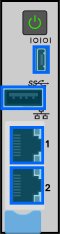
Witness sled: VxRail VD-4000W/PowerEdge XR4000W
View of VxR VD-4000W/Poweredge XR4000W witness appliance
Notable features
  • Self-contained system designed to be used as hardware vSAN witness appliance for VD-4000 solutions
  • Intel Atom 3508 quad core cpu
  • 2 port gigabit Ethernet supplied by an intel i210 chipset
  • 1 USB A 3.0 port and 1 micro USB system console port RS232
  • If a bootable USB device is found inserted to the USB port witness boots into it first
  • Specialized RASR iso required to re-image and using RASRISO-to-RASRUSB to image RASR ISO to USB drive
  • 16gb soldered DDR4 RAM
  • Single 960GB m.2 SSD for ESXi boot device


14G

VxRail E560(F)(N)
PowerEdge R640
Front view of a VxR E560(F)(N) Rear view of a VxR E560(F)(N) 
Notable features
  • Utilizes dual M.2 Boss card in RAID 1 as ESXI boot device
  • Utilizes HBA 330 as its Storage Controller
  • Utilizes iDRAC9
  • Utilizes dual SD card(IDSM) RASR environment
  • Can have a NVMe Cache disk using expansion card
  • N series uses all NVMe drives


VxRail D560(F)
PowerEdge XR2

Front view of a VxR D560(F) 
Rear view of a VxR D560(F) 
Notable features
  • Utilizes dual M.2 Boss card in RAID 1 as ESXI boot device
  • Utilizes HBA 330 as its Storage Controller
  • Utilizes iDRAC9
  • Utilizes dual SD card(IDSM) RASR environment
  • Can have a NVMe Cache disk using expansion card
  • N series uses all NVMe drives


VxRail (P-V) 570(F)
PowerEdge R740XD(SFF)
Front view of a VxR (P-V) 570(F) Rear view of a VxR (P-V) 570(F) 
Notable features
  • Utilizes dual M.2 Boss card in RAID 1 as ESXI boot device
  • Utilizes HBA 330 as its Storage Controller
  • Utilizes iDRAC9
  • Utilizes dual SD card(IDSM) RASR environment
  • Only the P series can have a NVMe based cache drive using expansion card


VxR S570(F)
PowerEdge R740XD(LFF)
Front view of a VxR S570(F) Rear view of a VxR S570(F) 
Notable features
  • Utilizes dual M.2 Boss card in RAID 1 as ESXI boot device
  • Utilizes HBA 330 as its Storage Controller
  • Utilizes dual SD card(IDSM) RASR environment
  • Utilizes iDRAC9


VxRail G560(F)
PowerEdge C6420
Front view of a VxR G560(F) 
Rear view of a VxR G560(F) 
Notable features
  • Utilizes a single SATA based M.2 card on a PCI x16 riser as the ESXI boot device unlike the RAID 1 dual m.2 drives in other 14G models
  • HBA 330
  • Has only a single SD card RASR environment
  • Can have a NVMe based cache disk
  • Utilizes an Open Compute Project (OCP) card for NIC
  • Utilizes iDRAC9


VxRail P580N
PowerEdge R840
Front view of a VxR P580N 
Rear view of a VxR P580N 
Notable features
  • Utilizes dual M.2 Boss card in RAID 1 as ESXI boot device
  • N series uses all NVMe drives
  • Utilizes dual SD card(IDSM) RASR environment
  • Utilizes iDRAC9


13G

VxRail E460(F)
PowerEdge R630
Front view of a VxR E460(F) Rear view of a VxR E460(F) 
Notable features
  • Utilizes satadom as the ESXI boot device
  • Utilizes HBA 330 as its Storage Controller
  • Utilizes dual SD card(IDSM) RASR
  • Utilizes iDRAC8


VxRail (P-V) 470
PowerEdge R730
Front view VxR (P-V) 470 Rear view VxR (P-V) 470 
Notable features
  • Utilizes satadom as the ESXI boot device
  • Utilizes HBA 330 as its Storage Controller
  • Utilizes dual SD card(IDSM) RASR environment
  • Utilizes iDRAC8


VxRail S470
PowerEdge R730XD LFF
Front view of a VxR S470 Rear view of a VxR S470 
Notable features
  • Utilizes satadom as the ESXI boot device
  • Utilizes HBA 330 as its Storage Controller
  • Utilizes dual SD card(IDSM) RASR environment
  • Utilizes iDRAC8


Additional Information

Prefixes:
D: 1U VxRail models designed for industrial durability in mind ideal for offsite Remote Office Branches(ROBO).
E: 1U VxRail models are ideal for small and remote deployments designed for entry-level VDI or graphics workloads.
G: 2U VxRail models that offer a compute dense platform designed for general-purpose workloads.
P: 2U VxRail models that are performance intensive in memory or I/O intensive workloads offering high core counts per processor, and processor clock speed.
V: 2U VxRail models that offer GPU hardware for graphics-intensive desktops and workloads optimized for VDI
S: 2U VxRail models that offer a storage-dense solution to capacity-demanding applications such as Microsoft SharePoint, Microsoft Exchange, big data, analytics, and video surveillance.

Suffixes:
F: Denotes the model is all Flash.
N: Used with the F suffix denotes that the Flash storage is all NVMe based.
VE: Denotes a combination of V(VDI) and E(everything) 
VP: Denotes a combination of V(VDI) and P(Performance)

Affected Products

VxRail, VxRail 460 and 470 Nodes, VxRail Appliance Series, VxRail G Series Nodes, VxRail D Series Nodes, VxRail D560, VxRail D560F, VxRail E Series Nodes, VxRail E460, VxRail E560, VxRail E560F, VxRail E560N, VxRail E660, VxRail E660F, VxRail E660N , VxRail E665, VxRail E665F, VxRail E665N, VxRail G560, VxRail G560F, VxRail P Series Nodes, VxRail P470, VxRail P570, VxRail P570F, VxRail P580N, VxRail P670F, VxRail P670N, VxRail P675F, VxRail P675N, VxRail S Series Nodes, VxRail S470, VxRail S570, VxRail S670, VxRail V Series Nodes, VxRail V470, VxRail V570, VxRail V570F, VXRAIL V670F, VxRail VD-4000R, VxRail VD-4000W, VxRail VD-4000Z, VxRail VD-4510C, VxRail VD-4520C, VxRail VE-660, VxRail VE-6615, VxRail VP-760, VxRail VP-7625 ...
Article Properties
Article Number: 000023374
Article Type: How To
Last Modified: 14 Nov 2025
Version:  8
Find answers to your questions from other Dell users
Support Services
Check if your device is covered by Support Services.