Increase Power Efficiency Without Diminishing Performance
Prowess Consulting examined the value of current-generation Dell™ PowerEdge™ servers powered by Intel® Xeon® 6 processors for decreasing server energy consumption while maintaining performance.

Executive Summary
Data centers face growing challenges: rising energy costs, tightening sustainability mandates, and escalating performance demands driven by AI, analytics, and cloud workloads. Organizations must modernize infrastructure to reduce power consumption and operational costs without sacrificing throughput. This study evaluates the power-efficiency benefits of upgrading from 16th generation Dell™ PowerEdge™ servers to 17th generation PowerEdge models powered by Intel® Xeon® 6 processors.
For this study, commissioned by Dell Technologies, Prowess Consulting modeled four representative use cases using the Dell™ Enterprise Infrastructure Planning Tool (EIPT) under consistent performance conditions. Our objective was to isolate energy savings in the following areas: general compute, dense compute, edge/small and medium-sized business (SMB), and CPU-based AI inferencing. Key findings from the study include:
- Significant power reduction across all use cases:1
- General compute: Up to 13% lower power draw, saving more than $237,000 annually for a one-third refresh of a 5,000-server fleet
- Dense compute: Up to 20% power reduction, saving more than $74,000 annually for a similar refresh
- Edge/SMB: Up to 42% power reduction, saving more than $79,000 annually
- CPU-based AI inferencing: Up to 33% power reduction, saving more than $170,000 annually
- Environmental impact: These efficiency gains translate into substantial CO2 reductions—up to 622 metric tons annually for AI-inferencing scenarios with a one-third fleet refresh.
- ISO-power advantage: In dense compute environments, 17th generation PowerEdge servers deliver double the core count within the same power envelope, which can enable workload consolidation without increasing energy consumption.
- Feature enhancements: Advanced telemetry, automation tools, and thermal design improvements in 17th generation PowerEdge servers further support cost containment, sustainability, and compliance goals.
Modernizing with 17th generation PowerEdge servers and Intel Xeon 6 processors can offer a path to lower operating expenses, reduced emissions, and future-ready performance. Business results from these findings indicate that organizations can achieve lower operating expenses (OpEx), better alignment to their environmental, social, and governance (ESG) and regulatory mandates, and scalable performance.
Introduction
IT leaders face mounting pressure as data centers grow more complex. Energy costs rise while budgets stay flat. Sustainability mandates tighten across industries. At the same time, workloads demand more performance for AI, analytics, and cloud services. These forces converge to create a difficult balancing act: deliver more computing power while reducing operational costs and environmental impact.
Cost containment remains a top priority. Power and cooling expenses consume a growing share of IT budgets. Sustainability adds another layer of urgency, with carbon-reduction targets becoming non-negotiable. Performance expectations climb as businesses adopt AI-driven applications and real-time analytics. Compliance requirements compound the challenge, forcing IT teams to meet strict security and reporting standards without slowing innovation. Together, these pressures make infrastructure modernization not just desirable, but essential.
Study Scope
This study examines power-consumption differences between two generations of PowerEdge servers: 16th generation and 17th generation. We evaluated both generations under consistent performance conditions to isolate energy-efficiency gains. Our analysis also highlights improvements delivered by Intel Xeon 6 processors compared to previous generations of Intel Xeon processors.
For this study, we modeled four representative workload categories to reflect real-world deployment scenarios:
- General compute workloads represent balanced enterprise applications and virtualization.
- Dense compute focuses on high-density deployments optimized for rack space and throughput.
- Edge and SMB configurations address cost-sensitive environments such as remote offices and small businesses.
- AI inferencing workloads require low-latency, high-throughput processing without GPU acceleration, relying on CPU-based performance.
Each use case includes a side-by-side comparison of 16th generation and 17th generation systems. We held performance constant across configurations to ensure that power-consumption differences were the only variable we measured. This approach provides insight into efficiency gains without compromising workload throughput.
The Dell EIPT served as the foundation for modeling power consumption. EIPT is a Dell Technologies platform that estimates energy use, cooling requirements, and cost implications based on server configurations. We selected EIPT for this study because it offers detailed, scenario-based modeling validated against Dell Technologies engineering data. Using this tool ensures that our findings reflect realistic operational conditions and align with industry best practices.
The Case for Infrastructure Modernization
Modernization is no longer optional. It is a strategic imperative for organizations that want to stay competitive and compliant. Data centers face rising energy costs, sustainability mandates, and escalating performance demands. At the same time, IT leaders must control operational expenses and prepare for workloads that push traditional infrastructure to its limits. This section explains why now is the right time to act.
Why Now?
Energy costs continue to climb, driving up operational expenses for data centers worldwide. Cooling systems add to the burden, consuming significant power to maintain thermal stability. And sustainability mandates further amplify the challenge. Organizations must meet carbon-reduction targets and report emissions accurately or risk penalties and reputational damage.
At the same time, performance demands are also accelerating. AI and machine learning (ML) workloads require high throughput and low latency. Data analytics and business intelligence platforms process massive datasets in real time. Cloud and hybrid deployments add complexity, forcing infrastructure to scale quickly without sacrificing efficiency. These trends make legacy systems a liability.
Modern servers deliver the efficiency and agility needed to meet these demands while reducing cost and environmental impact.
Modernization Drivers
Regulatory compliance is tightening across industries. Emerging regulations demand accurate reporting of energy use and emissions. Infrastructure accountability is no longer optional. Organizations must prove that their data centers meet sustainability and security standards or face fines and loss of trust.
Operational efficiency and business agility are equally critical. Modern servers reduce power draw and cooling requirements, freeing up budget and rack space. Automation and integrated management tools streamline operations, cutting manual tasks and reducing errors. These gains translate into lower operating costs and faster response times.
Agility and scalability complete the picture. Infrastructure must adapt quickly to changing business needs, whether that means supporting new workloads or expanding capacity. Refresh cycles offer an opportunity to align IT capabilities with strategic goals.
Upgrading to energy-efficient servers positions organizations to meet performance demands while staying compliant and competitive.
How PowerEdge Servers and Intel Xeon 6 Processors Align with Modernization Goals
17th generation PowerEdge servers are built for efficiency and scalability. Their design reduces energy consumption and optimizes thermal performance. These servers also support advanced telemetry and management tools, enabling IT teams to monitor and tune infrastructure proactively. This combination helps organizations cut power costs while maintaining predictable performance.
Intel Xeon 6 processors deliver higher performance per watt compared to previous generations of processors. Architectural improvements enhance support for AI, analytics, and cloud-native workloads. These processors provide the compute power needed for modern applications without driving up energy use. Together, PowerEdge servers and Intel Xeon 6 processors create a platform that meets sustainability goals while delivering the agility and performance businesses demand.
Study Methodology
We designed this study to compare power consumption between 16th generation and 17th generation PowerEdge servers under equal performance conditions. Our goal was to isolate energy efficiency gains without introducing performance bias.
Power Metrics
For our study, two measurements defined power use: input power in watts and cooling requirements in British thermal units (BTUs). These values provide a clear picture of both electrical draw and thermal impact.
Cost Modeling
We calculated energy costs using a standard rate of $0.14 per kilowatt-hour. We annualized estimates for each configuration to show long-term financial impact.
Environmental Impact
We modeled emissions using the same standard factor of 0.399 kilograms of CO2 per kilowatt-hour as used by the Dell EIPT. This approach translates energy savings into sustainability benefits that align with corporate ESG goals.
Comparative Analysis: Power Consumption and Costs per Use Case
To understand the real-world impact of modernization, we compared power consumption and cost across four common deployment scenarios: general compute, dense compute, edge and SMB, and CPU-based AI inferencing. Each scenario reflects a distinct set of business priorities, from balanced enterprise workloads to high-density environments and specialized AI tasks. By holding performance constant, these comparisons isolate energy-efficiency gains and their effect on operating costs. The results reveal where organizations can achieve the greatest savings while keeping throughput steady.
General Compute
Upgrading to 17th generation PowerEdge servers can cut power draw by up to 13% compared to using 16th generation PowerEdge systems. For organizations refreshing one-third of a 5,000-server fleet, that efficiency translates into more than $237,000 in annual energy savings and a reduction of 675 metric tons of CO2 emissions.1 These gains support both cost-control and sustainability goals while maintaining predictable performance.
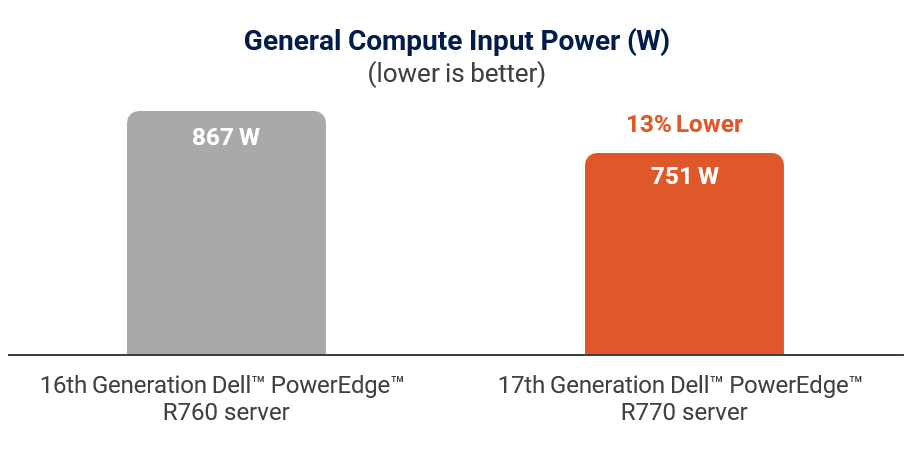
Figure 1 | General-compute use case comparative input power (see Appendix A for complete figures)
Dense Compute
Dense compute workloads see an up to 20% reduction in power consumption with 17th generation PowerEdge servers, compared to 16th generation PowerEdge servers. Applied to a one-third refresh of a 2,000-server fleet, the savings reach more than $74,000 annually and avoid 212 metric tons of CO2 emissions.1 Lower energy use in high-density environments helps free budget for growth while reducing environmental impact.
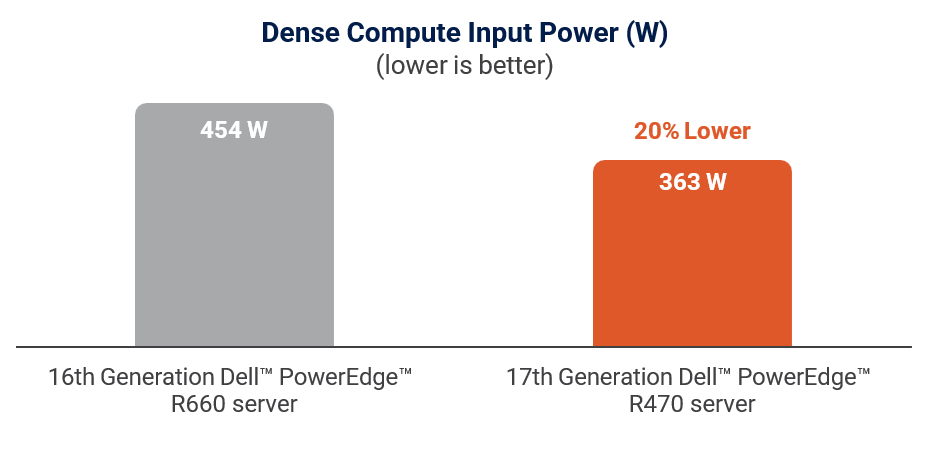
Figure 2 | Dense-compute use case comparative input power (see Appendix A for complete figures)
Edge/SMB
For edge and SMB deployments, power efficiency improves by up to 42% with 17th generation PowerEdge servers, compared to 16th generation PowerEdge servers. Refreshing one-third of a 1,200-server fleet yields more than $79,000 in yearly energy savings and cuts 227 metric tons of CO2 emissions.1 These improvements matter most in cost-sensitive environments where every watt counts.
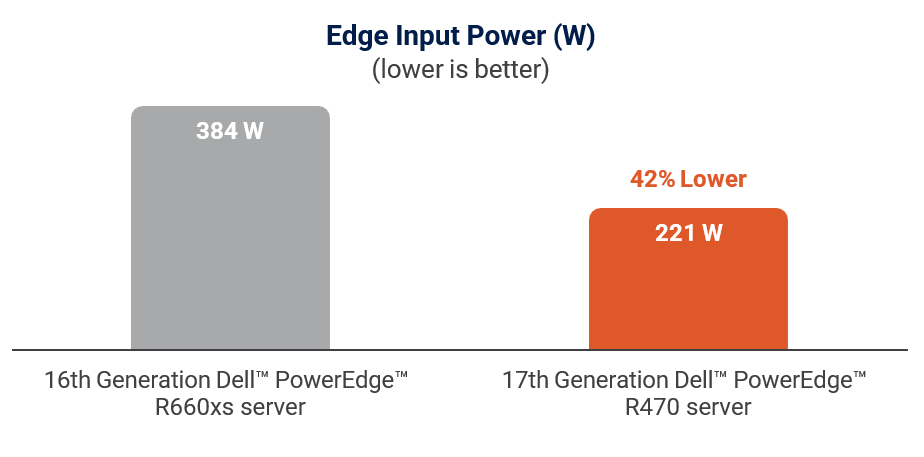
Figure 3 | Edge and SMB use case comparative input power (see Appendix A for complete figures)
CPU-Based AI Inferencing
AI inferencing workloads based on CPUs benefit from up to 33% lower power consumption. A one-third refresh of an 800-server fleet saves more than $170,000 per year and prevents 622 metric tons of CO2 emissions.1 These results show that modern infrastructure can deliver high-throughput AI performance without driving up energy costs.
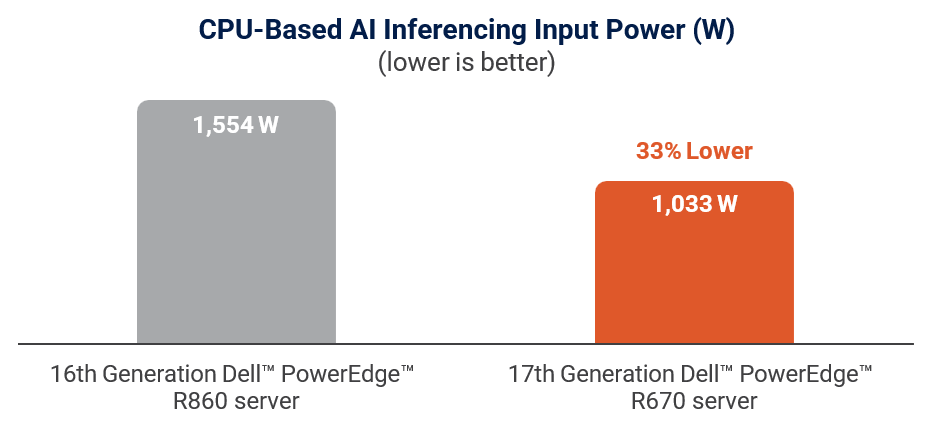
Figure 4 | CPU-based AI-inference use case comparative input power (see Appendix A for complete figures)
ISO-Power Comparative Analysis: Dense Compute
Dense-compute environments prioritize throughput per rack unit. In this scenario, we compared a 16th generation PowerEdge R660 server to a 17th generation PowerEdge R470 server under an ISO-power condition. Both systems draw about the same power—539 watts for the prior generation and 523 watts for the current generation.1
The difference lies in compute density. The 17th generation PowerEdge server delivers twice the number of cores within that same power envelope. This improvement means organizations can consolidate workloads without increasing energy consumption. For high-density deployments, that translates into more virtual machines (VMs), faster analytics, and greater scalability—all without expanding power budgets or cooling requirements.
Additional 17th Generation PowerEdge Features
These features reinforce the modernization goal of delivering higher performance and efficiency while meeting sustainability and compliance requirements across diverse workloads:
- Telemetry and power management—17th generation PowerEdge servers provide advanced telemetry for power and thermal data. This visibility enables precise energy monitoring and proactive tuning, helping organizations meet efficiency targets and sustainability mandates.
- Automation and systems management—Integrated tools such as the Integrated Dell™ Remote Access Control 10 (iDRAC10) and Dell™ OpenManage™ Enterprise simplify routine tasks. Automated configuration, firmware updates, and monitoring reduce manual effort and improve operational consistency, which is critical for dense compute and edge deployments.
- Thermal design innovations—Enhanced airflow and optional liquid cooling improve thermal performance in high-density environments. These features lower cooling costs and maintain predictable performance under demanding workloads, supporting cost containment and environmental goals.
- Security and compliance enhancements—Built-in silicon root of trust and secure boot capabilities strengthen infrastructure security. These measures help organizations align with emerging compliance requirements without adding complexity to operations.
Modernization for Business Impact
This study confirms that modernization delivers measurable benefits. Across all use cases, 17th generation PowerEdge servers powered by Intel Xeon 6 processors reduce power consumption significantly compared to prior-generation systems. These reductions translate into lower operating costs and meaningful emissions savings when applied to real-world fleet refresh scenarios. In dense compute environments, the ISO-power analysis highlights another advantage: organizations can double core counts without increasing power draw in certain cases.
Beyond efficiency, modernization improves thermal performance and operational agility. Enhanced energy management and advanced cooling options help contain costs and support sustainability mandates. At the same time, these platforms can scale to meet the demands of AI, analytics, and hybrid cloud workloads, ensuring that infrastructure investments align with long-term business priorities and regulatory requirements.
For organizations seeking cost control, ESG alignment, and future-ready performance, the data points to a clear path forward. Refreshing infrastructure with 17th generation PowerEdge servers and Intel Xeon 6 processors enables higher performance per watt, lower OpEx, and reduced environmental impact—all without compromising workload throughput or business agility.
Appendix A: Detailed Study Results
The following tables present the raw data used in this analysis, including power consumption, cost savings, and emissions reductions.
Table A1 | Percent reduction in power consumption (16th generation Dell™ PowerEdge™ servers versus 17th generation PowerEdge servers)
|
Use Case |
16th Generation Dell™ PowerEdge™ Server Input Power (W) |
17th Generation Dell™ PowerEdge™ Server Input Power (W) |
Percent Reduction |
|
General Compute |
867 W |
751 W |
13% lower |
|
Dense Compute |
454 W |
363 W |
20% lower |
|
Edge/SMB |
384 W |
221 W |
42% lower |
|
CPU-Based AI Inferencing |
1,554 W |
1,033 W |
33% lower |
Table A2 | Annual savings and emissions reduction (assuming one-third annual fleet refresh)1
|
Use Case |
Annual kWh Saved per Server |
Annual Cost Saved per Server |
CO2 Saved per Server (kg) |
Servers Refreshed |
Fleet Annual Savings ($) |
Fleet CO2 Reduction (metric tons) |
|
General Compute |
1,016 kWh |
$142 |
405 kg |
1,667 |
$237,114 |
675 t |
|
Dense Compute |
797 kWh |
$112 |
318 kg |
667 |
$74,423 |
213 t |
|
Edge/SMB |
1,427 kWh |
$200 |
569 kg |
400 |
$79,912 |
228 t |
|
CPU-Based AI Inferencing |
4,563 kWh |
$639 |
1,821 kg |
267 |
$170,564 |
622 t |
Appendix B: Detailed System Configurations
The tables in this appendix detail the configurations for each server evaluated in this study. Specifications include form factor, processor, memory, storage, power supply, and BIOS settings to ensure transparency and reproducibility.
General Compute
Table A3 | General compute use case configurations
|
Component |
17th Generation Dell™ PowerEdge™ R770 Server Details |
16th Generation Dell™ PowerEdge™ R760 Server Details |
|
Form Factor |
2U rack |
2U rack |
|
Processor |
Intel® Xeon® 6740P, 2.1 GHz, 48 cores/96 threads, 288 MB cache, Intel® Turbo Boost Technology, 270 W thermal design power (TDP) |
Intel® Xeon® Platinum 8592+, 1.9 GHz, 64 cores/ 128 threads, 320 MB cache, Intel® Turbo Boost Technology, 350 W TDP |
|
Memory |
16 x 32 GB RDIMM, DDR5-6,400, dual rank |
16 x 32 GB RDIMM, DDR5-5,600, dual rank |
|
Storage |
1 x 480 GB solid-state drive (SSD) Serial ATA (SATA) read-intensive, 6 Gbps, 2.5-inch hot-plug |
2 x 480 GB SSD SATA read-intensive, 6 Gbps, 2.5-inch hot-plug |
|
Power Supply |
Dual, fully redundant (1+1), hot-plug MHS power supply, 1,100 W mixed mode (MM) |
Dual, fully redundant (1+1), hot-plug power supply, 1,400 W MM |
|
BIOS Setting |
Power-saving Dell™ Active Power Controller |
Power-saving Dell™ Active Power Controller |
|
Product Carbon Footprint (PCF) |
Dense Compute
Table A4 | Dense compute use case configurations
|
Specification |
17th Generation Dell™ PowerEdge™ R470 Server Details |
16th Generation Dell™ PowerEdge™ R660 Server Details |
|
Form Factor |
1U rack |
1U rack |
|
Processor Details |
Intel® Xeon® 6521P, 2.6 GHz, 24 cores/48 threads, 144 MB cache, Intel® Turbo Boost Technology, 225 W TDP |
Intel® Xeon® Silver 4510, 2.4 GHz, 12 cores/24 threads, 30 MB cache, Intel® Turbo Boost Technology, 150 W TDP |
|
Memory |
8 x 32 GB RDIMM, DDR5-6,400, dual rank |
16 x 16 GB RDIMM, DDR5-4,800, single rank |
|
Storage |
1 x 480 GB SSD SATA read-intensive, 6 Gbps, 2.5-inch hot-plug |
2 x 480 GB SSD SATA read intensive, 6 Gbps, 2.5-inch hot-plug |
|
Power Supply |
Dual, non-redundant (2+0), hot-plug MHS power supply, 800 W MM |
Dual, fully redundant (1+1), hot-plug power supply, 1,100 W titanium |
|
BIOS Setting |
Power-saving Dell™ Active Power Controller |
Power-saving Dell™ Active Power Controller |
|
Product Carbon Footprint (PCF) |
Edge/SMB
Table A5 | Edge/SMB use case configurations
|
Component |
17th Generation Dell™ PowerEdge™ R470 Server Details |
16th Generation Dell™ PowerEdge™ R660xs Server Details |
|
Form Factor |
1U rack |
1U rack |
|
Processor |
Intel® Xeon® 6505P, 2.2 GHz, 12 cores/24 threads, 48 MB cache, Intel® Turbo Boost Technology, 150 W TDP |
Intel® Xeon® Silver 4410Y, 2.0 GHz, 12 cores/ 24 threads, 30 MB cache, Intel® Turbo Boost Technology, 150 W TDP |
|
Memory |
2 x 16 GB RDIMM, DDR5-6,400, single rank |
2 x 16 GB RDIMM, DDR5-5,600, single rank |
|
Storage |
1 x 480 GB SSD SATA read-intensive, 6 Gbps, 2.5-inch hot-plug |
1 x 480 GB SSD SATA read-intensive, 6 Gbps, 2.5-inch hot-plug |
|
Power Supply |
Dual, non-redundant (2+0), hot-plug MHS power supply, 800 W MM |
Dual, fault-tolerant redundant (1+1), hot-plug power supply, 800 W MM |
|
BIOS Setting |
Power-saving Dell™ Active Power Controller |
Power-saving Dell™ Active Power Controller |
|
Product Carbon Footprint (PCF) |
CPU-Based AI Inferencing
Table A6 | AI inferencing use case configurations
|
Specification |
17th Generation Dell™ PowerEdge™ R670 Server Details |
16th Generation Dell™ PowerEdge™ R860 Server Details |
|
Form Factor |
1U rack |
2U rack |
|
Processor Details |
Intel® Xeon® 6730P, 2.5 GHz, 32 cores/64 threads, 288 MB cache, Intel® Turbo Boost Technology, 250 W TDP |
Intel® Xeon® Gold 6448H, 2.4 GHz, 32 cores/ 64 threads, 60 MB cache, Intel® Turbo Boost Technology, 250 W TDP |
|
Memory |
32 x 64 GB RDIMM, DDR5-6,400, dual rank |
32 x 64 GB RDIMM, DDR5-5,600, dual rank |
|
Storage |
1 x 480 GB SSD SATA mixed-use, 6 Gbps, 2.5-inch hot-plug |
1 x 480 GB SSD SATA read-intensive, 6 Gbps, 2.5-inch hot-plug |
|
Power Supply |
Dual, fully redundant (1+1), hot-plug power supply, 1,500 W MM |
Dual, fully redundant (1+1), hot-plug power supply, 2,400 W MM |
|
BIOS Setting |
Performance BIOS setting |
Performance BIOS setting |
|
Product Carbon Footprint (PCF) |
ISO-Power Dense Compute
Table A7 | ISO-power dense compute use case configurations
|
Specification |
17th Generation Dell™ PowerEdge™ R470 Server Details |
16th Generation Dell™ PowerEdge™ R660 Server Details |
|
Form Factor |
1U rack |
1U rack |
|
Processor Details |
Intel® Xeon® 6761P, 2.5 GHz, 64 cores/128 threads, 330 MB cache, Intel® Turbo Boost Technology, 350 W TDP |
Intel® Xeon® Gold 6426Y, 2.5 GHz, 16 cores/32 threads, 37.5 MB cache, Intel® Turbo Boost Technology, 185 W TDP |
|
Memory |
8 x 32 GB RDIMM, DDR5-6,400, dual rank |
16 x 16 GB RDIMM, DDR5-4,800, single rank |
|
Storage |
1 x 480 GB SSD SATA read-intensive, 6 Gbps, 2.5 inch hot-plug |
2 x 480 GB SSD SATA read-intensive, 6 Gbps, 2.5-inch hot-plug |
|
Power Supply |
Dual, non-redundant (2+0), hot-plug MHS power supply, 800 W MM |
Dual, fully redundant (1+1), hot-plug power supply, 1,100 W Titanium |
|
BIOS Setting |
Power-saving Dell™ Active Power Controller |
Power-saving Dell™ Active Power Controller |
|
Product Carbon Footprint (PCF) |
Appendix C: EIPT Modeling Parameters and Assumptions
This analysis used the Dell EIPT to model power, thermal, and acoustic characteristics for each server configuration. EIPT provides conservative estimates intended for facilities planning and energy cost projections. We applied the following parameters and assumptions consistently across all scenarios:
- Input voltage: 220 V AC
- Ambient temperature: 25°C
- Power utilization effectiveness (PUE): 1.0 (IT load only)
- Annual operating hours: 8,760 (continuous operation)
- Energy cost: $0.14 per kilowatt-hour
- Emissions factor: 0.399 kg CO2 per kilowatt-hour
- Lifecycle assumption: 1 year in order to annualize calculations
- Workload utilization: Based on EIPT workload profiles (transactional or computational)
- Cooling and acoustic estimates: Derived from EIPT thermal modeling at specified airflow and temperature rise values
- Power supply efficiency: As specified in each configuration (Titanium or MM)
Note that EIPT outputs are approximate and intended for planning purposes only. Actual results may vary based on workload mix, environmental conditions, and system tuning.
For more information on EIPT methodology and tools, visit the Dell EIPT website.
Endnotes
1 See Appendix A for details. Calculated via Dell™ Enterprise Infrastructure Planning Tool (EIPT) assuming an average US commercial electricity price of $0.14/kWh per the US Energy Information Administration as of August 2025 (latest month published). “Electric Power Monthly.” Accessed November 2025.
Legal Notices and Disclaimers
The analysis in this document was done by Prowess Consulting and commissioned by Dell Technologies.
Results have been simulated and are provided for informational purposes only. Any difference in system hardware or software design or configuration may affect actual performance.
Prowess and the Prowess logo are trademarks of Prowess Consulting, LLC. Copyright © 2026 Prowess Consulting, LLC. All rights reserved.
Other trademarks are the property of their respective owners.