Let's automate
While there are several networking automation techniques in the industry, this blog discusses bare metal provisioning (BMP). This is a solution that optimizes deployment by automatically provisioning the hardware (networking switches) using a pre-defined configuration and Dell networking operating system images with standard protocols, such as dynamic host configuration protocol (DHCP) and common file transfer mechanisms.
BMP aims to address the typical challenges to the traditional IT model, including the following:
- Compliance
- Compatibility
- Concern across difference version of firmware and hardware for new application or development
- Security vulnerabilities
- Support for lifecycle management of networking hardware
How does BMP work?
BMP consists of three components including:
- Bare metal (hardware – BIOS with POST)
- System bootloader
- Network operating system
Bare metal is hardware, bootloader is an (ONIE) that loads and starts the boot time task of a network operating system into working memory, the network operating system is the software component that acts as an interface between the dell switch hardware components and the end user. DHCP and file transfer service to provide OS image and pre-defined configuration (installer) to the Dell switches over the network.
The process of the BMP includes:
- When an ONIE-enable network switches boots for the first time, the boot loader launches the kernel and starts the ONIE discovery and execution (ODE) application.
- The ODE uses several methods (such as local file, DHCP, IPv6 neighbors, mDNS/DNS-SD) to locate and download (via HTTP/TFTP/FTP) an OS image and pre-defined configuration once the installer is found.
- The ODE starts the installer, which provisions the switches.
The reference of network operating system to bare metal provisioning includes the following:
- Dell SmartFabric OS10
- SONIC to Enterprise SONiC Distribution by Dell Technologies
- Third party applications
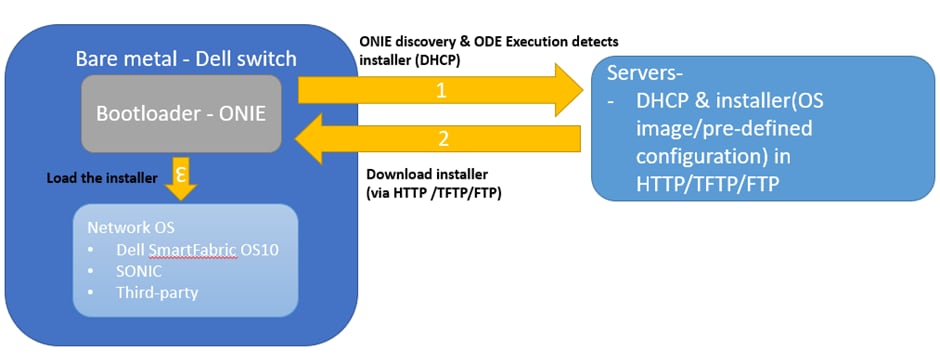
Figure 1. Components of bare metal provisioning process
With BMP, IT can adopt an open network hardware ecosystem that enables end users to choose different network operating systems without worrying about the proprietary requirement from a single vendor for scalable, cost-effective, application integration, and efficiency.
The following list provides an overview to benefit of adopting BMP:
- Reduces the time to install and configure the network device with pre- and post-configuration scripts for automation for mass deployment
- Helps eliminate configuration errors and ensure consistent configurations.
- Adopts open-source system, an open network operating system to diversify application ecosystem.
- Disaggregates software and hardware
Additional resources
Overview — Open Network Install Environment documentation (opencomputeproject.github.io)
Overview — Open Network Install Environment documentation (opencomputeproject.github.io)