How to Modify Policy in Dell Encryption Personal
摘要: Learn how to modify policies in Dell Encryption Personal (formerly Dell Data Protection Personal Edition) by using these instructions.
本文适用于
本文不适用于
本文并非针对某种特定的产品。
本文并非包含所有产品版本。
说明
This article provides steps to modify policies in Dell Encryption Personal (formerly Dell Data Protection Personal Edition).
Affected Products:
- Dell Encryption Personal
- Dell Data Protection Personal Edition
Affected Platforms:
- Windows
When Dell Encryption Personal is initially activated, a policy template must be chosen to complete activation. Policy templates contain a default set of policy settings that work together. After activation, the policy template may require modification to:
- Provide exclusions for software.
- Adhere to new security standards.
- Troubleshoot the endpoint.
Policy templates are to be used as a baseline to be customized to your environment.
Warning: Modifying policy templates or applying custom policy settings may impact both the scope of encrypted data and how it is encrypted. Dell Technologies recommends contacting Dell ProSupport with any questions before making modifications. For more information, reference Dell Data Security International Support Phone Numbers.
Note:
- The Encryption Administrator Password is required to make any policy modifications.
- A storage device (outside of the endpoint with Dell Encryption Personal installed) is required to back up the encryption keys.
The steps to modify policies differ between v8.15.0 and Later and v8.0.0 to 8.13.X. Click the appropriate client version for specific steps to modify the policy. For more information about versioning, reference How to Identify the Dell Encryption Enterprise or Dell Encryption Personal Version.
v8.15.0 and Later
Modify policies by either changing the policy Template or by applying Custom changes to the template. Click the appropriate method for more information.
Template
- Log in to the Windows computer.
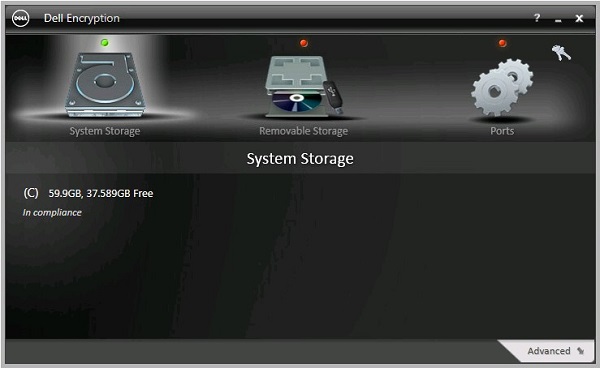
- In the Windows system tray, right-click the Dell Encryption icon and then select Open Dell Encryption.

- Click Advanced in the bottom right.
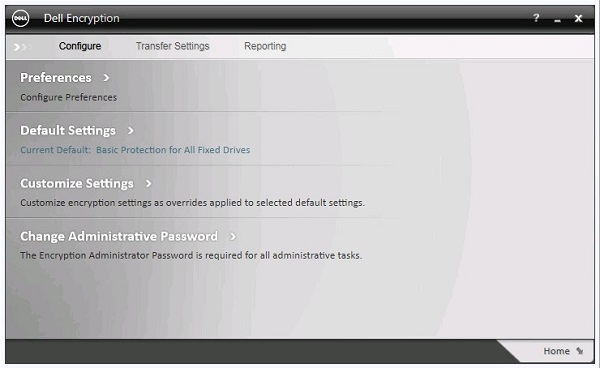
- Click Default Settings.
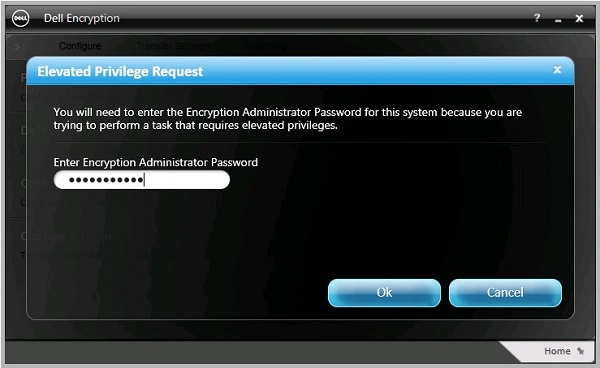
- Populate the Encryption Administrator Password and then click OK.
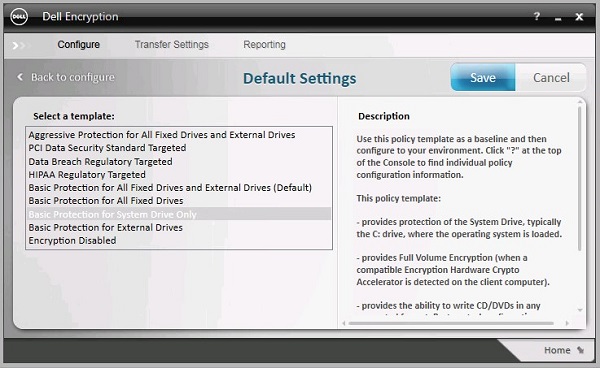
- From the Default Settings user interface (UI):
- Select a policy template.
- Click Save.
- Click Back to configure.
 Note: For more information about policy templates, reference Policy Templates in Dell Encryption Personal.
 - In the bottom-right, click Home.
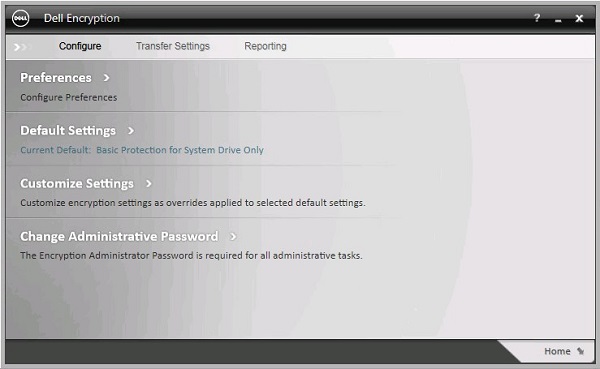
- Back up the encryption keys.
 Note: For more information, reference How to Manually Back Up Encryption Keys in Dell Encryption Personal.
Custom
- Log in to the Windows computer.
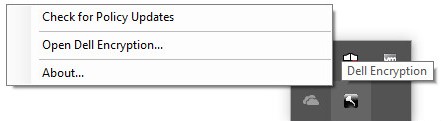
- In the Windows system tray, right-click the Dell Encryption icon and then select Open Dell Encryption.
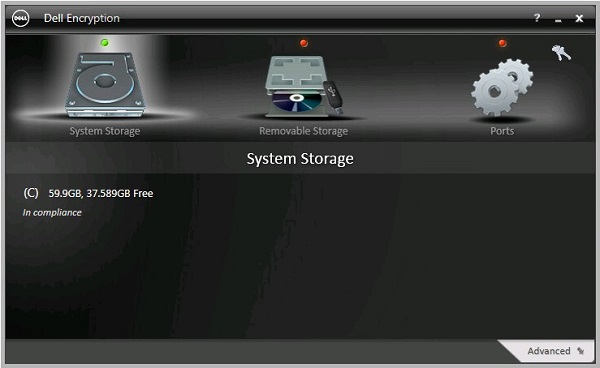
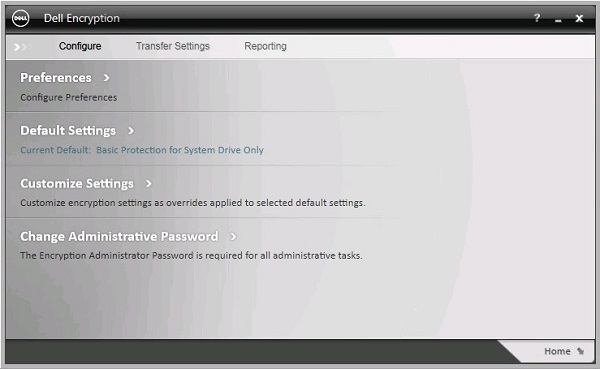
- Click Advanced in the bottom right.
- Click Customize Settings.
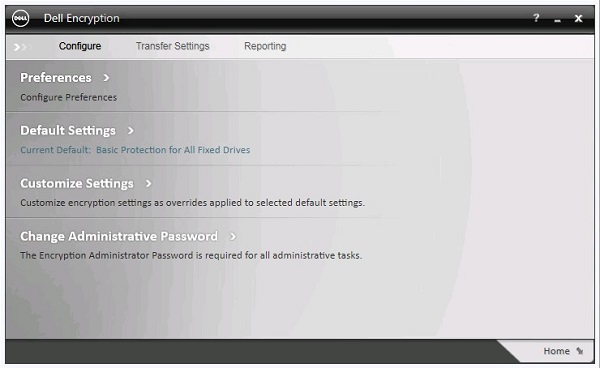
- Populate the Encryption Administrator Password and then click OK.
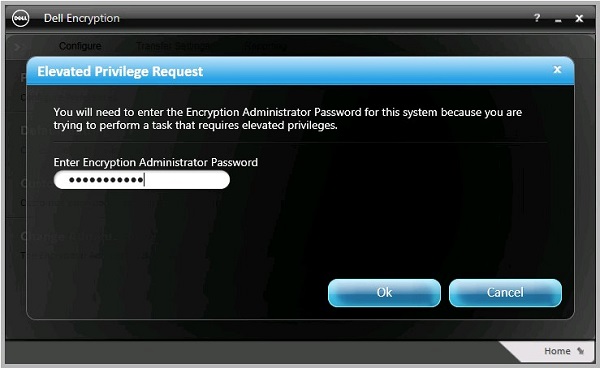
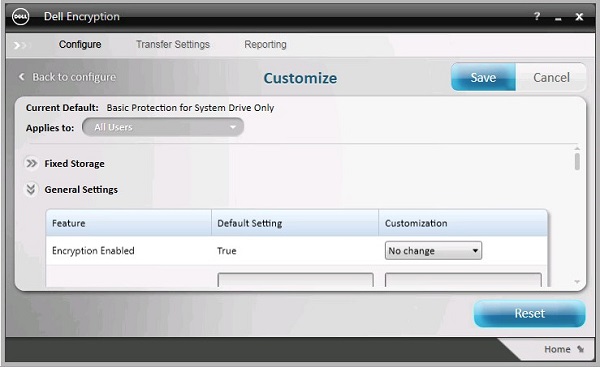
- From the Customize user interface (UI):
- Modify the appropriate Customization column policies.
- Click Save.
- Click Back to configure.
 Warning:
- If customizing a text box policy instead of a drop-down policy, ensure that all text from the Default Setting is copied into the Customization box.
- Incompatible policy customizations may lead to errors or loss of functionality.
- For detailed policy definitions, reference the help file.
- For assistance with policy conflicts, contact Dell Data Security International Support. For more information, reference Dell Data Security International Support Phone Numbers.
Note: To reset customized policies to the default policy template, click Reset. - In the bottom-right, click Home.
- Back up the encryption keys.
 Note: For more information, reference How to Manually Back Up Encryption Keys in Dell Encryption Personal.
v8.0.0 to 8.13.X
Modify policies by either changing the policy Template or by applying Custom changes to the template. Click the appropriate method for more information.
Template
- Log in to the Windows computer.
- In the Windows system tray, right-click the Dell Data Protection Encryption icon and then select Open Dell Data Protection Encryption.
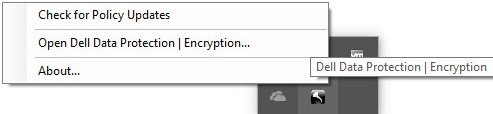
- Click advanced in the bottom right.
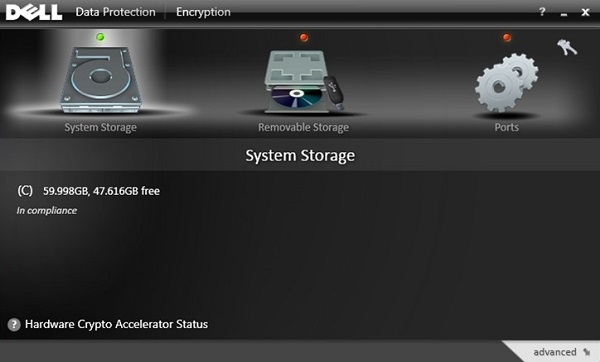
- Click Default Settings.
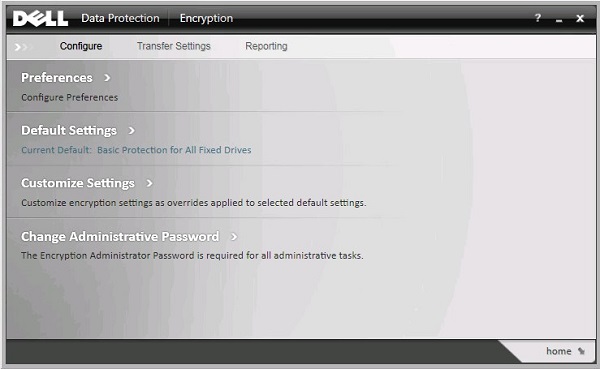
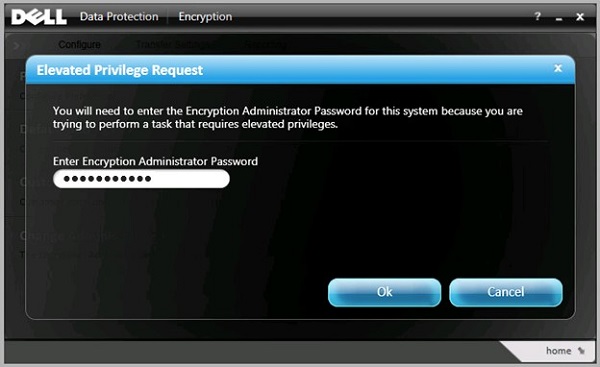
- Populate the Encryption Administrator Password and then click OK.
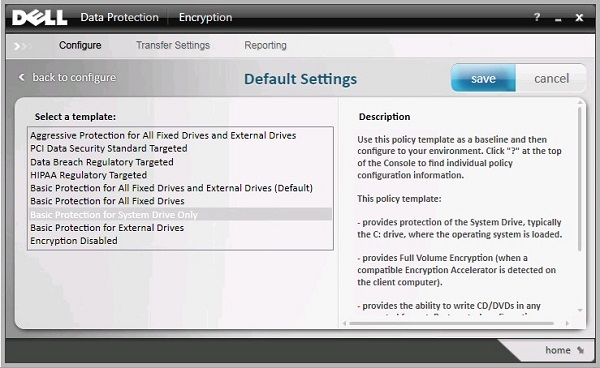
- From the Default Settings user interface (UI):
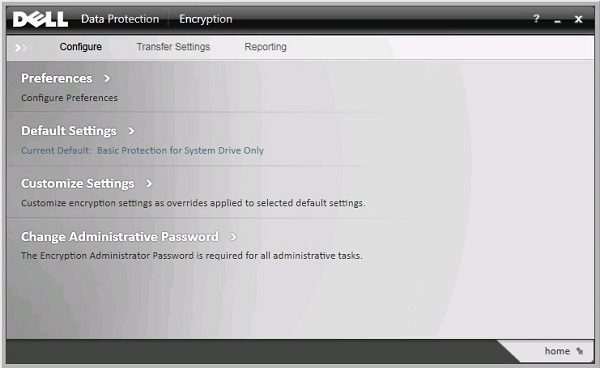
- Select a policy template.
- Click save.
- Click back to configure.
 Note: For more information about policy templates, reference Policy Templates in Dell Encryption Personal.
 - In the bottom-right, click home.
- Back up the encryption keys.
 Note: For more information, reference How to Manually Back Up Encryption Keys in Dell Encryption Personal.
Custom
- Log in to the Windows computer.
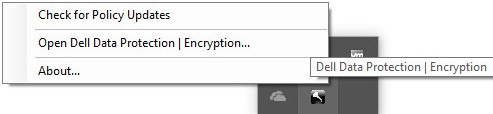
- In the Windows system tray, right-click the Dell Data Protection Encryption icon and then select Open Dell Data Protection Encryption.
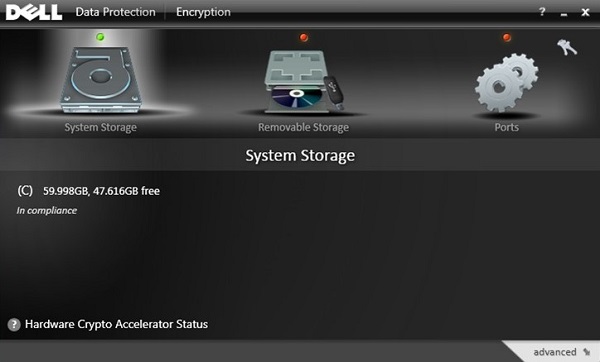
- Click advanced in the bottom right.
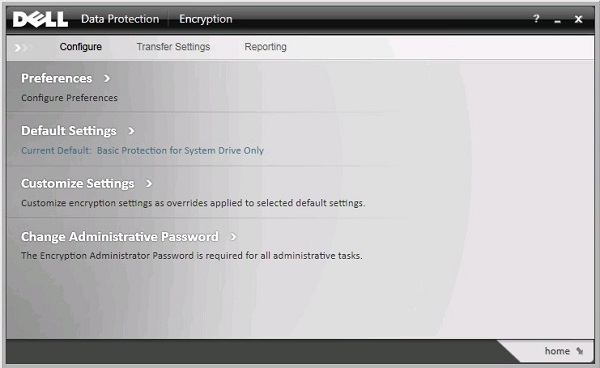
- Click Customize Settings.
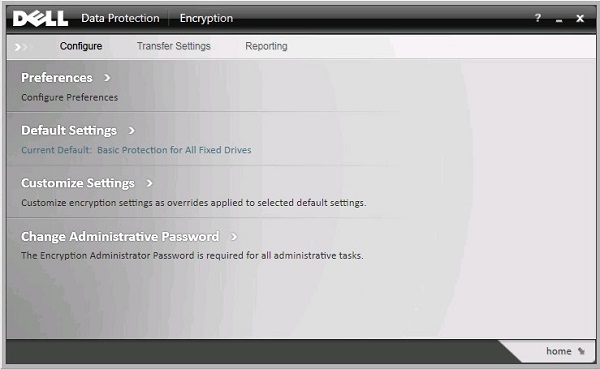
- Populate the Encryption Administrator Password and then click OK.
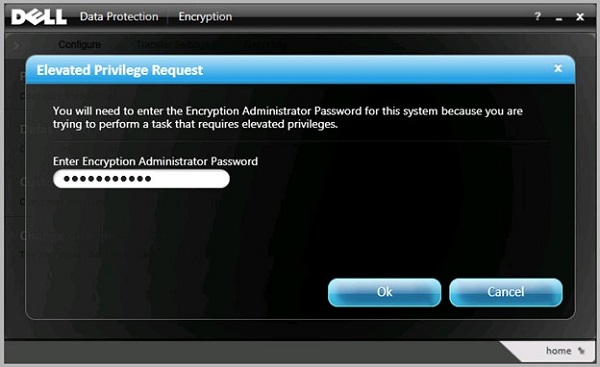
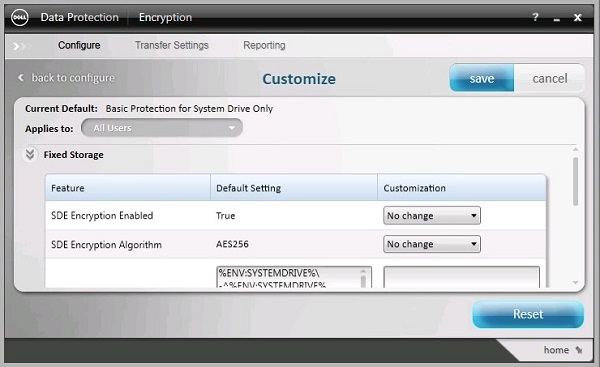
- From the Customize user interface (UI):
- Modify the appropriate Customization column policies.
- Click save.
- Click back to configure.
 Warning:
- If customizing a text box policy instead of a drop-down policy, ensure that all text from the Default Setting is copied into the Customization box.
- Incompatible policy customizations may lead to errors or loss of functionality.
- For detailed policy definitions, reference the help file.
- For assistance with policy conflicts, contact Dell Data Security International Support. For more information, reference Dell Data Security International Support Phone Numbers.
Note: To reset customized policies to the default policy template, click Reset. - In the bottom-right, click home.
- Back up the encryption keys.
 Note: For more information, reference How to Manually Back Up Encryption Keys in Dell Encryption Personal.
To contact support, reference Dell Data Security International Support Phone Numbers.
Go to TechDirect to generate a technical support request online.
For additional insights and resources, join the Dell Security Community Forum.
受影响的产品
Dell Encryption文章属性
文章编号: 000131804
文章类型: How To
上次修改时间: 07 7月 2025
版本: 12
从其他戴尔用户那里查找问题的答案
支持服务
检查您的设备是否在支持服务涵盖的范围内。