Dell Technologies DellNLP: A Centralized Text Processing Engine
Introduction
Executive summary
Business challenge
Document purpose
Audience
We value your feedback
Solution overview
Introduction

Figure 1. Real-world examples of spelling and grammar issues
Spelling and grammar mistakes are problematic for NLP tasks. Some mistakes also have a negative impact beyond the world of computing, and spelling issues may even end up costing business millions of dollars in lost revenue. The following figure shows real-world examples of spelling and grammar issues.
An analysis of a random sample of 1,000 textual symptom entries by the customer support agents revealed that a staggering 15% of all entries have one or more spelling mistakes in them, which means about two out of every 10 entries have one or more spelling errors.
Noisy and erroneous text make the automated processing of textual data difficult. Noisy text is text with any difference in the surface form from the intended text, including abbreviations, acronyms, and more. It has been proven to reduce the performance of various automated text processing applications and algorithms including the following:
- Semantic and syntactic parsing
- Information retrieval
- Machine translation
- Text classification
Research indicates that addressing these issues by pre-processing text help improve the accuracy of many NLP applications.
Text pre-processing is usually a prerequisite for NLP tasks such as speech processing, information retrieval, and text classification, as shown in the following figure.
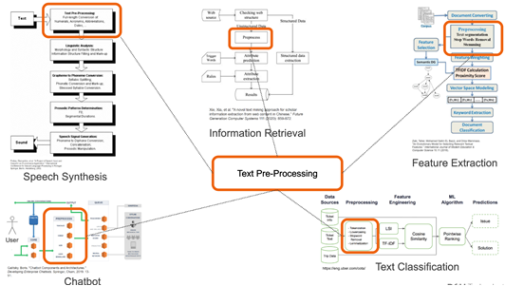
Figure 2. Text pre-processing: A common step in NLP applications
Automated processing of textual data is increasingly important within Dell Technologies. Tools employ various ML and Deep Learning (DL) techniques to extract useful information that inform and streamline business operations. NLP applications implement their own bespoke text cleaning and pre-processing techniques in various levels of maturity.
Still, most of these applications employ primitive key-value based mapping techniques for spelling corrections, which can only deal with a limited number of vocabulary items contained in a database. Moreover, different teams working on similar applications can duplicate the same text-preprocessing functionality, as shown in left-hand side of the Figure 3 in the Methodology section.
This issue of different teams having to develop same text-processing solutions over and over again highlights the need for a central, robust, high-performance automated query correction and text pre-processing API for processing textual data logged within Dell Technologies.
Methodology
Automated query correction algorithm
DellNLP solution facilitates the extraction of insights from text by proposing a central scalable API, including a novel automated query correction system that addresses various text pre-processing challenges and requirements. The main benefit DellNLP provides is incorporating Dell context which is missing from industry solutions and usually trained on open text corpora such as Wikipedia.
A novel automated query correction algorithm created for the project primarily performs detection and automated correction of spelling errors while minimizing false positives.
The solution was benchmarked with other widely available solutions including NLTK and spaCy.
In comparison, DellNLP provides:
- Accuracy gains of more than 10% over NLTK and spaCy, reducing spelling errors from 15% to 2%
- Major performance gains with a processing time of 1-2 minutes compared to 3-4 hours
DellNLP can be immensely useful for current text processing applications as well as future applications, such as chatbots. Further, the algorithm and resource derivation process can be generalized. The same algorithm has the potential to process similar text found in other industry or academia contexts outside of Dell Technologies. The following figure compares the old and new processes.
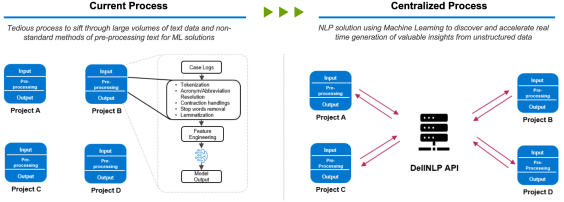
Figure 3. DellNLP as a central text pre-processing engine
Common NLP project requirements
Key tasks associated with building NLP solutions include:
1. Query and spell correction
2. Text normalization including query and spelling correction
3. Extracting keywords and named entities from text
4. Data labeling for building ML models
5. Building highly accurate DL models for tasks such as classification, text summarization, natural language understanding, and natural language generation
6. Predictive text for features like auto-complete and Smart Compose
DellNLP implements several text pre-processing functions and incorporates NLP resources such as n-gram dictionaries and word embeddings trained on Dell data.
The primary task of DellNLP is to automatically correct spelling mistakes. The other tasks implemented include text sanitization, predictive text capability, and retrieval of semantically similar terms.
The subsequent sections offer details on design decisions and algorithm components, some of which are included in the following figure:
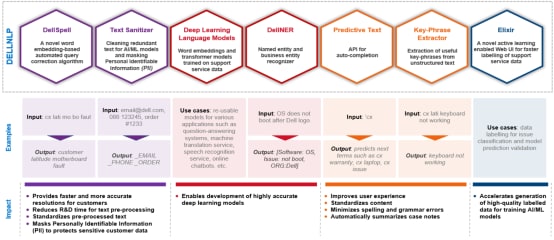
Figure 4. DellNLP consists of seven key modules to help extract insights from text data
DellSpell - Automated Query Correction
DellSpell - Automated Query Correction
Automated Query Correction component - DellSpell, is a key DellNLP algorithm component that involves the detection and auto-correction of spelling errors. Several exploratory analyses helped identify key issues found in textual data within Dell Technologies.
The analysis revealed that the following types of issues are prominent in Dell Technologies text:
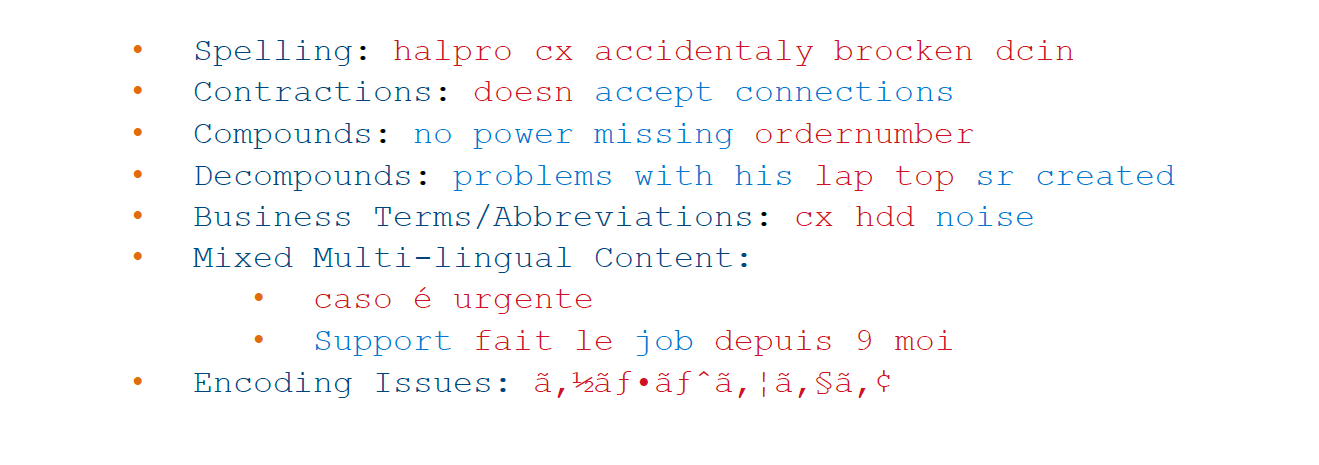
Addressing these issues meant investigating readily available libraries that perform automated spelling correction. The SymSpell library could handle issues such as spelling mistakes, compounds, and decompounds, but was not expected to work on regular Dell Technologies text because of proprietary and internal terminology that does not exist in SymSpell’s language resources. This led to the creation of custom language resources from Dell Technologies data that are compatible with SymSpell. The key language resources developed include a unigram database and a bigram database.
Still, even after constructing SymSpell-compatible dictionaries, empirical analyses showed a substantial number of false positives, where false positive means the algorithm unnecessarily correcting a correct term, leading to an incorrect term. The SymSpell word segmentation feature also has low accuracy when operating on Dell Technologies data.
In response to these issues, the language resources were leverages to derive and devise custom algorithms to perform compounding and decompounding tasks.
Minimizing false positives required a mechanism to semantically validate syntactic corrections proposed by the SymSpell module. For this purpose, a word embedding model was trained and devised as an algorithm to predict spelling corrections based on word embeddings trained on Dell Technologies data. This completely novel algorithm acts as a key component that reduces false positives.
The development of these functionalities led to several useful Python functions that diverse teams can leverage in various NLP applications, leading to the decision to expose these functionalities through a package and an API, later named DellNLP.
The following figure shows the main components of our algorithm, some of which are discussed in detail within this document:
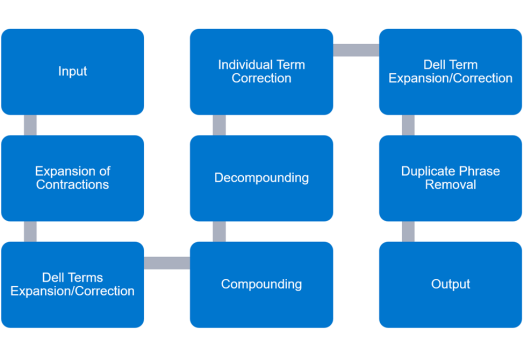
Figure 5. DellNLP auto-correction algorithm steps
DellNLP text correction steps
Step 1. Expansion and correction of contractions
The concordance analysis of a large amount of Dell Technologies text data helped identify mappings for contraction expansions. This analysis also used trained word embeddings to identify terms like “doesn” instead of “doesn’t,” for example.
The first operation that DellNLP performs on text is expansion of contractions. This is based on the simple but efficient use of compiled regular expressions. Any contractions found in the input text are corrected or expanded with the aid of derived mappings, as shown in the following figure.
The current mapping list consists of 270 contractions similar to this sample list.
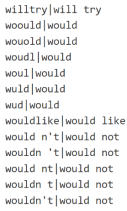
Figure 6. Contraction mappings
|
Input Text |
cx reported autoshut down issue wih the the optiaio. I’ve instructuced to reboot lap top
|
|
Output Text |
cx reported autoshut down issue wih the the optiaio. I have instructuced to reboot lap top |
Step 2. Dell Technology terminology expansion and correction
To address Dell-specific terms within text, a mapping was leveraged and constructed with the aid of concordance analysis to expand frequently used abbreviations by support agents.
The default mapping list includes more than 900 Dell Technology terms with an option to augment these mappings depending on project requirements. DellNLP also supports custom language packs that can be installed separately.
A sample of Dell Technology terminology expansion and correction mapping is shown in the following figure:
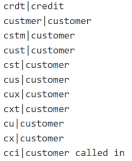
Figure 7. Dell Technologies abbreviations and acronyms mapping
The following table illustrates the application of these mappings:
|
Input Text |
cx reported autoshut down issue wih the the optiaio. I have instructuced to reboot lap top |
|
Output Text |
customer reported autoshut down issue wih the the optiaio. I have instructuced to reboot lap top |
Steps 3 and 4. Compounding and decompounding
Exploratory data analysis revealed that some support agents pay less attention to the proper use of spaces between words or proper word segmentation due to time pressure. In these steps, the algorithm determines the appropriate placement of spaces between words in a sentence.
By leveraging the collated bigram and unigram frequency information, the probability of segmenting or amalgamating given terms is computed. For example, given the term “lap top,” the algorithm determines whether the typical usage is “laptop” or “lap top.” Next, depending on the probability of segmenting the word, these modules either break the term into several terms (as in the bigram dictionary) or amalgamate it into a single term (as in the unigram dictionary).
The following illustrates the application of these corrections:
|
Input Text |
customer reported autoshut down issue wih the the optiaio. I have instructuced to reboot lap top |
|
Output Text |
customer reported auto shut down issue wih the the optiaio. I have instructuced to reboot laptop |
Step 5. Individual term correction
This algorithm is the most complex component of the project and includes a novel, newly created word-embedding-based spelling correction algorithm. Here given an incorrect term, we use spelling corrections by four different algorithms independently and select the term suggested by the majority of the algorithms as the final correction. The details of the algorithm are given below:
- After carrying out Steps 1-4, the algorithm consumes each term as a separate token and analyzes each token for a possible non-word.
- Next, three separate functions available through SymSpell are employed for obtaining possible syntactic corrections for the non-word.
- In parallel, the custom word-embedding-based spelling correction algorithm is also executed. The latter suggestion is primarily used to semantically validate the SymSpell syntactic suggestions.
- Finally, a simple decision tree determines the final term correction. This decision tree mainly implements a voting mechanism where, if suggestions by multiple independent methods agree on the same correction, it will be used as the final term correction.
The algorithm also segments terms if previous bigram or unigram analysis failed to do the correction. Empirical results show that this novel algorithm minimized false positives but increases recall, including the detection of true misspellings, in Dell Technologies text. The following figure illustrates the novel term correction process:
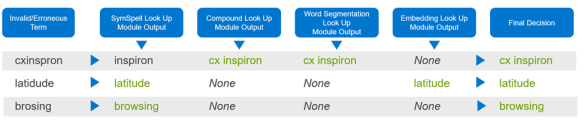
Figure 8. Individual term correction by different modules
The invention of the word-embedding-based spelling correction method, which determines semantically accurate spelling correction for a given term, uses fuzzy matching techniques and meta-phone features of the terms under analysis.
The following table illustrates the outcome of this step:
|
Input Text |
customer reported auto shut down issue wih the the optiaio. I have instructuced to reboot laptop |
|
Output Text |
customer reported auto shut down issue with the the opti aio. I have instructed to reboot laptop |
Step 6. Dell Terminology expansion and correction
As a result of individual term correction, some terms may need to be segmented that did not get resolved during the compounding and decompounding stages. An example of this is “optiaio” in the figure below. Terms like this undergo the same terminology mapping as described in Step 2.
The following table illustrates the outcome of this step:
|
Input Text |
customer reported auto shut down issue with the the opti aio. I have instructed to reboot laptop |
|
Output Text |
customer reported auto shut down issue with the the optiplex all in one. I have instructed to reboot laptop |
Step 7. Repetitive phrase deletion
Exploratory data analysis showed that repetitive phrases are a common issue in Dell Technologies text. These repetitions may occur due to database augmentations, by appending or inserting data into same table, for example.
Since repetitive phrases usually add little value in semantic parsing, the repeated phrases are removed in text using simple but effective regular expression technique.
The following table illustrates the outcome of this step:
|
Input Text |
customer reported auto shut down issue with the the optiplex all in one. I have instructed to reboot laptop
|
|
Output Text |
customer reported auto shut down issue with the optiplex all in one. I have instructed to reboot laptop |
The following figure shows how DellNLP handles individual cases as implemented in a notebook.
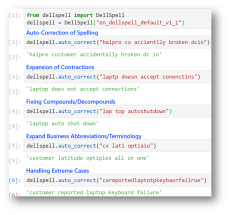
Figure 9. DellNLP auto-correct function
Optimizations
As highlighted in the preceding figure, the auto-correct algorithm performs several complex operations to detect and correct various issues found in Dell Technologies text. The initial implementation of DellNLP primarily focused on accuracy and less on performance, yet due to the increasing demand for use in real-time applications, there was a focus on identifying algorithmic optimizations.
The optimizations included comprehensive time complexity analysis of individual functions, including profiling of each function. Appropriate steps were then taken to optimize code performance, including optimizing O(n2) operations into O(n), the use of appropriate data structures, and more.
The above steps failed to reach desired performance targets (for example, 200-400ms for processing an average sentence, including API call time, which was longer than desired), the algorithm was redesigned as a Cython implementation. This redesign resulted in a more than 50 percent faster performance, outperforming existing Python pre-processing algorithms in terms of speed within some projects.
The current implementation in production is the Cython-based DellNLP implementation. Subsequent optimizations focused on code maintainability, such as identifying and implementing key unit test cases, linting (with 10/10 rating), and PEP8 formatting of code.
Systematic derivation of language resources
Several language resources were collated and built for this project, such as unigram and bigram dictionaries. As a first step to the systematic derivation, textual data was collected and a text corpus was compiled, primarily containing text logged by Dell Technologies support agents and service providers. The collected data was later used for training FastText-based word embeddings due to its ability to provide embeddings for even out-of-vocabulary data.
Next steps involved identification of Dell Technologies terminology using the trained word-embeddings to retrieve semantically similar terms. For example, if the given term was “cx,” similar ones such as “cust”, “customer”, “cst” are retrieved.
A list of unique words found in the textual corpus was also derived. This list originally contained more than 198,000 terms, but any terms found within an English dictionary were filtered out, at about 80,000 words. Only 28,248 words were common between the Dell Technologies unique word list and English dictionary. The rest of the entries contained of Dell Technologies-specific terms, multilingual entries, and erroneous or misspelt terms.
These 170,000 entries could be further segregated into Es, Pt, It, De, Fr language terms and short terms with just two to three letters. The remaining entries (~132,000) consisted mainly of terms with genuine spelling mistakes, specific to Dell Technologies, person names, place names, erroneous compounds, and some transliterated terms. The following figure outlines term analysis.
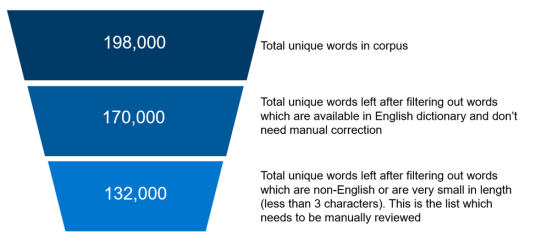
Figure 10. Dictionary construction - term analysis
Identifying Dell Technologies-specific terms meant reviewing ~132,000 terms to construct a custom dictionary. After filtering out less frequently occurring terms, the rest were manually reviewed to identify legitimate terms including acronyms, abbreviations, and products to be included. The following figure shows a sample of the word review process.
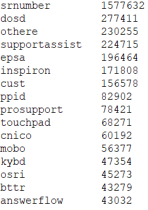
Figure 11. Manual analysis of unique words
Concordance analysis and word-embeddings were used to examine the usage of words in context, as shown in the figure below:

Figure 12. Concordance analysis of the term "weve"
These steps resulted in the following:
- A Dell Technologies dictionary containing more than 83,000 Dell Technologies-specific terms
- A word-embeddings model
- A bigrams dictionary with more than 303,000 words
These systematically derived resources are leveraged in algorithms and models and are consistently being updating, with new Language Packs released as necessary. This ensures that model predictions are updated to reflect any changes or new patterns in the data.
Text sanitizer
Text sanitizer
DellNER
Named Entity Recognition model
DellNER is a custom Named Entity Recognition (NER) model that helps identify pre-defined entities in text data, as shown in the following figure. Currently, DellNER helps identify the following entities:
- Hardware entities such as motherboards, hard disk drives, memory
- Software entities such as operating systems, BIOS, Microsoft Office
- Diagnostic tests carried out by technical support agents such as ePSA, BIST
- Diagnostic codes generated during troubleshooting such as:
2000-0141, amber white-off-of
- Technical issues encountered during troubleshooting such as no power, slow performance, no video
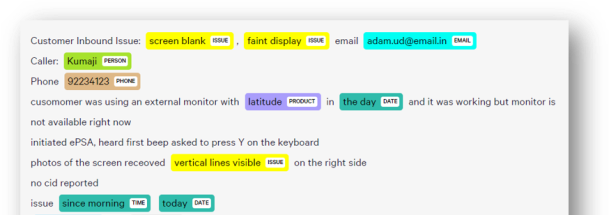
Figure 13. DellNER helps identify pre-defined entities in text data
DellNER was trained on a corpus of more than 1 million case logs generated by technical support agents during troubleshooting for the client business. The training data was bootstrapped using a combination of static term lists and regular expressions. For evaluating model performance, a sample of 1,000 case logs was manually labelled. The model performance is shown in the following table:
|
Entity |
Precision |
Recall |
F1 |
|
HARDWARE |
70 |
75 |
72 |
|
SOFTWARE |
57 |
59 |
58 |
|
DIAGTEST |
88 |
77 |
82 |
|
OVERALL |
58 |
70 |
64 |
Note: DIAGCODE was not included in test results above since there was a very small sample of it in the test set (<10 occurrences).