Vectorized Databases for AI Training
As the complexity and scale of AI training use cases continue to grow, traditional databases are not always the best choice for finding data for AI training. This blog highlights vectorized databases and describes why they are important for AI training when compared to other search methodologies.
Overview
As AI and machine learning continue to push the boundaries of what is possible, the choice of database systems becomes increasingly critical. Vectorized databases represent a paradigm shift in database search capabilities that offer the speed, flexibility, and efficiency necessary for AI training use cases. In the evolving landscape of AI, embracing vectorized databases might be the key to unlocking unprecedented insights and capabilities.
Traditional databases
SQL databases
Structured Query Language (SQL) databases have long been the go-to solution for managing structured data stored in rows and columns. They excel at transactions, ensuring data integrity, and providing powerful querying capabilities. However, for AI training, SQL databases face limitations such as latency, schema rigidity, and complex joins.
Graph databases
Graph databases use nodes and edges to analyze data relationships and are commonly used in applications for understanding social networks, knowledge graphs, or recommendation systems.
NoSQL databases
A “not only” SQL or nonrelational database is a type of database management system that provides a flexible schema to store and retrieve data. It is ideally suited for multiple datatypes, rapidly changing data environments including web, mobile, IoT, and real time analytics.
Vectorized databases
A vectorized or vector database is a scalable, nonrelational database system designed for high-speed data retrieval and efficient analytical processing. It is optimized for workloads involving complex mathematical operations, and similarity search capabilities integral to AI and machine learning applications. The following table compares the various database schemas:
Table 1 - Summary of database comparisons
|
Database |
Data Model |
Primary Use Case |
|
SQL |
Structured, tabular format, predefined schemas, traditional business applications |
Transactional workloads, CRM and ERP, financial systems, relational databases |
|
NoSQL |
Schema flexible, structured, semistructured, and unstructured data |
Ideal for evolving data requirements, diverse datatypes, IoT storage, and real time analytics |
|
Graph |
Uses nodes/edges, emphasizes relationships |
Modeling, querying, traversing relationships such as social networks |
|
Vector |
Stored in columnar format optimized for analytical processing |
AI training, analytical workloads with complex mathematical operations, similarity searches, and high-speed data retrieval requirements |
A significant advantage of a vectorized database is that it enables data retrieval based on similarity searches. That is, query of the data can be performed based on similarities of values to the target value. Knowledge of the exact value or value ranges is not necessary.
Theory of operation
Overview
What is a vector database?
A vector database is a specialized database designed to store, index, and query high-dimensional vectors efficiently. Vectors are mathematical representations of data points in a multidimensional space, often used in machine learning and data science.
Why use vectors?
Vectors are used extensively in various fields, especially in machine learning and data science, because they provide a powerful and flexible way to represent complex and unstructured data. The physical representation of a vector is a location or point in space. The mathematical representation of that location is a series of numbers collectively called an N-dimensional or a high-dimensional vector.
Vectors can be used to encode various types of data, such as text, images, audio, or user behaviors into a high-dimensional numerical format. Each vector represents a data point in a multidimensional space in which each dimension corresponds to a specific feature or characteristic of the data.
Key features of an N-dimensional or high-dimensional vector database used in storage and retrieval represents anything from word embeddings in Natural Language Processing (NLP) to feature vectors in image processing. Novel indexing techniques are used to perform similarity searches, anomaly detection, monitoring, and recommender tasks quickly. Vector databases can easily scale to handle billions of vectors, making them suitable for big data applications. They can seamlessly integrate into existing AI frameworks that focus on training and inferencing workloads.
Embedding models are the core enabling component that transforms the unstructured data into a vector representation and generates the vector representations to be stored in a vector database. This AI model transforms text or images into an array of numerical values or vectors. The resultant vectors are then stored for subsequent retrieval in the database and optimized for retrieving vectors and neighboring vectors for similarity searches as shown in the following figure:
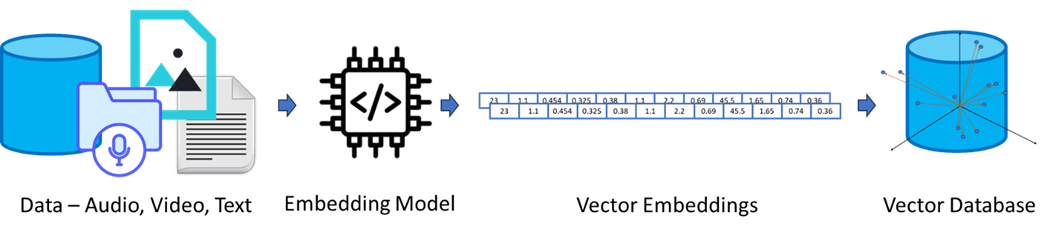
Figure 1. How a vectorized database might be used
Vector database considerations
Key attributes and considerations of a vectorized database include:
- Scalability─Ensure that the database can handle large-scale data and grow with your organization's needs.
- Performance─Look for low-latency and high-throughput capabilities to support real-time data processing and querying.
- Integration─Check compatibility with existing data infrastructure and integration with tools commonly used in your organization.
- Security─Evaluate security features, including data encryption, access controls, and compliance with industry standards.
- Query capabilities─Assess the database's support for complex queries, filtering, and indexing to ensure efficient data retrieval.
- Cost─Consider the total cost of ownership, including licensing, maintenance, and any additional infrastructure requirements.
- Community and support─Look for active community support, comprehensive documentation, and available customer support services.
- Flexibility and features─Ensure that the database supports various datatypes, provides flexible schema design, and offers advanced features such as machine learning integration or analytics capabilities.
- Ease of use─Evaluate the user interface, ease of setup, and overall user experience to ensure it meets your team's needs.
- Reliability─Consider the database's performance history for uptime, data durability, and disaster recovery options.
Vectorizing a database
The ability to vectorize content has significantly impacted AI and generative AI. By converting raw data into numerical representations, software algorithms can efficiently store and operate on many types of data and quickly unlock insights that were previously unknown or difficult to search. The following figure shows how image data from an autonomous vehicle can be vectorized into a three-dimensional vector space:
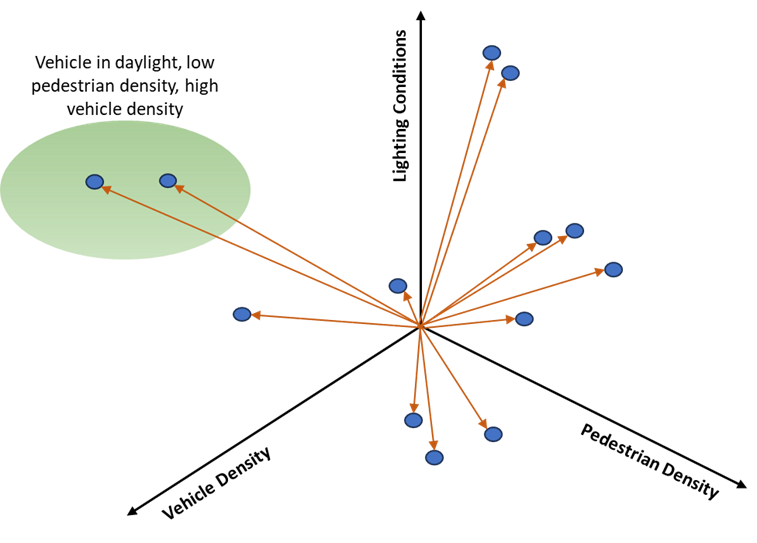
Figure 2. Graphical illustration of a three-dimensional vectorized database
The blue dots indicate the location of the stored image, and the orange arrows represent the magnitude and direction of each stored image. You can see that the closer the vectors are to each other, the more the images have in common.
Use case: A vector database in Advanced Driver Assistance Systems (ADAS) development
If you have used a virtual assistant to search knowledgebases, there is a good chance that you used a vector database behind the scenes to enable similarity search for text.
Similarity search is a powerful method for use with massive amounts of unstructured data. For example, a large amount of data might be available but might not be tagged or labeled with a specific use case that you have in mind. How do you find the data?
The automotive industry's insatiable demand for extensive image data, often reaching into hundreds of petabytes, underscores the crucial role of high-quality data in training machine learning models. Efficiently cleaning, curating, organizing, and labeling this vast pool of data becomes paramount, given the significant costs associated with collecting sensor data from roads using test fleets.
Identifying the appropriate datasets quickly and accurately is crucial, especially in demanding environments such as ADAS/AD workloads. This process is vital to enable data engineers to isolate specific scenarios for training, inference, simulation, and replay tasks. The goal of continuous model improvement requires new images and objects that are either missing or underrepresented in the dataset. Finding images or objects that are similar in the existing dataset is vital when striving for continuous model improvement. Similarity searches scour marginal data that is close to but not precisely aligned with the "favorable" test path. This technique allows data engineers to easily search for scenarios closely aligned to an existing scenario that might otherwise be difficult or impossible to find using other database querying methodologies.
Conclusion
The adoption of vector databases for AI workloads is transformative, offering unprecedented efficiency and accuracy in data retrieval and analysis. These databases enable rapid and precise identification of patterns and relationships within vast datasets, significantly enhancing the capabilities of AI systems across diverse applications. Dell Technologies is at the forefront of this technological advancement, empowering the AI industry with its state-of-the-art PowerEdge XE9680 server, an eight-way GPU server designed to handle the most demanding AI workloads. By using Dell's robust AI infrastructure, organizations can achieve superior performance in tasks ranging from computer vision systems to anomaly detection, and optimal similarity searches. The strategic implementation of vector databases, supported by Dell's cutting-edge hardware and partner software, not only drives innovation but also establishes a foundation for more intelligent, responsive, and effective AI applications. As the demand for sophisticated AI solutions continues to grow, the role of vector databases, bolstered by Dell's advanced server and storage technology, becomes increasingly indispensable in unlocking the full potential of AI.