How to enable SDE policies on Self-Encrypting Drives
Summary: How to Enable System Data Encryption (SDE) Encryption for Dell Encryption Enterprise or Dell Encryption Personal on computers with Self-Encrypting Drives.
This article applies to
This article does not apply to
This article is not tied to any specific product.
Not all product versions are identified in this article.
Symptoms
Affected Products:
- Dell Encryption Enterprise
- Dell Data Protection | Enterprise Edition
- Dell Encryption Personal
- Dell Data Protection | Personal Edition
Dell Encryption Enterprise (formerly Dell Data Protection | Enterprise Edition Shield) and Dell Encryption Personal (formerly Dell Data Protection | Personal Edition) use a type of file folder-based encryption (FFE) called SDE.
Note: SDE is prevented on a computer using a Self-Encrypting Drive (SED), to prevent encryption conflicts.
Cause
Not Applicable
Resolution
Warning: The next step is a Windows Registry edit:
- Back up the Registry before proceeding, reference How to Back Up and Restore the Registry in Windows
.
- Editing the Registry can cause the computer to become unresponsive on the next reboot.
- Contact Dell Data Security International Support Phone Numbers for assistance if you have concerns about performing this step.
Add the following registry key:
Key: HKLM\Sofwtare\Microsoft\Windows NT\CurrentVersion\Winlogon\CMgShield
Value Name: AlwaysApplySDE
Value Type: DWORD
Value: 1
Note: v8.12.0.x and later has the registry key added by default.
In the Remote Management Console, check Encrypt with SDE when SED is detected.
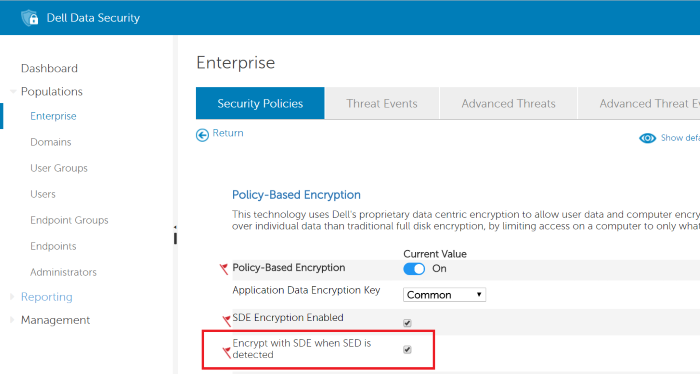
Figure 1: (English Only) Encrypt with SDE when SED is detected
Note: After making a change, save and then commit the policy change.
To contact support, reference Dell Data Security International Support Phone Numbers.
Go to TechDirect to generate a technical support request online.
For additional insights and resources, join the Dell Security Community Forum.
Affected Products
Dell EncryptionArticle Properties
Article Number: 000125023
Article Type: Solution
Last Modified: 29 Apr 2024
Version: 10
Find answers to your questions from other Dell users
Support Services
Check if your device is covered by Support Services.