PowerEdge: Recommended BIOS and iDRAC9 Upgrades for 16th Gen
Summary: This article provides a high-level explanation for updating the BIOS and iDRAC9 firmware versions for 16th generation PowerEdge servers.
This article applies to
This article does not apply to
This article is not tied to any specific product.
Not all product versions are identified in this article.
Instructions
Dell Technologies recommends updating your BIOS version to benefit from the bug fixes and improvements to the functionality, reliability, and stability of your Dell PowerEdge server. It may also include security fixes and other feature enhancements. The iDRAC9 firmware version update contains changes to maintain overall system health. It ensures that the system software remains current and compatible with other system modules (firmware, BIOS, drivers, and software) and may include other new features.
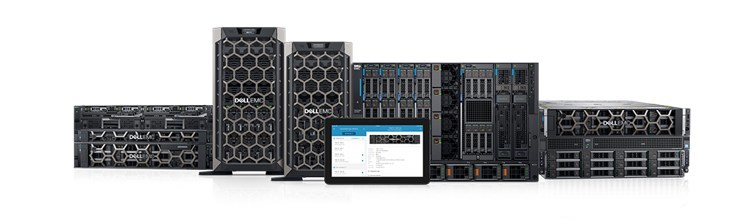
Benefits of updated BIOS and iDRAC9 for 16th generation PowerEdge servers with Intel processors
For Dell's 16th generation PowerEdge servers with Intel processors, updated BIOS versions include the following:
Fixes and Enhancements
- Intel processor and memory reference codes to IPU 2025.2.
- Intel processor microcode to version 0x639 in the 4th Generation Intel Xeon Scalable Processors Family
- Intel processor microcode to version 0x3F7 in the Intel Xeon CPU Max Series
- Intel processor microcode to version 0x2A9 in the 5th Generation Intel Xeon Scalable Processors Family
- Updated Intel Server Platform Services (SPS) and Manageability Engine (ME) firmware from 6.2.4.48 to 6.3.4.58
- Updated Intel Catlow RPL-E Refresh Server WW13 MR1 Unify BKC 2025 Reference Codes version to 5040_00
- Updated Intel Processor Microcode to version 0x000012e (m_32_b0671_0000012e) for Xeon-E RPL-E and version 0x0000003a (m_07_90672_0000003a) for Pentium ADL-S
- Updated Intel PMC firmware to version 160.02.00.1044
- Fixed PCR[2] values change over BIOS updates without any hardware or firmware modifications
Security Enhancements
- DSA-2025-156, remediation for 2025.2 Intel Platform Update (IPU) components that could be exploited by malicious users to compromise the affected systems.
For Dell's 16th generation PowerEdge servers with AMD processors, updated BIOS versions include the following:
Fixes and Enhancements
- Fixed an issue of UEFI0457 to UEFI0461 log shows incomplete strings (this fix is [CSD1-2816] SMOD related).
- Fixed Collaborative Processor Performance Control (CPPC) issue so that it can be enabled with CPU Power Management > OS Demand-Based Power Management (DBPM) option.
- Fixed an issue where System and Setup password marked as 'invalid' when special characters are used.
- Corrected a reboot issue when "Minimum SEV non-ES ASID" is set to a value larger than 255. For additional information, see BIOS and UEFI Reference Guide for your model.
For Dell's 16th generation PowerEdge servers with iDRAC9, updated iDRAC9 firmware versions include the following:
Fixes and Enhancements
- The release includes support for PLDM updates for PERC 12
- Enhanced thermal management with throttling and CoolIT features
- Fixes that improve iDRAC stability
- The release includes 21 critical fixes.
- The release includes 10 new enhancements.
Security Enhancements
- Improved security with support for SHA384, SHA512, and AES-256 privacy types
- The release includes 10 Critical Security Fixes and Dell Security Advisories
Check latest code versions in PowerEdge: Minimum, Recommended, and Latest Code Versions and upgrade BIOS & iDRAC9 versions to benefit from these improvements.
Step 1: Download the latest BIOS.
Dell Technologies recommends keeping your system up to date with the latest BIOS (UEFI firmware) available. This ensures critical bug fixes and changes to improve the functionality, reliability, and stability of your Dell system. It may also include security fixes and other feature enhancements. BIOS updates require a reboot of the host. The BIOS version can differ from one system to another, for downloading the BIOS available for your system, see Drivers & Downloads.
- Go to Drivers & Downloads
- Identify your Dell product
- Enter the service tag of the Dell product and click Search.
- Or click Browse all products and manually select your Dell product from the menu.
- Select your host Operating System and BIOS from the Category drop-down.
- Click Download to download the latest Dell BIOS Update Package directly.
- Or expand the BIOS release to choose from older versions and to view full driver details. The full driver details also provide all available download formats and release notes.
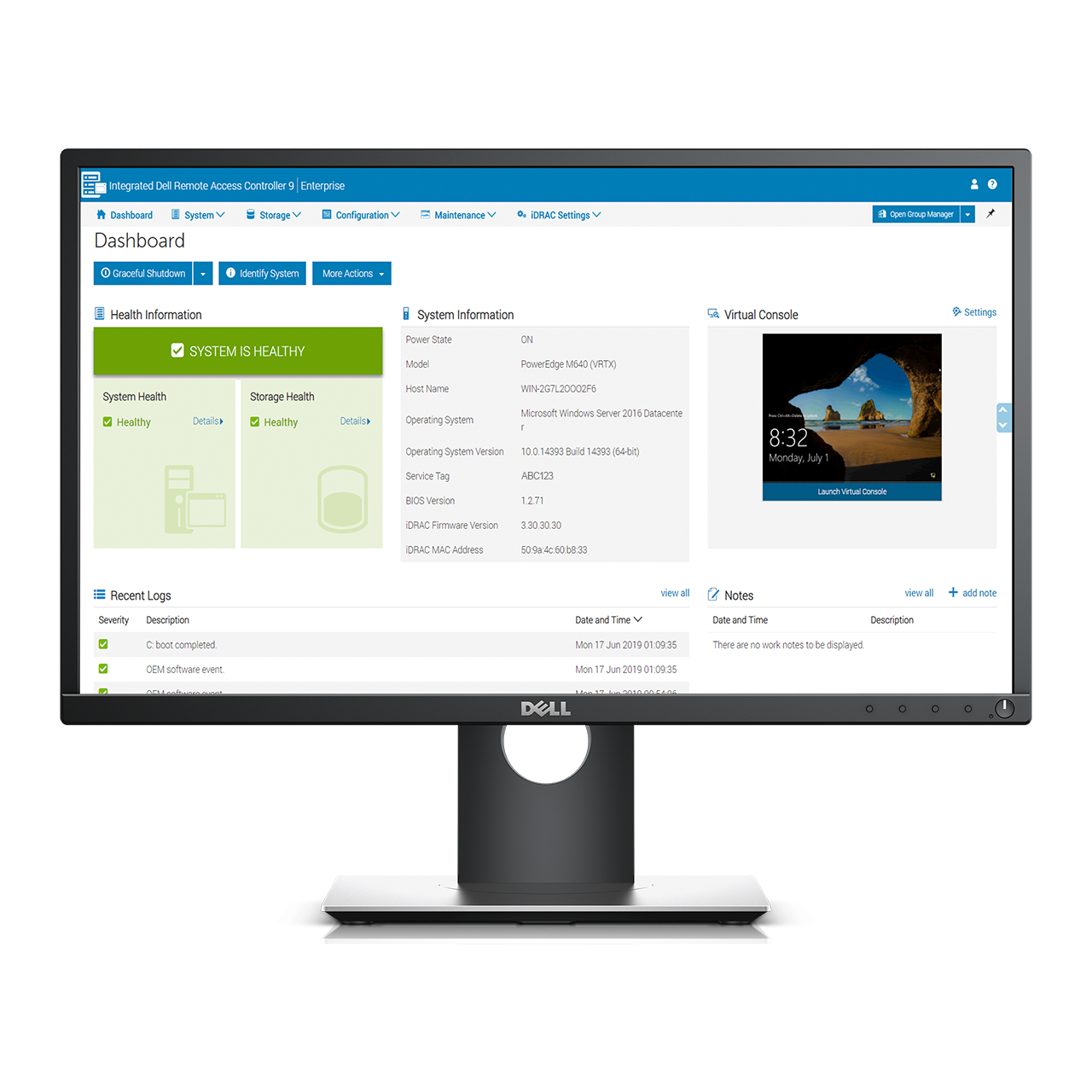
Step 2: Download the latest iDRAC Firmware.
Dell Technologies recommends keeping your system up to date with the latest iDRAC firmware available. This ensures the best performance and the latest security updates and bug fixes. iDRAC updates do not require a reboot of the host, allowing for in-place updates.
iDRAC firmware versions vary by system. For iDRAC9 versions, see Integrated Dell Remote Access Controller 9 Versions and Release Notes for all iDRAC versions, including iDRAC9, iDRAC8, and iDRAC7.
Step 3: Deploy the updated BIOS and iDRAC Firmware.
There are multiple methods to update the firmware for your PowerEdge server. These different methods are outlined in this section.
Manual method for updating individual components
Dell Update Packages (DUP)
Using the Dell Update Packages (DUP) is an and quick way to update the firmware or drivers of the entire system or individual system components. A DUP is an executable which contains firmware for a single component.
Updating all or selected system components
Platform Bootable ISOs are custom built using Dell Repository Manager.
Create a Platform Bootable ISO based on PowerEdge server using the latest enterprise catalog from the Dell support site without creating or using any repository. This is a way of updating all server firmware in one single step. An ISO can be transferred on a bootable USB storage device, accessed through iDRAC virtual media, or accessible over the network.
PowerEdge: Using the Dell SUU to Update Firmware and Drivers
The Dell Server Update Utility ISO (SUU) is a local one-to-one utility to update BIOS, firmware, drivers, and application on PowerEdge servers to the latest version. The SUU also allows comparison between the current versions that are installed on the server and the most up-to-date versions available. Select the components in need of updating and upon confirmation, SUU orchestrates the deployment of the selected updates.
LifeCycle Controller
Dell Lifecycle Controller is an advanced embedded systems management technology that enables remote server management. Using Lifecycle Controller, you can update the firmware using a local or Dell-based firmware repository.
Dell Repository Manager (DRM)
An update management tool used to assist with the identification, gathering, and packaging of Dell Update Packages (DUPs) into a format to be used for deployment.
DELL System Update (DSU)
Command-Line Interface optimized deployment tool that assists customers who prefer to manage the deployment of updates in a scripted manner.
Integrated Dell Remote Access Controller (iDRAC)
An embedded systems management tool that is available on PowerEdge servers. With iDRAC, you can remote into a system to perform many systems management tasks, including updating of firmware. *Some additional features may require the iDRAC Enterprise or DataCenter license.
Console-based methods for updating multiple components
OpenManage Enterprise (OpenManage Enterprise)
OpenManage Enterprise systems management console is designed to simplify, intelligently automate and unify IT infrastructure management tasks. One of these tasks is the update of multiple components.
VMware vCenter
Performing Firmware Updates for Clusters
Microsoft System Center (MSSC)

Microsoft System Center Configuration Manager (SCCM), or ConfigMgr, is software by Microsoft for managing large groups of systems running Windows NT, Windows Embedded, macOS, Linux, or UNIX.
Configuration Manager provides remote control, patch management, software distribution, operating system deployment, network access protection, and hardware and software inventory.
Additional Information
For other generations, see below:
PowerEdge: recommends upgrading BIOS and iDRAC9 for 14th Gen
PowerEdge: Upgrading BIOS and iDRAC9 for 15th Generation PowerEdge Servers
PowerEdge: Recommended BIOS and iDRAC10 Upgrades for 17th Gen
Affected Products
iDRAC9, PowerEdge C6620, PowerEdge HS5610, PowerEdge HS5620, PowerEdge MX760c, PowerEdge R260, PowerEdge R360, PowerEdge R660, PowerEdge R660xs, PowerEdge R6625, PowerEdge R760, PowerEdge R760XA, PowerEdge R760xd2, PowerEdge R760xs, PowerEdge R7625
, PowerEdge T160, PowerEdge T360, PowerEdge T560, PowerEdge XE8640, PowerEdge XE9640, PowerEdge XE9680, PowerEdge XR5610, PowerEdge XR7620, PowerEdge XR8610t, PowerEdge XR8620t
...
Article Properties
Article Number: 000355982
Article Type: How To
Last Modified: 18 Sept 2025
Version: 5
Find answers to your questions from other Dell users
Support Services
Check if your device is covered by Support Services.