Telecommunications
Transforming Your Cell Site into a Data Center
See how telecom operators can prepare cell sites for AI, Cloud RAN, and 5G edge with Dell PowerEdge XR8720t and XR9700.
Key takeaways 5 min read
As RAN disaggregation and Cloud RAN densification create new infrastructure requirements, cell sites are becoming distributed data centers. These sites support compute, AI and cloud-native RAN functions. The XR8000 with the XR8720t compute sled supports indoor Cloud RAN and edge AI workloads on one platform. The XR9700 extends that model to demanding outdoor deployments. Together, these platforms help operators create a more flexible and future-ready RAN foundation.
Cell sites now do far more than move traffic from point A to point B. They’re becoming distributed compute locations that support cloud-native RAN, edge applications and AI workloads closer to users and devices. For telecom operators, this shift creates real opportunity. It also raises the bar for infrastructure. The hardware at the cell site must now support more software, more flexibility and more operational consistency across indoor and outdoor environments. This is the new challenge for network architects and CTOs: how do you modernize the RAN without adding complexity, increasing risk or locking your teams into rigid platforms?
Why the cell site is evolving
Three converging trends are turning traditional cell sites into powerful compute hubs. We are moving away from signal transmission and stepping into an era of intelligent, software-defined networks.
1. RAN Disaggregation Is Changing the Infrastructure Model Disaggregated RAN separates software from purpose-built hardware. Instead of relying on tightly coupled appliances, operators can run network functions on standard server platforms. That shift matters because it gives teams more choice. It can simplify lifecycle planning, support interoperability and help operators align infrastructure with a broader cloud strategy. For CTOs, it also changes the long-term architecture decision. The focus is no longer just on radios and transport. It’s now about building a flexible compute foundation at the edge.
2. AI Is Moving Closer to the Network Edge AI is no longer limited to centralized data centers. Operators are exploring AI at the cell site to support AI inferencing, network optimization, traffic management, computer vision and other low-latency use cases. That requires infrastructure with real compute capability at the edge. A traditional cell site design, built for fixed-function tasks, wasn’t made for this kind of demand.
3. Cloud RAN Densification Raises the Operational Stakes As 5G expands, operators must deploy and manage more sites, often in locations with space, power and environmental constraints. For Cloud RAN densification, that creates a practical challenge. You need infrastructure that can scale across different deployment models while meeting carrier expectations for stability, timing accuracy and service continuity. Operators can densify with traditional solutions and avoid some of these constraints. But that approach can limit what each site can do. With Cloud RAN, the opportunity is broader. The same sites can also support other workloads, helping operators make better use of their footprint and build more value into each deployment.
Where legacy telecom hardware falls short
Many existing platforms were built for a different era. They perform specific functions well, but they can struggle when networks need to support cloud-native software, AI workloads and faster change cycles. Common limitations include:
-
- Purpose-built systems that are hard to repurpose
- Limited flexibility for new software stacks
- Higher operational complexity across multiple appliance types
- More dependency on vendor-specific architectures
- Challenges supporting modern automation and orchestration models
For operations teams, this is not just a technology issue. It’s an execution issue. More platforms mean more variation across sites, more integration work and more pressure on already stretched teams. Modernization needs to move the network forward without making daily operations harder.
A more practical path forward
Dell Technologies addresses this shift with two purpose-built platforms for modern RAN environments: the compact, fully enclosed Dell PowerEdge XR9700 and the Dell PowerEdge XR8000 with the PowerEdge XR8720t compute sled. Together, they give operators a consistent platform for indoor and outdoor deployments, with the flexibility to support Cloud RAN and edge AI use cases on open server architecture.
Dell PowerEdge XR8000 for sheltered cell site deployments
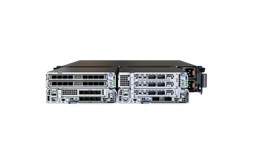
The Dell PowerEdge XR8000 is built for sheltered telecom environments where operators want to join functions and simplify the site footprint. With the 2U XR8720t compute sled, it supports a single-server Cloud RAN approach that can run key workloads on one platform, including:
-
- Distributed Unit functions
- Centralized Unit functions
- Edge AI workloads
That consolidation can help reduce infrastructure sprawl and simplify deployment planning. The platform also includes timing capabilities that are critical in telecom environments, including:
-
- Precision Time Protocol
- Synchronous Ethernet
- GNSS-based timing support
- Up to eight-hour OCXO timing holdover for resiliency during signal loss
These features help operators maintain accurate synchronization and reliable network performance, even when external timing sources are interrupted.
Dell PowerEdge XR9700 for standalone unprotected deployments
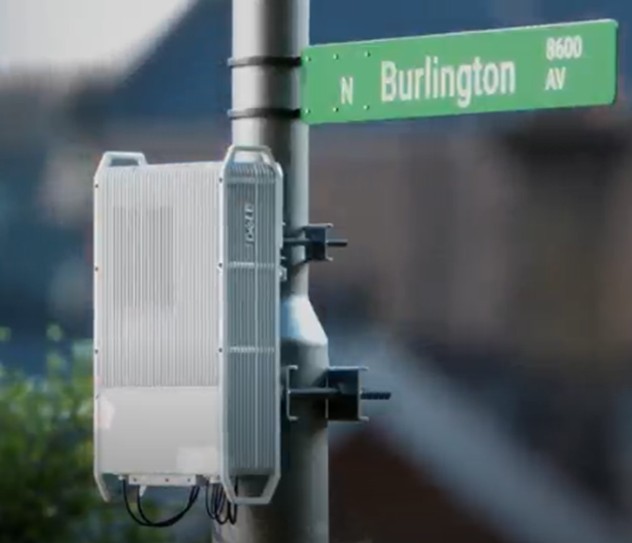
Not every site has the benefit of a protected indoor environment. Many edge locations must operate on rooftops, utility poles or building exteriors, where space is limited and conditions are tougher. The Dell PowerEdge XR9700 is designed for those standalone outdoor deployments. Its IP-66 rated enclosed design helps protect the system in harsh environments and supports installation where a separate street-level shelter may not be practical. For operators, that creates a more direct path to extending compute closer to the edge in locations that have traditionally been harder to modernize. The XR9700 helps support:
-
-
-
- Outdoor deployment flexibility
- Reduced need for separate equipment enclosures
- A consistent platform approach across site types
- Edge compute readiness for modern RAN demands
-
-
Why this matters for telecom leaders
For CTOs and network architects, the infrastructure decision at the cell site now carries more weight. It affects not only current RAN plans, but also how well the network can adapt to AI, automation and future software changes. A modern platform should help you:
-
- Support open, disaggregated network architectures
- Prepare sites for AI and edge applications
- Simplify deployment across indoor and outdoor environments
- Improve operational consistency across the network
- Reduce dependency on fixed-function platforms
This is about building a network foundation that can evolve without forcing a full redesign every time the software stack advances.
Building the cell site data center
As RAN disaggregation and Cloud RAN densification create new infrastructure requirements, cell sites are becoming distributed data centers. These sites support compute, AI and cloud-native RAN functions. Legacy telecom hardware can limit flexibility, interoperability and operational simplicity. The XR8000 with the XR8720t compute sled supports indoor Cloud RAN and edge AI workloads on one platform. The XR9700 extends that model to demanding outdoor deployments. Together, these platforms help operators create a more flexible and future-ready RAN foundation.
Plan for the future
The network edge is becoming a strategic compute layer. With the right infrastructure, telecom operators can support new services, simplify operations and prepare the RAN for the AI era with greater confidence. Explore Dell Technologies RAN solutions to see how the XR9700 server and the XR8720t can help you modernize the cell site for what comes next.