ChengMing 3990/3991 Product Overview
Summary: The article provides information about dell new product Dell ChengMing 3990/3991.
This article applies to
This article does not apply to
This article is not tied to any specific product.
Not all product versions are identified in this article.
Instructions
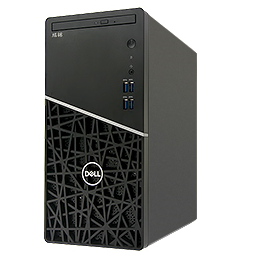
Specifications
| Description | Values |
|---|---|
| Dimension |
|
| Chipset |
|
| Processor |
|
| PCIe bus |
|
| Memory (RAM) |
|
| Operating system |
|
Ports
| Description | Values |
|---|---|
| Audio |
|
| Video |
|
| Network |
|
| USB |
|
| PCIe expansion card slots (internal) |
|
| SATA |
|
| mSATA |
|
| M.2 |
|
| nVME |
|
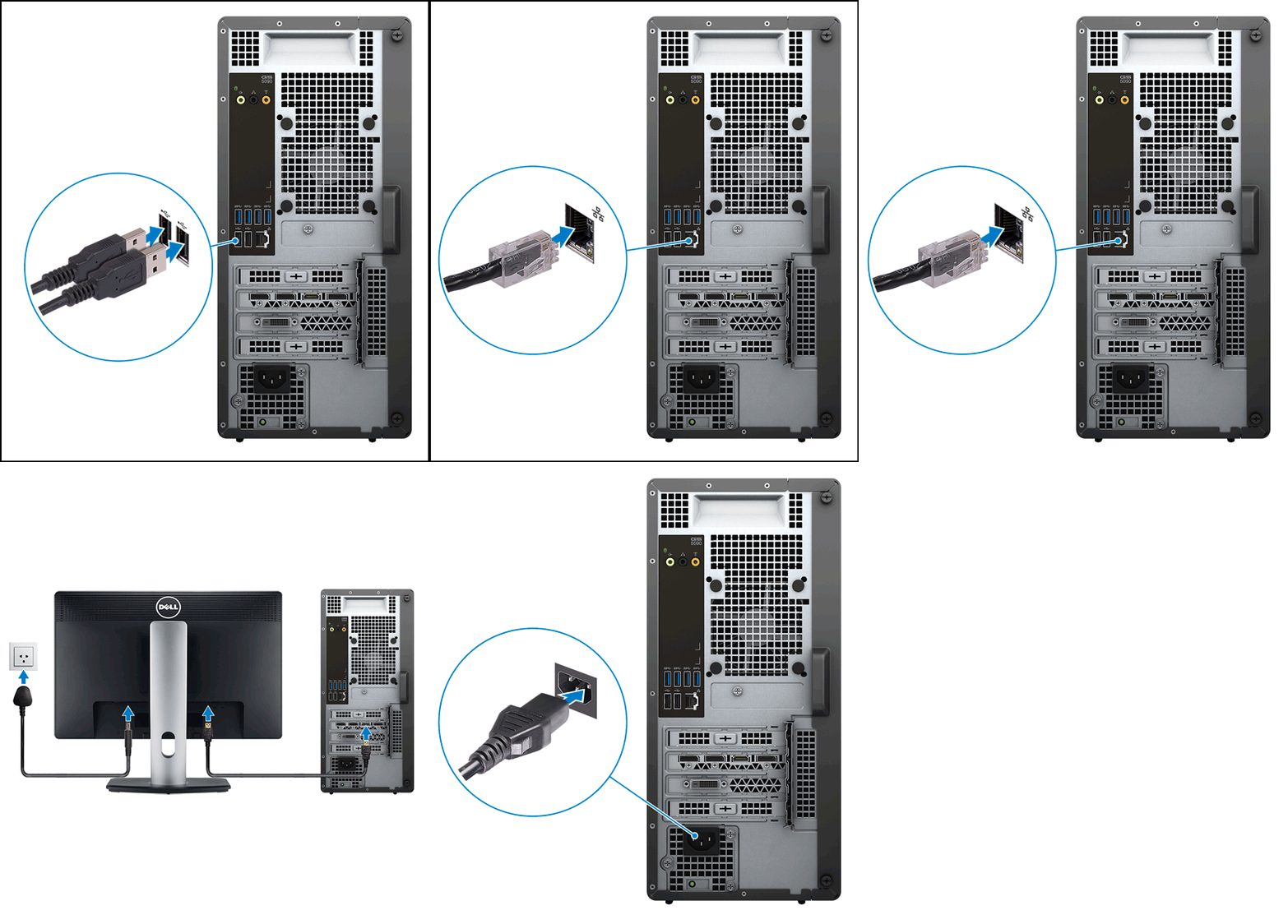
- Connect the keyboard and mouse to the computer.
- Connect the Ethernet cable to the computer, or connect to a wireless network (if applicable).
- Connect the monitor using the VGA, DVI, HDMI, or DisplayPort cable provided with the monitor.
- Connect the power cable to the computer.
- Press the power button and turn on the computer.
- Follow the instructions on the screen to complete the setup procedure.
Dell desktops come with pre-boot or built-in diagnostics which can help diagnose hardware issues and capture error codes. Built-in or pre-boot diagnostics are run outside the operating system. Running a built-in or pre-boot diagnostics does not require the computer to be connected to the Internet.
How to run the pre-boot or built-in diagnostic test.
Dell SupportAssist Pre-boot (also called ePSA or PSA) diagnostics are available on Dell laptops, desktops, servers, and Windows-based tablets.
- Restart the Dell computer.
- When the Dell logo appears, press F12 key to enter One-time Boot Menu.
- Select Diagnostics and press Enter key on the keyboard.
- Follow the on-screen prompts and respond appropriately to complete the diagnostics.
If the test fails, make a note of the error code and validation code.
Note: Some diagnostic tests are interactive and require the user to respond. If no response is provided, the test results may be inaccurate.
See Dell Knowledge Base article Resolve Hardware Issues With Built-in and Online Diagnostics (SupportAssist ePSA, ePSA, or PSA Error Codes) for information about how to look up the error code for additional help.
Alternatively, see the SupportAssist Pre-Boot System Performance Check page to get more information about pre-boot diagnostic error codes.
To learn more about Dell's pre-boot diagnostics, see the Dell knowledge-base article Resolve Hardware Issues With Built-in and Online Diagnostics (ePSA or PSA Error Codes).
ePSA Pre-boot System Assessment (Official Dell Tech Support) (English only) - 02:00
SupportAssist proactively checks the health of computer hardware and software. When an issue is detected, SupportAssist notifies you. SupportAssist is preinstalled on all new Dell computers and tablets.
Note: If SupportAssist is not installed, download and install SupportAssist for PCs and Tablets.
How to run the SupportAssist default test.
- Click Start.
- Open Dell SupportAssist.
- Click Start Now.
- The default Scan Hardware test should run.
How to run SupportAssist thorough test.
- Click Start.
- Open Dell SupportAssist.
- Click Troubleshooting.
- Click I want to scan my entire PC.
- Click Start.
To learn more about SupportAssist, see SupportAssist for PC's and Tablets page.
Scan the computer and automatically download the latest drivers.
- Browse to the Dell Drivers & Downloads page.
- Identify your Dell product:
- Click Detect PC.
- Or, Enter the Service Tag, Express Service Code, or Serial number for your Dell product and click Submit.
- Or, Click Browse all products to select the Dell product manually.
- Click Detect Drivers to allow Dell to automatically scan your computer and identify compatible drivers.
- After your computer has been analyzed, click Download and Install.
- Follow the instructions on the screen to complete the installation process.
Note: Certain drivers may require you to download and install manually.
Manually download and install drivers.
- Browse to the Dell Drivers & Downloads page.
- Identify your Dell product:
- Click Detect PC.
- Or, enter the Service Tag, Express Service Code, or Serial number for your Dell product and click Submit.
- Or, click Browse all products to select the Dell product manually.
- Select the Operating System.
- Locate the drivers using the driver list or keyword search box (enter a keyword of the device driver you are looking for, example - BIOS, Chipset, Audio, Video, and so forth)
Note: To view drivers for a specific Dell product, switch the "Show drivers for Service Tag."
- Click the Download next to the device driver of your choice and save the file.
- Using File Explorer (also known as Windows Explorer), browse to the location where the downloaded file was saved.
- Double-click the .exe device driver installation file and follow the instructions on the screen to complete the installation process.
- Restart the computer when required.
The Dell Download Center provides information about the software that you may have bought and software that is already installed on your computer, such as Dell Backup Solutions and Dell SupportAssist for PCs and tablets.
Some of the software sold at the time of purchase has to be downloaded once you receive your computer. You can download and install those programs by using Dell Digital Delivery, for more information see the following links:
A free PDF reader (Acrobat Reader DC) is available for free from Adobe. You need this program to view any PDF files such as the Quick Start Guides or Owner's Manuals. 
This article provides help with Microsoft Office programs, A Guide to the various Microsoft Office programs available on your Dell PC.
- The Skype software can be downloaded from the Skype website. This website also offers instructional videos on how to use the Skype program.
- To uninstall Skype, perform the following steps:
- Close Skype and make sure it is not running in the background.
- In the Search bar type appwiz.cpl
- Touch or click appwiz.cpl (Control panel item) to open the Programs and Features window.
- Touch and hold or right-click on Skype from the list and select either Remove or Uninstall.
- Reboot your computer and check to make sure the application has been uninstalled.
To access the Dell Security and Virus Support Page click the following link:
Your computer comes pre-installed with an Anti-virus program. For more information see the Dell Knowledge Base article How to Get Support for McAfee Products Sold at Dell.
More information about Viruses, Spyware, and Malware can be found at the following links:
When your computer is unable to boot to the operating system even after repeated attempts, it automatically starts Dell SupportAssist OS Recovery.
Dell SupportAssist OS Recovery is a standalone tool that is preinstalled in all Dell computers installed with the Windows 10 operating system. It consists of tools to diagnose and troubleshoot issues that may occur before your computer boots to the operating system. It enables you to diagnose hardware issues, repair your computer, back up your files, or restore your computer to its factory state.
Caution:
- Dell Technologies recommends backing up your data before you begin the system recovery process.
- Manually formatting or deleting the partitions on the hard drive of the computer deletes the SupportAssist OS Recovery environment.
Manually start SupportAssist OS Recovery.
- Turn on or restart the computer.
- When the Dell logo is displayed, press F12 to access the one-time boot menu.
Note: If you wait too long and the operating system logo is displayed, wait until you see the Windows desktop, restart the computer, and try again.
- Select SupportAssist OS Recovery, and then press Enter.
- Follow the instructions on the screen to scan, repair, backup files and reset the computer.
To learn more about, see the Dell Knowledge Base article Restore your system using Dell SupportAssist OS Recovery Local Restore.
Audio playback and recording
Power
Monitors and screens
Get support for no video, distorted, blurry image, or other display issues.
Mouse, Keyboard, and Touchpad
Get support for issues related to the mouse or keyboard.
Networking, WiFi, and Bluetooth
To learn more about how to view or download the User Guide or Manual for a Dell product, see the Dell Knowledge Base article Manuals and Documentation for your Dell Product.
- User's Guide - Dell ChengMing 3990/Dell ChengMing 3991
- Service Manual - Dell ChengMing 3990/Dell ChengMing 3991
- Setup and Specifications - Dell ChengMing 3990/Dell ChengMing 3991
Frequently asked questions
Warning: Dell Technologies recommends disconnecting any external devices like external hard disk drives, printers, and scanners before updating the BIOS.
Note: To learn more about updating the BIOS on a Dell desktop or laptop, see the Dell Knowledge Base article BIOS Update Guide.
- Browse to the Dell Drivers & Downloads page.
- Select the Operating System.
- Under Category, select BIOS.
- Locate the latest System BIOS.
- Click Download and save the file to your computer.
- Open File Explorer and browse to the location where the downloaded file is saved.
- Double-click the BIOS setup file and follow the instructions on the screen to complete the BIOS update.
- Browse to the Dell Drivers & Downloads page.
- Select the Operating System.
- Under Category, select BIOS.
- Locate the latest System BIOS.
- Click Download and save the file to your computer.
- Create a bootable USB drive. To learn more, see the Dell Knowledge Base article How to Create a Bootable USB Flash Drive using Dell Diagnostic Deployment Package.
- Copy the BIOS setup to the bootable USB drive.
- Connect the bootable USB drive to the computer that needs the BIOS update.
- Restart the computer and press F12 when the Dell logo is displayed on the screen.
- Boot to the USB drive from the One Time Boot Menu.
- Type the BIOS setup program filename and press Enter.
- The BIOS Update Utility appears. Follow the instructions on the screen to complete the BIOS update.
Hardware diagnostic tests can identify any potential hardware issues with the components like a hard disk drive, memory (RAM), chipset, audio or sound card, graphics or video card, and so forth.
The Diagnostics section of this Dell Knowledge Base article provides instructions on how to run pre-boot and/or SupportAssist diagnostic tests on Dell ChengMing 3990/3991 desktop.
The Troubleshooting section of this Dell Knowledge Base article provides self-help resources on troubleshooting common issues on the Dell ChengMing 3990/3991 desktop.
Performing a hard reset usually fixes many problems and also drains any residual power that may be causing the problem.
- Turn off the computer.
- Disconnect the power cable.
- Disconnect all external devices like USB drives, printer cables, and media cards (SD/xD).
- Press and hold the power button for 15-20 seconds to drain residual power.
- Connect the power cable and turn on the computer.
Article Properties
Article Number: 000177592
Article Type: How To
Last Modified: 13 Nov 2025
Version: 8
Find answers to your questions from other Dell users
Support Services
Check if your device is covered by Support Services.