tl;dr: AI is transforming healthcare through advanced diagnostics, personalized treatments and improved global access. Collaboration and scalable infrastructure are driving this innovation, creating smarter, more accessible care solutions for patients worldwide.
Artificial intelligence (AI) is revolutionizing healthcare. Through advanced diagnostics, personalized treatments and enhanced workflows, AI is empowering healthcare providers to make faster, smarter decisions. But it’s not just about immediate improvements—integration with AI is reshaping the trajectory of medicine, paving the way for more equitable and efficient care.
By understanding where AI and healthcare align today, and how these advancements are shaping what’s to come, we can see the groundwork already in place for a future that promises better outcomes for patients everywhere.
How AI Shapes Today’s Healthcare
Advancing Diagnostics with Speed and Precision
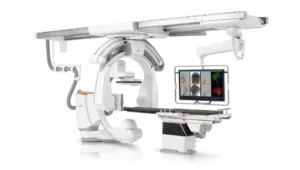 AI has become an indispensable tool for healthcare diagnostics, stretching the limits of what clinicians can achieve. Algorithms powered by machine learning now allow providers to analyze medical imaging with accuracy that rivals seasoned experts. For example, Siemens Healthineers’ Mobile Stroke Unit, powered by Dell Technologies, simplifies one of the most critical processes in emergency care by enabling stroke diagnoses within an ambulance. This ensures patients receive treatment on the way to the hospital, reducing delays that can mean the difference between recovery and lasting impairment.
Radiologists are also leveraging AI for efficiency. Strings, a pioneering company in real-time AI implementation, equips medical teams with tools to process imaging scans faster. Their systems provide insights that allow clinicians to make better-informed decisions during time-critical diagnoses, translating directly into improved patient outcomes.
Reimagining Healthcare’s Workflow
Paperwork and routine systems often siphon valuable time from healthcare providers. Enter AI, now automating processes like patient scheduling, electronic record management and automated billing. This lets hospital staff redirect their focus onto patient care instead of logistical or administrative challenges.
At the clinical level, intelligent PCs and systems designed for healthcare environments are helping hospitals process enormous datasets seamlessly. These tools allow for real-time updates in care workflows, ensuring practitioners always have the most accurate information at their fingertips.
Predicting Health Trends for Better Interventions
AI’s capabilities go beyond identifying problems; they are increasingly being used to anticipate them. With access to large-scale patient data, AI systems can flag potential red flags before symptoms appear. Take Varian’s Ethos radiotherapy solution, for instance. It constantly updates cancer treatment plans to reflect real-time patient conditions, ensuring therapy remains optimized and adaptable throughout treatment.
This approach shifts care from reactive to proactive, allowing healthcare providers to prevent health crises while improving long-term outcomes.
Where AI Will Lead Healthcare Next
Personalization Redefines Treatment
The next phase of AI is deeply personal. Advances in machine learning are paving the way for treatments that adapt to an individual’s unique needs. By analyzing genetic data, lifestyle choices and personal medical histories, AI can help create hyper-specific care protocols that are more effective and less invasive.
This way, medication side effects are minimized, therapeutic benefits are maximized and the trial-and-error of traditional prescriptions becomes obsolete. AI-based personalization is already being adopted in drug development, where data analysis forecasts how patients will respond to specific therapies, reducing the cost and length of clinical trials.
Elevating Decision-Making in Surgery
AI is transforming surgeries by delivering real-time insights during procedures. Machine learning algorithms analyze live data streams and guide surgeons with recommendations based on millions of previous cases. This kind of augmented decision-making could drastically improve precision and outcomes in high-stakes scenarios.
For example, wearable medical devices and AI tools embedded in surgical robots are helping surgeons focus on the intricacies of each case while gaining machine-level accuracy and assistance.
Bridging the Gap in Global Healthcare
AI’s ability to democratize healthcare access cannot be overstated. Innovative solutions, such as remote diagnostics and wearable health monitoring systems, are breaking geographic limitations and empowering rural and underserved communities to receive the same quality of healthcare available in urban centers.
Siemens Healthineers is investing in these efforts by introducing connected care solutions that make specialized expertise accessible in regions lacking traditional infrastructure. These tools ensure patients receive consistent, quality care regardless of location, addressing disparities that have long plagued healthcare systems.
Innovation Built on Collaboration
The kind of transition AI promises cannot happen in silos. Partnerships between healthcare providers and technology companies are shaping the innovations we see today. Varian’s Ethos solution, developed with robust technical infrastructure, is a great example of such collaboration driving impactful outcomes.
Events like Dell Technologies World provide the space for life sciences professionals, technologists and researchers to exchange ideas and refine next-generation healthcare solutions.
This idea exchange was showcased at the event in a dynamic panel featuring Sandi Colner, Dell’s General Manager of Healthcare and Life Sciences, and Dr. Michael T. Lawton, CEO and Head of Neurosurgery at Barrow Neurological Institute. The conversation centered around how AI is already reshaping medicine and what the future could hold for AI-powered care delivery:
-
- Strategies for integrating advanced AI seamlessly into healthcare workflows.
- AI’s future in providing real-time guidance during critical procedures like surgery.
- Scaling AI innovations to reach more healthcare organizations while training the next generation of clinicians.
Setting the Stage for What’s Next
The momentum behind AI in healthcare is profound, but sustaining it requires thoughtful implementation. Investing in scalable infrastructure such as cloud services, high-performance servers and secure data management platforms is critical to ensure AI solutions perform reliably at scale.
And it’s not just technology that needs advancement. Healthcare organizations must continue applying rigorous ethical considerations to how data is used, stored and shared with AI partners. Prioritizing transparency builds trust and ensures AI delivers benefits without compromising security or patient privacy.
The Future is Happening Now
AI is not merely shaping the future of healthcare; it’s transforming its present. From earlier and more accurate diagnoses to AI-assisted surgeries and predictive care, the evidence of its impact is everywhere.
The question for healthcare organizations is no longer whether to adopt AI but how to integrate these solutions effectively. By focusing on smart deployments and fostering collaboration across industries, the possibilities for progress are limitless. Now is the time to innovate, invest and create a future where every patient has access to smarter, more effective care.
Reach out to life.sciences@dell.com to explore how Dell’s solutions can help you transform patient care, operational workflows and research capabilities.