
Artificial Intelligence
Beyond Models: Where AI Becomes Reality
Everson Luz transforms AI complexity into scalable systems, enabling innovation beyond models. Discover how he makes AI a reality!
Key takeaways: Everson Luz focuses on building scalable systems that enable AI innovation beyond just models. His journey from IT support to Dell’s Research team shaped his expertise in solving real-world complexities. Everson designs systems with both AI and human users in mind, ensuring clarity, trust and smooth adoption. By simplifying processes and reducing friction, he empowers researchers to focus on experimentation and discovery. Dell’s team-first culture and operational excellence fuel his mission to turn complexity into sustainable momentum.
Where the real AI work happens
Most people think artificial intelligence work starts and ends with models. Everson Luz knows that the real magic happens everywhere else.
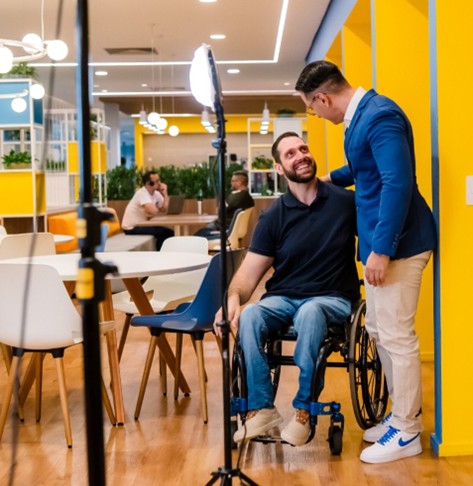
As part of Dell’s Research team, Everson builds the operational backbone that allows advanced artificial intelligence work to be reliable, scalable and ready for real‑world use. Rather than focusing on individual models, he concentrates on what surrounds them: the processes, integrations, automations and standards that quietly—but critically—make innovation possible at scale.
From the front lines of IT to research at scale
Everson’s professional foundation is deeply rooted in hands‑on information technology and operations. He joined Dell in 2019 as a Technical Support Engineer, where he worked closely with real users, real systems and real problems. In 2023, he transitioned into the Research team, bringing with him a sharp understanding of how systems break, how users think and how small points of confusion can quickly grow into major challenges when scaled.
Building systems, not just models
One of the projects he is most proud of didn’t involve building a single artificial intelligence model. Instead, it focused on designing an end‑to‑end system to support artificial intelligence research in a practical and sustainable way. As research efforts expanded, operational friction began to slow momentum. Data arrived from multiple sources, volumes increased, dependencies stretched across teams and traceability requirements became stricter. What was meant to enable innovation was slowly draining energy from it.
Simplifying complexity without losing trust
Everson set out to simplify the process without sacrificing trust in the data. He built scripts, automations and integrations that could be run in just a few clicks. These tools reduced ambiguity, standardized outputs and produced clear, audit‑ready results—without requiring users to open or understand code. The result was subtle but powerful. Researchers regained mental space. Instead of navigating tools and processes, they could focus on experimentation, discovery and innovation. Helping the team shine has always mattered more to Everson than standing out himself and this work accomplished exactly that.
Designing with AI—and with humans—in mind
Artificial intelligence also plays a role in how Everson designs systems. He uses Dell’s internal tools as a form of continuous testing. By creating personas that represent researchers and stakeholders, he simulates questions, behaviors, misunderstandings and common mistakes before systems ever reach real users. This approach often surfaces issues traditional engineering might miss—for example, when a single field is interpreted differently across teams. A “status” label might feel like a priority to one group and a workflow stage to another. Left unresolved, small ambiguities like these can lead to large‑scale rework. Testing flows, messages and outputs through these personas allows Everson to refine clarity, reduce errors and support smoother adoption from day one.
A career built on understanding real-world complexity
His career journey has strongly shaped how he approaches artificial intelligence and operational design. Early roles taught him how to maintain stability under pressure. Moving into support wasn’t a step backward—it was a deliberate investment in understanding users and real‑world complexity. That experience, paired with Dell’s team‑first culture, continues to influence how he works today.
Turning complexity into momentum
When Everson joined the Research team, everything came together: engineering expertise, operational thinking, problem‑solving skills and a culture that invests in people. Today, he focuses on turning complexity into clear, stable and sustainable systems so others can innovate without friction. He sees growth like strength training—built through consistency, a solid foundation and steady progress over time.