$9058.84
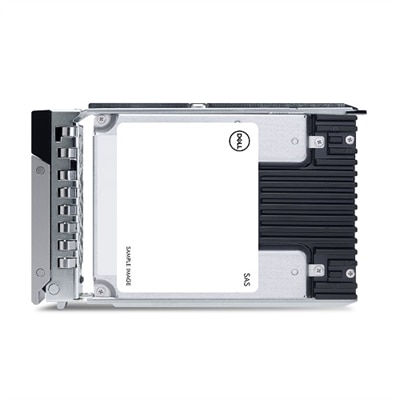
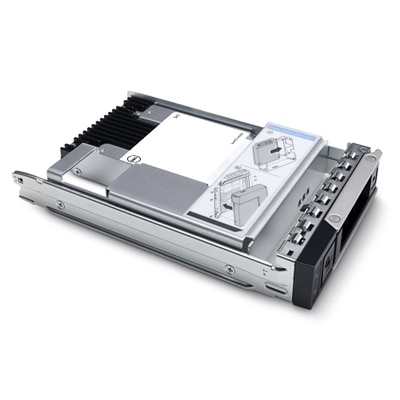
A 1.6TB SSD offering 12Gbps speed and 2.5-inch form factor for efficient data storage.
Enterprise SAS SSD drives deliver the speed, reliability, and scalability required to support demanding business applications and data-intensive workloads. Designed for robust performance in enterprise environments, these drives help optimize storage infrastructure and ensure seamless operation for mission-critical tasks. Explore a wide range of enterprise SAS SSD drives to enhance your organization's data management and accelerate productivity.
A 1.6TB SSD offering 12Gbps speed and 2.5-inch form factor for efficient data storage.
A 1.92TB read-intensive SSD with FIPS-140 encryption, 512e format, and 2.5-inch hot-plug design.
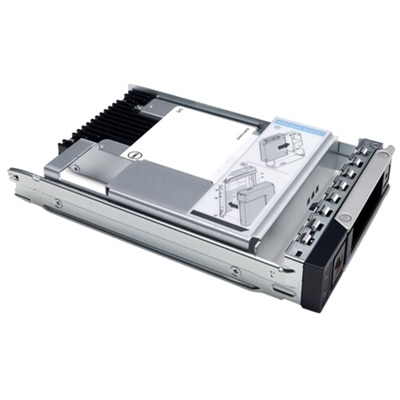
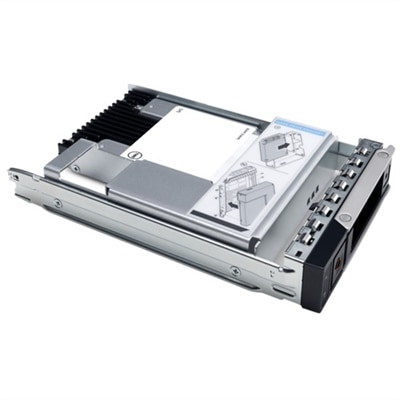
A 1.92TB SSD with 12Gbps speed and FIPS-140 encryption, featuring a 2.5in hybrid carrier.
A 1.6TB SSD offering up to 24Gbps speed for efficient data storage and transfer.
A 1.92TB SSD with 12Gbps speed, featuring FIPS-140 security and a 2.5in form factor.
A 3.84TB SSD offering up to 24Gbps speed, ideal for read-intensive tasks with hybrid carrier.
An 800GB SAS solid-state drive offering 12Gbps transfer speed and 10 DWPD durability.
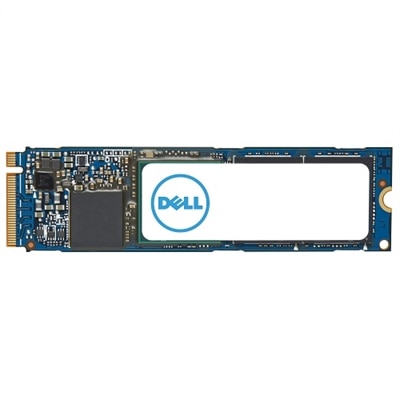
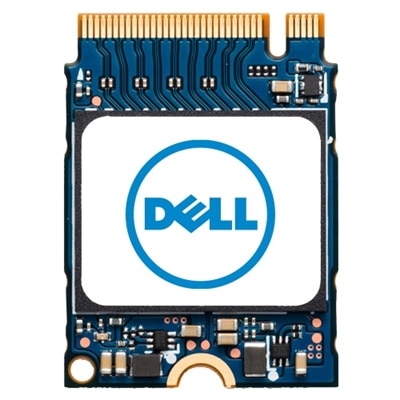
An M.2 PCIe NVME Gen 4x4 SSD offering 1TB storage and enhanced data transfer speeds.
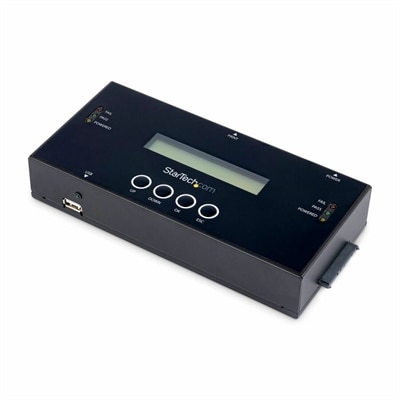
A standalone black device that clones and erases 2.5"/3.5" SATA and SAS drives with multiple secure modes.
Enterprise SAS SSD drives are designed for professional computing environments where consistent performance, dependable operation, and controlled access to business-critical information matter every day. Unlike consumer-oriented solid-state drives that commonly use SATA or PCIe connections, SAS SSDs use the Serial Attached SCSI interface and are built for compatible enterprise platforms. Depending on the system and generation, SAS interfaces may support 12Gb/s or 24Gb/s signaling, giving organizations a high-bandwidth connection for demanding applications. Their value is not measured by sequential speed alone. Enterprise SAS SSDs are engineered to deliver predictable input/output performance, low latency, strong error handling, and dependable operation across continuous workloads. They are commonly considered for relational databases, virtualization environments, transaction processing, analytics, application hosting, logging, caching, and other professional tasks that place frequent demands on flash memory. A dual-port design can provide two independent communication paths to compatible controllers, allowing a system to maintain access if one path, cable, or controller connection becomes unavailable. This capability supports high-availability configurations and can help reduce interruptions during maintenance or an unexpected component issue. Compatibility should be confirmed before purchase, including the host platform, drive bay or carrier requirements, firmware support, interface generation, form factor, and controller configuration. A drive that fits physically may still require specific firmware or a supported controller mode to operate properly. Reviewing the platform documentation and selecting a drive intended for the correct enterprise environment can prevent installation surprises, recognition errors, or limitations in performance.
Workload classification is another important consideration. Read-intensive SAS SSDs are a practical choice when applications retrieve information far more often than they rewrite it, such as reference databases, application repositories, boot volumes, and frequently accessed content. Mixed-use models are suited to environments where reading and writing occur with greater balance, while write-intensive models are built for sustained activity such as transaction logs, high-volume databases, event capture, caching, and virtualization tasks. Endurance is commonly expressed as Drive Writes Per Day, or DWPD, which estimates how much of the drive’s rated capacity can be written each day over its warranty period. A lower-DWPD option may be appropriate for a read-focused workload, while a higher rating can be worthwhile when frequent rewriting is central to the application. Power-loss protection is also a defining feature to evaluate. Enterprise drives with full power-loss protection use onboard energy reserves to help complete in-flight writes and preserve essential metadata if electrical power is interrupted. This can reduce the possibility of incomplete transactions or file-system inconsistency, though it should complement, not replace, an organization’s backup and recovery plan. Capacity deserves equal attention: selecting a drive that is too small can create operational pressure as applications grow, while choosing considerably more capacity than needed may raise costs without improving the workload. Consider usable capacity after formatting, redundancy requirements, expected growth, performance targets, and whether several smaller drives or fewer larger drives better suit the platform. Buyers replacing older media should also compare sector format, endurance history, firmware revisions, temperature limits, and manufacturer qualification lists. For teams refreshing professional computing equipment during the warmer or cooler parts of the year, a careful drive review can fit naturally into planned maintenance, application upgrades, or equipment lifecycle work. Enterprise SAS SSDs are generally purchased by IT departments, system administrators, managed service providers, laboratories, financial organizations, healthcare organizations, creative production teams, and other businesses that depend on responsive applications and reliable access to important information; they are less often chosen as personal gifts because correct compatibility depends heavily on the recipient’s existing platform. For broader solid-state options intended for compatible personal and professional computers, explore Internal SSDs. Before finalizing a purchase, document the host system model, available interface speed, supported form factor, required capacity, expected read-to-write ratio, endurance target, power-loss protection requirements, and any dual-path configuration. Matching those details to the drive specification helps create a balanced upgrade that delivers meaningful performance without overlooking reliability, serviceability, or long-term operating needs.
Enterprise SAS SSD drives offer high reliability, fast data access speeds, and durability for continuous 24/7 operation. They are engineered for demanding workloads, providing advanced error correction and wear-leveling technologies that help maintain data integrity and consistent performance, making them ideal for mission-critical applications.
Enterprise grade SSDs are commonly used by IT professionals, system administrators, and organizations that require robust storage solutions. They are most effective in environments such as data centers, virtualization platforms, large-scale databases, and industries like healthcare, finance, media production, and research where high-speed, reliable data access is crucial.
SAS SSDs are specifically designed for enterprise use, featuring higher endurance, enhanced error correction, and superior reliability compared to consumer SSDs. They support dual-port connections for redundancy, offer better performance under sustained workloads, and are optimized for multi-user, high-transaction environments.
While enterprise SSDs are commonly found in servers and data centers, they can also be installed in compatible desktop workstations. This is especially beneficial for professionals who require high-speed storage and reliability for tasks such as video editing, design, or running complex simulations.
When selecting a Dell enterprise SSD, consider factors such as endurance rating, interface compatibility (SAS or SATA), support for encryption, power-loss protection, and vendor support or warranty. These features ensure the drive meets your organization's performance and reliability requirements for critical business operations.
Add the products you would like to compare, and quickly determine which is best for your needs.