$10.99
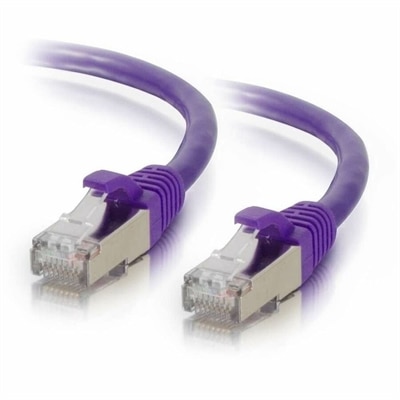
A purple shielded Cat6 network patch cable designed to reduce electromagnetic interference and crosstalk.
Cat5e patch cables offer a reliable solution for connecting network devices in both home and office environments. Designed for efficient data transmission, these cables help ensure seamless connectivity between computers, routers, switches, and other networking equipment. Whether you're setting up a new network or upgrading your existing infrastructure, Cat5e patch cables provide the versatility and performance needed to support your wired connections. Explore a variety of lengths and colors to find the perfect fit for your networking needs.
A purple shielded Cat6 network patch cable designed to reduce electromagnetic interference and crosstalk.
Cat5e patch cables are pre-terminated Ethernet cords designed to connect compatible devices with RJ45 ports, including routers, laptops, desktops, printers, game consoles, streaming devices and other equipment that uses a wired connection. They are a practical choice for home offices, classrooms, small businesses, entertainment areas and everyday computer setups because they are simple to install and do not require cutting, crimping or terminating cable by hand. A Cat5e cable can support Gigabit Ethernet speeds of up to 1,000 Mbps under suitable conditions, with the standard rated for operation at 100 MHz. That makes it well suited for sharing an internet connection, transferring files between compatible computers, joining online games, connecting a desktop to a broadband router or giving a streaming device a steady wired link. Unlike a wireless connection that can be affected by distance, walls or interference, a properly installed Ethernet cable provides a direct physical path between devices. The result can be a more consistent connection in areas where wireless coverage is uneven, such as a back bedroom, a basement workspace or a room separated from the router by several walls. When selecting Cat5e patch cables, begin with the length needed for the actual route rather than choosing an excessively long cord that may leave loops behind a desk. Short lengths are useful for connecting nearby equipment on a desktop, while longer cables can run along a wall, beneath a desk or through a cable-management channel. Leave enough room for gentle bends and for moving a laptop, monitor or other device without pulling on the connector. Cable color can also help organize a busy workspace by making connections easier to identify at a glance, especially when several cords run behind a desk or entertainment center. A low-profile design may be useful in tight spaces, while a flexible stranded conductor is well suited to patching because it can handle frequent movement and plugging and unplugging more comfortably than a stiffer cable intended for permanent in-wall installation.
Construction details can make a noticeable difference in daily use. Cat5e patch cables commonly use four twisted pairs to reduce signal interference, and unshielded twisted-pair construction is often appropriate for ordinary homes and offices where the cable is routed away from strong electrical interference. Buyers who plan to place cables near power equipment or in a particularly demanding environment should review the cable specifications and choose a design suited to that setting. A snagless boot helps protect the small plastic release tab on the RJ45 plug, making it less likely to catch on neighboring cords when the cable is removed from a crowded connection panel. Molded strain relief can provide additional support where the cable meets the plug, while clearly molded connectors make it easier to check that the plug is fully seated. Before purchasing, confirm that every device has a compatible RJ45 Ethernet port and consider whether the cable will be used for a temporary connection or left in place for an extended period. A cable rated for the intended route and installed without sharp bends, crushing or heavy tension is more likely to deliver dependable performance. It is also wise to measure the path, account for the distance around furniture and keep a little extra length for rearranging a workspace later. For compact setups that need a shorter run while still using a newer cable category, browse Short Cat6 Patch Cables. Cat5e patch cables can be especially useful for someone moving into a new home office, refreshing a study area or replacing a worn cord whose latch no longer holds securely. They are small, practical additions to a technology drawer and can help avoid the frustration of discovering that a wired connection is needed after furniture has already been arranged. During the cooler months, when people often spend more time working, studying, gaming or watching entertainment indoors, a few appropriately sized cables can make it easier to create a neat and reliable setup. Keep spare cables coiled loosely rather than tightly wrapped, avoid placing heavy furniture on them and label both ends when several connections follow similar routes. With the right length, durable connectors and a layout that allows comfortable movement, Cat5e patch cables offer a straightforward way to connect compatible devices and keep everyday digital routines running smoothly.
Add the products you would like to compare, and quickly determine which is best for your needs.