$149.99
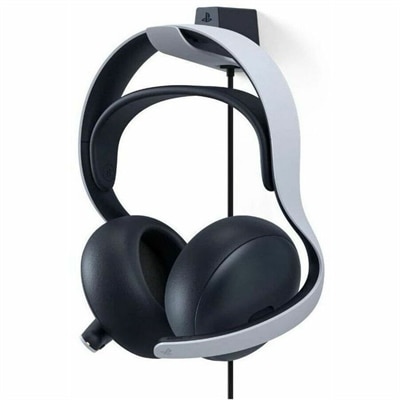
A white wireless gaming headset with planar magnetic drivers, Bluetooth, noise rejection, and 30-hour battery life.
Level up your play with console gaming headsets designed to immerse you in every moment of the action. Whether you're coordinating with teammates or diving into solo adventures, the right headset can make all the difference in your gaming experience. Explore a wide selection of console gaming headsets that deliver comfort and style, helping you stay focused and connected during even the longest sessions. Find your perfect match and enhance your setup for next-level gameplay.
A white wireless gaming headset with planar magnetic drivers, Bluetooth, noise rejection, and 30-hour battery life.
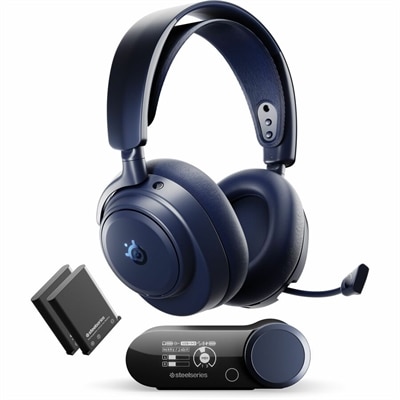
A Hi-Res gaming headset with 96kHz/24-bit audio, four-source mixing, ANC, and AI noise rejection.
Console gaming headsets bring game audio and voice chat together in a personal listening setup, keeping dialogue, environmental sounds, and conversations with teammates close without filling the room with speaker noise. Their usefulness extends from a quiet evening with a story-driven adventure to a competitive match where hearing movement behind a doorway can inform the next move. A well-suited headset balances clear sound, an intelligible microphone, and a comfortable fit with support for the console being used. Sound quality depends on more than powerful bass: a deep rumble can give an engine or explosion weight, but distinct midrange and treble help preserve spoken instructions, footsteps, and subtle environmental details. Accurate directional cues depend on the recording, the game’s audio processing, and the headset working together; a surround-sound label alone does not guarantee better positional accuracy. Stereo headsets can also reproduce spatial effects when a compatible console or game provides the processing. For multiplayer sessions, microphone clarity matters just as much as what comes through the earcups. A boom microphone positioned near the corner of the mouth, rather than directly in front of it, can pick up speech while reducing breath noise. Microphone noise reduction may help limit keyboard clicks or background conversation, although results vary with the microphone, processing, and room. It is different from active noise cancellation, which reduces certain sounds heard by the wearer. Mic monitoring, also called sidetone, feeds some of the wearer’s voice back into the headset, making it easier to speak naturally instead of raising the volume during an intense match. Accessible mute controls are useful when someone enters the room, while separate game and chat adjustments, where supported, help keep teammates audible without overwhelming the soundtrack. These qualities make console gaming headsets useful for solo players sharing a living space, friends catching up through cooperative games, and players who depend on quick, clear communication. For late-night play, personal audio also makes it easier to enjoy a detailed soundscape while keeping the television speakers off.
Compatibility is the foundation of a reliable console audio setup because matching a connector does not necessarily mean every audio and microphone feature will work. A wired console gaming headset with a 3.5 mm plug can offer a straightforward connection through a compatible controller or console audio port, with no wireless pairing or headset battery to manage for basic operation. The plug and port must both support the intended audio and microphone functions, and extras such as lighting or digital processing may require another connection. Cable length also shapes everyday use: a short controller connection keeps the cable nearby, while a cord stretched across a room can snag or pull against the headset. Wireless console gaming headsets allow more freedom to shift position on the couch or move within the supported range. Many use a dedicated 2.4 GHz USB transmitter or a console-specific wireless connection designed for low-latency audio, helping sounds stay closely aligned with on-screen action. Actual performance depends on the headset, platform support, distance, and interference. Bluetooth support by itself does not establish console compatibility, and some connections limit voice chat or introduce more delay than a dedicated gaming connection. Compatibility information should cover the exact console generation, transmitter mode, microphone support, and any restrictions on game/chat balance or spatial audio. For households that move between a console, computer, and handheld system, Multi Platform Wireless Gaming Headsets relate to that shared-device setup, although switching methods and supported features still differ by headset. Some designs switch between sources, while others can combine game audio with a separate mobile connection; those are distinct capabilities. Battery runtime, charging time, and whether listening is supported during charging also affect wireless convenience. Published runtime often reflects particular test conditions, so higher volume, additional wireless connections, or enabled processing can change the time between charges. A reachable charging cable and a consistent place to set the headset help keep a living-room setup orderly, especially when several people share controllers and accessories.
Comfort becomes most noticeable after the opening match, when earcup pressure, warmth, and headset weight have had time to build. Over-ear console gaming headsets generally surround the ears with padded cushions, but cushion depth and opening size determine whether the ears sit freely or press against the inner lining. An adjustable headband or suspension strap can distribute weight across the head, while swiveling earcups help the cushions follow the angle of the jaw. A secure fit should hold through ordinary movement without creating concentrated pressure at the temples. For people who wear glasses, softer cushions and moderate clamping force may reduce discomfort around the frames, although the fit can also affect the acoustic seal. Fabric-covered cushions tend to feel more breathable, while leatherette surfaces are often easier to wipe clean and can form a closer seal; neither material guarantees comfort for every wearer. Closed-back earcups generally limit sound leakage and reduce some outside noise through their physical seal, though they do not make a shared room silent. Construction matters at the points handled most often, including hinges, adjustment sliders, microphone joints, and cable connections. Reinforced components can help withstand repeated use, but weight and flexibility also influence how a headset feels. Replaceable cushions and detachable cables, when supported, make it easier to address wear without replacing the entire headset. Everyday care is straightforward: follow the manufacturer’s cleaning directions, wipe suitable surfaces with a soft cloth, keep moisture away from openings, and let damp cushions dry fully before storing them. Solvents, excessive heat, and tightly wrapped cables can damage finishes or stress materials. Lifting the headset with both hands and unplugging cables by the connector rather than the cord can reduce strain. For a birthday, graduation, or housewarming gift, the recipient’s console, preferred connection, and usual play space are more useful reference points than appearance alone. A lightweight wired design may suit someone who plays beside a controller charging station, while wireless freedom may better suit a couch across the room. In either setting, comfortable listening at a moderate volume and regular breaks support longer-term enjoyment without making every session louder than necessary.
Add the products you would like to compare, and quickly determine which is best for your needs.