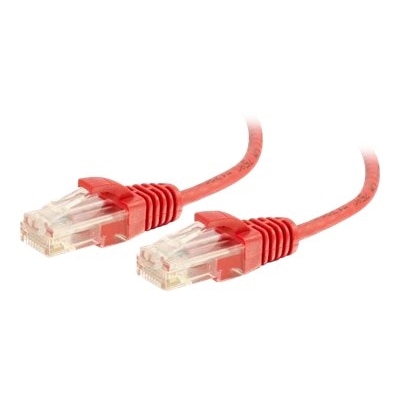
Ethernet Cables For Security Cameras
Ethernet cables for security cameras are essential components that ensure reliable and efficient connectivity for your surveillance system. Whether you're setting up a new security network or upgrading an existing one, these cables provide the necessary link between your cameras and network devices, facilitating smooth data transmission and uninterrupted monitoring. With various lengths and types available, you can find the perfect Ethernet cables to suit your specific needs, ensuring your security cameras perform optimally around the clock. Explore our selection to enhance the stability and performance of your security setup today.
This product is not available
Check out the following recommendations.
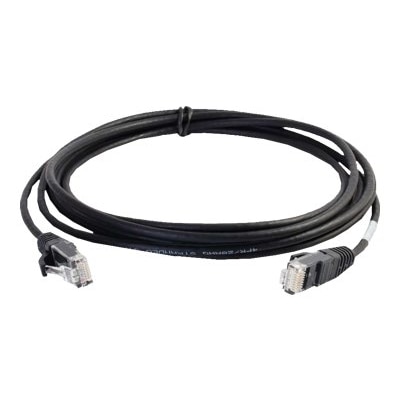
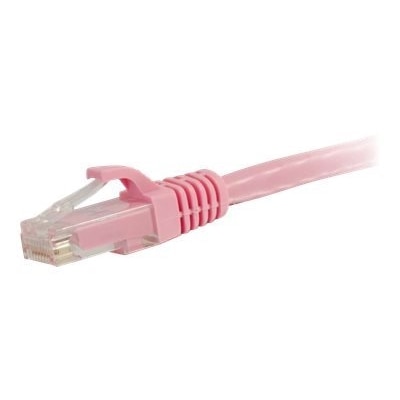
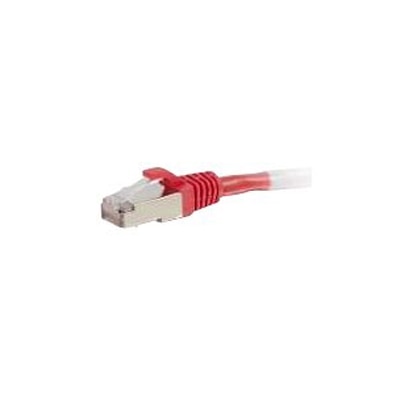
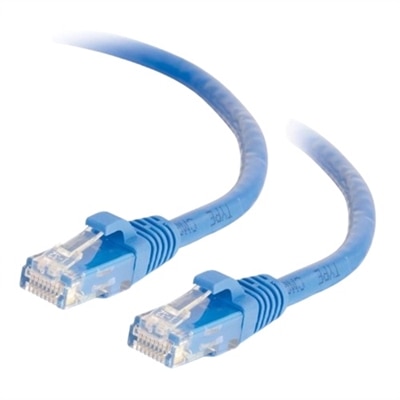
Ethernet Cables For Security Cameras
Ethernet cables for security cameras provide the physical connection that carries video from compatible IP cameras, with Power over Ethernet, or PoE, also delivering electricity through the same cable when the connected equipment supports it. That single-cable arrangement can keep a home office, entryway, or small business installation cleaner by reducing the need for a separate power cord at each camera. Cable selection depends on the camera’s connection requirements, the distance involved, and the environment along the entire route—not simply the resolution printed on the camera’s packaging. Cat5e supports Gigabit Ethernet over a properly installed channel of up to 100 meters, or approximately 328 feet, and can accommodate the traffic from many common IP cameras. Cat6 also supports Gigabit Ethernet over that distance, with tighter specifications for crosstalk and a higher frequency rating that can provide additional performance headroom. Neither category automatically improves image quality; its role is to carry the camera’s data reliably within the capabilities of the complete connection. For fixed installations using PoE, solid bare copper cable is a common choice because conductor material, size, and resistance affect power delivery as well as data transmission. Copper-clad aluminum has higher resistance than comparable copper conductors and is not a substitute for standards-compliant copper category cabling, particularly where dependable PoE operation matters. The familiar rectangular RJ45-style connector fits many IP camera Ethernet ports, but an Ethernet cable alone cannot convert an analog camera into an IP camera or make a non-PoE camera accept power through its data port. These distinctions matter whether the intended view is a front porch, a stockroom doorway, or a driveway after dark. Related Cables For Gigabit Ethernet offer additional context for the cable categories used in compatible wired connections. The right fit begins with matching the cable’s documented specifications to the camera and installation rather than treating every similar-looking cord as interchangeable.
Construction and jacket ratings help distinguish cables suited to a short indoor connection from those intended for a permanent route through a building or an exposed outdoor location. Solid conductors are commonly used for stationary cable runs, while stranded conductors offer flexibility for patch cords that need to bend around a desk or connect equipment within a confined space. A supple patch cord can be convenient beside a monitoring desktop, but flexibility alone does not establish suitability for installation inside a wall. In-wall, riser, and plenum applications require the appropriate listed cable type under applicable building and electrical codes; an ordinary PVC jacket does not, by itself, demonstrate that a cable belongs in an attic, wall cavity, or air-handling space. Outdoor conditions introduce different demands. Sunlight can degrade jackets that lack UV resistance, while moisture can affect cable routed beneath an eave, through a damp passage, or underground. Outdoor-rated and direct-burial-rated are not interchangeable descriptions, and underground conduit can collect water, making the cable’s wet-location suitability important even when it has physical protection. A route across a sheltered porch may therefore call for different jacket properties than one extending to a detached garage. Connector protection deserves equal attention because a weather-resistant jacket does not make an exposed plug or camera socket waterproof. Compatible seals, boots, and connection enclosures help protect vulnerable junctions when installed according to the camera manufacturer’s requirements. Physical fit also includes the diameter of the cable, the size of its connector housing, and the opening in any weatherproof gland. A thick molded boot may protect the locking tab yet fail to pass through a narrow fitting. For a neat finished appearance, jacket color can blend with trim or make a cable easier to identify during maintenance, but environmental and fire ratings remain more important than appearance. Durable camera cabling is the combination of suitable materials, protected connections, and a route that avoids unnecessary physical stress.
Length, handling, and the electrical surroundings influence how well a camera cable performs over time. The familiar 100-meter Ethernet limit generally describes a complete copper channel, commonly consisting of up to 90 meters of permanent cabling plus patch cords, rather than 100 meters of fixed cable with unlimited extensions added afterward. PoE performance also depends on the supported power standard, conductor gauge, connection quality, temperature, and the camera’s actual power requirements. A camera with infrared illumination, a heater, or motorized movement may draw more power than a simple indoor model, making the full equipment specifications especially relevant. Length measurements need to account for the real path along walls, around corners, and up to the mounting point, with modest slack for servicing rather than a taut connection hanging from the camera port. Factory-terminated cables suit routes where finished connectors can pass through the available openings, while bulk cable accommodates custom-length permanent installations when correctly matched connectors, termination methods, and testing are used. Shielding can be useful in electrically noisy environments, but shielded cable requires compatible components and proper bonding; it is not automatically a better choice for every home. Separation from power wiring and compliance with local routing requirements remain important regardless of cable category. Everyday durability also comes from avoiding crushed sections, tight staples, sharp bends, and doors that repeatedly pinch the jacket. Along a busy back-office wall, supported cabling is less likely to snag on a chair or be pulled loose during cleaning. In an exposed location, periodic checks for cracked jackets, loose supports, corrosion, and moisture around connections can reveal damage before it interrupts the camera feed. Care generally involves keeping accessible cable surfaces clean with a dry or lightly damp cloth when appropriate, avoiding harsh solvents, and preventing liquid from entering connectors. For homeowners, small business operators, and installers, well-matched Ethernet camera cables are practical accessories whose value lies in unobtrusive, consistent service: a secure fit at the port, materials suited to the surroundings, and reliable delivery of data and compatible PoE power throughout the intended run.
FAQs:
For outdoor security camera setups, it’s recommended to use Cat6 or Cat6a Ethernet cables with weather-resistant or UV-protected jackets. These cables are designed to withstand exposure to the elements, including rain, sunlight, and temperature fluctuations, ensuring reliable performance and long-term durability.
Yes, most modern Ethernet cables such as Cat5e, Cat6, and Cat6a support Power over Ethernet (PoE). This allows both data and power to be transmitted through a single cable, simplifying installation and reducing the need for additional power sources near your cameras.
Shielded Ethernet cables are beneficial in environments with significant electromagnetic interference or when cables run alongside other electrical wiring. They help minimize signal degradation and maintain the integrity of your video feeds, making them a good choice for busy office settings or industrial spaces.
Cat5e cables are suitable for standard home security installations and support speeds up to 1 Gbps. Cat6 cables offer higher speeds up to 10 Gbps and better performance for high-definition cameras or larger setups. Cat6a provides even more shielding and is ideal for future-proofing or demanding commercial environments.
Absolutely. The same Ethernet cables used for security cameras can also connect computers, printers, gaming consoles, and other networked devices. This versatility makes them a practical choice for building a robust and flexible home or office network.