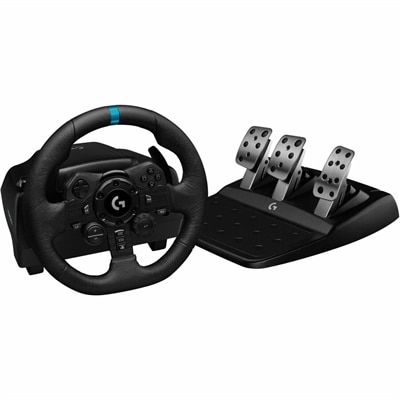
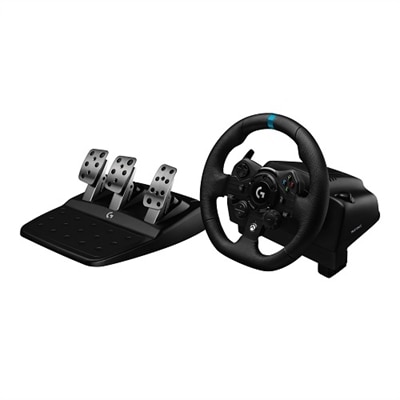
Force Feedback Wheels
Elevate your racing simulation experience with force feedback wheels designed to deliver immersive and responsive control. Perfect for gaming enthusiasts and competitive racers alike, force feedback wheels offer enhanced realism and precision for every turn and maneuver. Explore a wide selection of options to find the ideal wheel that matches your setup and driving style, and take your virtual racing to the next level.
This product is not available
Check out the following recommendations.




Force Feedback Wheels
A force feedback wheel is a steering controller for racing games and driving simulators that uses a motor to apply changing resistance and turning forces to the wheel rim. Those forces respond to information from compatible software, translating simulated vehicle behavior into physical sensations at the driver’s hands. Unlike a wheel that simply vibrates or returns to center with a spring, a force feedback racing wheel can push against steering input, lighten as front-tire grip changes, and communicate the impact of a curb through the steering column. The result is a more connected driving experience, whether the setting is a tight street circuit, a sweeping road course, or a loose gravel stage. The character and accuracy of that feedback depend on the game’s physics, its wheel support, and the controller’s settings; not every title communicates the same details. Three common mechanisms create these effects. Gear-driven wheels transfer motor force through gears, producing noticeable steering resistance with a mechanical feel that may include some notchiness or operating noise. Belt-driven wheels use belts and pulleys to transmit force, often providing smoother motion and less gear noise, although the design can soften some fine sensations. Direct drive wheels connect the steering shaft directly to the motor without a belt or gear reduction stage, allowing responsive changes in force and detailed feedback. Actual strength, smoothness, and fidelity vary across designs, so the mechanism alone does not describe the whole experience. Hybrid systems also combine different transmission methods. For someone accustomed to a handheld controller, the biggest change is often the relationship between hand movement and the car’s direction: a small correction becomes a measured turn of the rim rather than a brief movement of a thumbstick. Casual racing enthusiasts may enjoy that added physical involvement, while dedicated simulation drivers may value clearer cues during braking, cornering, and recovery from a slide. The broader category of Simulator Wheels also encompasses different steering layouts and configurations, with force feedback distinguishing controllers that actively communicate steering loads rather than relying only on centering resistance.
The way a racing wheel fits a room and a driver matters almost as much as its feedback mechanism. A desktop setup needs a secure clamp, sufficient clearance beneath the work surface, and a tabletop capable of handling repeated steering loads. A dedicated wheel stand or cockpit can provide a more rigid foundation, especially for stronger motor systems, but mounting-hole compatibility and the dimensions of the wheel base still matter. Movement in a desk or stand can blur the sensations that the motor is trying to deliver, while a rolling chair or sliding pedal unit can interrupt an otherwise convincing lap. A comfortable position leaves a slight bend in the elbows, keeps shoulders relaxed, and allows the pedals to be pressed without stretching or shifting the seat. Rim diameter, grip thickness, and button placement influence that fit. A round rim accommodates frequent hand repositioning during rally driving or drifting, while a more compact, shaped rim can suit racing styles that keep the hands near a consistent position. Rotation range is another consideration: a broad steering range can support road-car simulation, while some racing vehicles use a shorter steering angle. Matching the controller’s rotation to the simulated vehicle helps steering movement feel proportionate. Materials contribute to both comfort and longevity. Molded grips can be straightforward to wipe clean, leather-covered surfaces can offer a familiar steering-wheel feel, and suede or microfiber coverings may provide a secure grip but need more attention to perspiration and surface wear. Metal structural components can support a solid feel, though overall durability also depends on bearings, fasteners, internal construction, and mounting stability. Paddle shifters should be reachable without an awkward stretch, and frequently used controls should remain accessible during a turn. Pedals shape the experience just as strongly as the rim. Some brake pedals measure movement, while load-cell designs measure applied force, offering a different way to judge braking effort. Pedal spacing, resistance, and a stable mounting surface all affect comfort and consistency, particularly during a longer practice session or a race that demands repeated hard braking.
Compatibility determines how all those physical details come together. Support should match the intended computer or gaming console, the racing software, and any pedals, shifters, or handbrakes used alongside the wheel. A USB connection by itself does not guarantee that every component will work together, and console compatibility may depend on the complete controller configuration rather than a single accessory. On a computer, drivers, firmware, and game-specific settings can also influence recognition and feedback behavior. Torque, usually expressed in newton-meters, describes the wheel’s turning force, but a larger number does not automatically mean a better experience for every driver. Moderate resistance can make extended sessions more comfortable, while additional torque capacity can provide room for brief force peaks without requiring heavy steering throughout a lap. Excessive feedback settings may cause clipping, where different strong effects reach the same output limit and lose their distinction. Balanced settings preserve useful variation: the gradual buildup of steering weight through a fast bend should feel different from the sharp strike of a raised curb. Strong motorized wheels also warrant care around hands, loose cables, and nearby objects, particularly when the wheel rotates during startup calibration or reacts abruptly in a game. Intended use helps define a suitable setup. An occasional evening racer may prioritize easy attachment and removal from a shared desk, while a regular endurance-racing participant may place greater importance on seating position, cooling clearance, and controls that remain comfortable after many laps. As a gift for a racing enthusiast, a force feedback wheel is most useful when the recipient’s platform, available space, and existing equipment are understood. Everyday care is generally simple but should follow the manufacturer’s instructions: remove surface dust with a soft cloth, use only approved cleaning methods for the grip covering, and keep liquids away from seams, buttons, and ventilation openings. Cables need enough slack for the intended installation without being pinched by a mount or caught beneath pedals. Periodic checks of clamps and mounting hardware help keep the setup steady, preserving the clear steering sensations that make simulated driving engaging.
FAQs:
When choosing a force feedback wheel, consider the strength and smoothness of the force feedback motor, the material and grip of the wheel, pedal sensitivity, and the availability of customizable controls. Look for wheels that offer robust force feedback for authentic road feel, durable construction, and compatibility with your preferred platform and accessories.
Force feedback steering wheels are ideal for racing game enthusiasts, simulation fans, and anyone seeking a more immersive experience. They are also great for families, friends who enjoy multiplayer games, and those interested in motorsports training or realistic driving practice at home.
Force feedback technology replicates the physical sensations of driving, such as road texture, tire grip, and resistance during turns. This tactile feedback provides a deeper sense of immersion and control, allowing players to react more intuitively to in-game events and improving overall enjoyment and performance.
Many force feedback Xbox wheels are designed for cross-platform compatibility, supporting use with PCs and sometimes other gaming consoles. However, compatibility varies by model, so it’s important to check the specifications to ensure the wheel meets your needs across different devices.
Popular accessories to enhance your force feedback wheel setup include racing seats, pedal sets, shifters, monitor stands, and high-quality audio systems. These additions can help create a more immersive and comfortable racing environment, whether you’re setting up a dedicated simulator rig or upgrading your current gaming area.