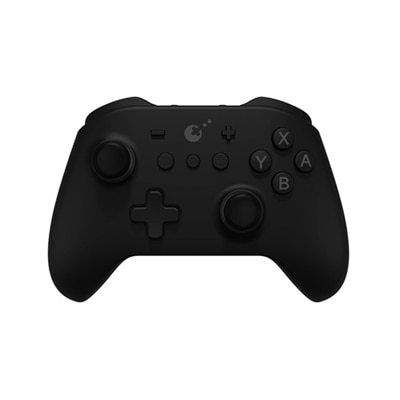
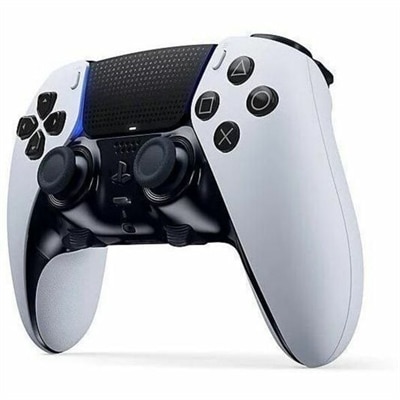
Gaming Controllers With Haptic Feedback
Level up your gameplay experience with gaming controllers with haptic feedback, designed to bring every action to life with immersive sensations. Whether you're exploring new worlds or competing in fast-paced battles, these advanced controllers help you stay connected to the action. Discover a range of options that deliver enhanced responsiveness and precision, perfect for gamers seeking greater control and realism. Find the ideal gaming controllers with haptic feedback to elevate your setup and enjoy a more engaging way to play.
This product is not available
Check out the following recommendations.


Gaming Controllers With Haptic Feedback
Gaming controllers with haptic feedback bring a more detailed sense of touch to compatible games, replacing the broad shaking sensation of traditional rumble with more controlled, localized responses. Instead of simply vibrating when a character takes damage or an explosion occurs, a haptic controller may create subtle pulses that differ in strength, timing and location. A racing game can use changing resistance and vibration to suggest tires slipping across wet pavement, a rough road surface or a hard landing. In an action game, the controller may communicate the kick of a weapon, the impact of a nearby blast or the difference between walking across wood, stone and grass. These effects are produced through precision actuators rather than relying only on a spinning weighted motor, allowing developers to connect tactile feedback more closely to what appears on screen. The result is a more dimensional playing experience, especially when sound and visuals are combined with touch. Haptic feedback is not identical across every controller, however. The intensity, texture and responsiveness depend on the controller’s hardware, the game’s software support and the platform being used. Before choosing, check compatibility with your gaming PC, console or other supported device, along with the games you play most often. Some titles use advanced haptics extensively, while others provide only basic vibration or no tactile effects at all.
Comfort and control remain just as important as the feedback technology itself. A controller should feel balanced in both hands, with thumbsticks, triggers and face buttons positioned naturally for the way you play. Pay attention to the shape of the grips, the spacing of the controls and the surface texture, particularly if long sessions are part of your routine during cooler months. A lighter design may be easier to hold for extended periods, while a slightly heavier controller can feel substantial and stable during fast-paced play. Wired models can provide a direct connection without battery concerns, making them a practical choice for desk-based PC gaming, while wireless models help keep a living room or bedroom setup uncluttered. If you choose wireless, consider battery life, charging options and whether the controller can also operate while connected by cable. Trigger travel and button response can affect the feel of racing, sports, action and competitive games. Some players prefer smooth, full-range triggers for driving and aiming, while others appreciate shorter, faster actuation for repeated inputs. For a different style of button response, explore Gaming Controllers With Mouse Click Triggers. Additional features such as adjustable vibration strength, motion controls, a built-in headset connection, remappable inputs and companion configuration software can add flexibility, but they are most useful when they fit your habits rather than simply expanding a specification list. Also review operating system support, connection requirements and available ports before completing a purchase, especially when moving between a desktop setup and a portable gaming device.
These controllers can suit a wide range of players, from someone building a first PC gaming setup to an experienced player who wants more sensory detail from familiar games. A haptic controller may be a thoughtful gift for a friend or family member who enjoys racing, adventure, sports or immersive single-player experiences, particularly when it works across the devices they already own. It can also be useful for shared play: tactile cues can make a game feel more immediate for a player who relies on sound and touch as much as visual information, and adjustable intensity can help tailor the experience to personal comfort. Competitive players should look beyond haptics alone and compare stick precision, trigger consistency, input latency, wired performance and the controller’s overall durability. Players who favor narrative adventures may place greater value on nuanced textures, environmental effects and adaptive trigger responses. For casual sessions, straightforward wireless pairing, comfortable grips and dependable battery life may matter more than an extensive set of customization tools. Think about where the controller will be used, how many hours it will typically be held and whether multiple platforms need to be supported. A well-matched gaming controller with haptic feedback can make familiar moments feel newly tangible: a vehicle skidding over gravel, a bowstring drawing taut or a distant impact traveling through the grips. Choosing around compatibility, comfort and the type of feedback a game actually supports helps ensure that the feature adds meaningful immersion rather than becoming a rarely used extra.
FAQs:
When selecting a gaming controller with haptic feedback, consider features such as adjustable vibration intensity, adaptive triggers, programmable buttons, and ergonomic design. Compatibility with your preferred platform, wireless connectivity options, and battery life are also important factors that can enhance your overall gaming experience.
Haptic feedback controllers are beneficial for a wide range of gamers, from casual players to competitive enthusiasts. They are especially appealing to those who enjoy immersive, story-driven games, simulation titles, or fast-paced action games where tactile feedback can provide a more engaging and responsive experience.
Haptic feedback enhances gameplay by providing realistic tactile sensations that mimic in-game actions and environments. This technology allows players to feel subtle differences, such as the tension of a trigger, the impact of explosions, or the texture of various surfaces, making the gaming experience more immersive and lifelike.
Most modern haptic feedback controllers are designed to be compatible with a wide range of PC games, especially those that support advanced controller features. However, the level of haptic integration may vary depending on the game, so it's a good idea to check for compatibility with your favorite titles.
Yes, haptic feedback controllers make excellent gifts for gamers of all ages. They offer a unique way to experience games, adding a new layer of immersion and excitement. Whether for a birthday, holiday, or special occasion, these controllers are a thoughtful choice for anyone looking to enhance their gaming setup.