$69.99
A comfortable, adjustable wired gaming headset featuring Hi-Res certified drivers and Dolby Atmos spatial audio support.
Gaming surround sound transforms your entertainment experience by placing you in the center of the action. Designed to enhance every detail, gaming surround sound brings immersive audio to your favorite titles, letting you hear footsteps, environmental effects, and dynamic soundscapes with remarkable clarity. Whether you're competing online or exploring expansive game worlds, discover options that elevate gameplay and provide an exceptional auditory journey. Explore gaming surround sound solutions that help you stay focused and connected during every session.
A comfortable, adjustable wired gaming headset featuring Hi-Res certified drivers and Dolby Atmos spatial audio support.
A comfortable tri-mode wireless gaming headset delivering tactile audio precision with Dolby Atmos® for extended sessions.
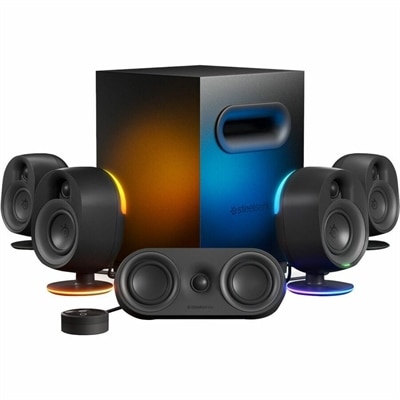
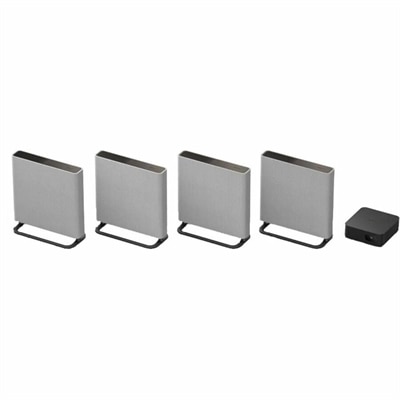
A 5.1 surround sound speaker system featuring Bluetooth, wireless rear speakers, USB connectivity, and a subwoofer.
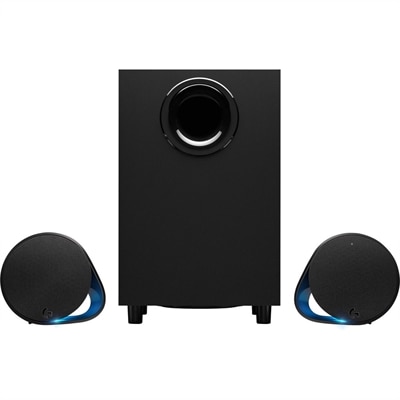
A black 2.1 Bluetooth speaker system delivering 240-watt audio with customizable RGB lighting and DTS:X surround.
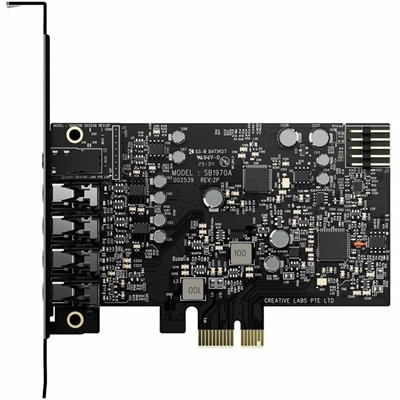
A PCIe sound card delivering 7.1 surround, 32-bit/384 kHz audio, 120 dB SNR, and headphone amplification.
A wireless gaming headset with simultaneous Bluetooth, 50-hour battery life, spatial audio, and a noise-rejecting microphone.
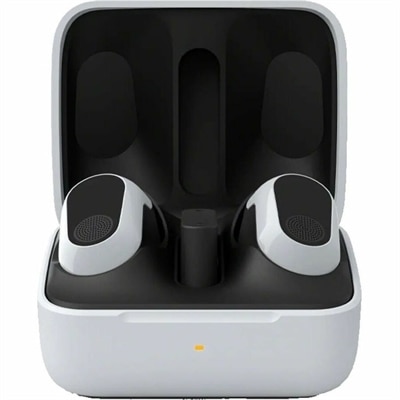
A white wireless gaming earbud set with active noise cancellation, spatial audio, and 12-hour battery life.
Gaming surround sound brings direction, distance, and atmosphere to game audio, helping footsteps, dialogue, engines, and environmental effects feel connected to the action on screen. Rather than presenting every sound as coming from the same place, a compatible surround or spatial audio setup can create the impression of activity beside, behind, and sometimes above the listener. A doorway creaking off to one side or a helicopter passing overhead becomes part of a more convincing scene. The two main approaches are physical surround speaker systems, which distribute audio through speakers positioned around a room, and headphones or gaming headsets that use spatial processing to reproduce directional cues through two earcups. Physical systems offer an open, room-filling experience, while headsets keep the listening experience personal and are often more practical for shared spaces. Neither approach guarantees a competitive advantage: positional accuracy depends on the game’s audio design, the playback equipment, the selected settings, and the listener. A traditional 5.1 speaker arrangement includes front left, center, front right, and two surround channels, along with a subwoofer for low-frequency effects. A 7.1 arrangement adds two more surround channels, while compatible immersive formats can incorporate height information through additional speakers or processing. Headset labels such as virtual 7.1 describe processing rather than seven separate speakers arranged around the user. Object-based spatial audio can place supported sounds within a three-dimensional listening space, but it requires a compatible playback path to work as intended. These distinctions matter across different kinds of play. A story-driven adventure benefits from believable weather and spacious interiors, a racing game gains texture from approaching engines, and a team match relies on effects and speech remaining distinct. Strong bass can give an explosion weight, but balanced reproduction also preserves the quieter details beneath it. Gaming surround sound is most satisfying when scale and clarity work together, making a busy battlefield feel expansive without turning every moment into a wall of noise.
Surround sound speakers suit gaming rooms, desktop setups with room for separate components, and living spaces where sound can be enjoyed without disturbing others. Their physical arrangement has a direct effect on the experience: surround speakers beside or behind the listening position create a different sense of space from several speakers crowded together beneath a monitor. A center channel can help anchor dialogue near the screen, while a subwoofer adds the low-frequency rumble of engines, impacts, and distant thunder. Bass performance depends on placement and room acoustics as well as the equipment itself; a corner location can make low frequencies more prominent, sometimes at the expense of definition. Rugs, curtains, and upholstered furniture often reduce reflections compared with bare floors and walls, helping effects sound less harsh or smeared. For a coordinated room setup, Surround Sound Speaker Packages provide a related category to consider alongside gaming-focused audio equipment. The practical fit extends beyond speaker count. Desktop depth, the distance between the screen and chair, access to power outlets, and safe routes for cables all affect how comfortably a system becomes part of everyday use. Compact enclosures leave more room for a keyboard and mouse, while larger cabinets require sturdy surfaces and enough clearance to avoid blocking controls or vents. Cabinet rigidity and construction can help limit unwanted vibration, though enclosure material alone does not determine sound quality. Soundbars offer another format for tighter spaces, but a single front-mounted unit may rely on processing or room reflections rather than discrete surround speakers. Systems described as wireless may still require power cords, and the connection between the gaming device and the audio system remains important. USB, analog, optical, and HDMI connections carry different capabilities depending on the equipment. A matching connector does not necessarily mean multichannel audio will pass through it, particularly when a monitor or another device sits between the source and speakers. Supported channel formats, decoding requirements, and the complete connection path are more useful considerations than speaker count alone.
Gaming headsets and headphones with spatial audio support offer a more contained alternative for late-night sessions, shared apartments, and desks where rear speakers would be impractical. Their directional effects depend on processing that models how sound reaches the ears, so the perceived placement of footsteps or overhead movement can vary from person to person. Some games provide their own headphone spatial audio; adding another surround effect on top can blur cues rather than improve them. Wired connections avoid battery management, while wireless designs offer freedom of movement but require attention to battery life, charging, platform support, and latency. Wireless technologies are not interchangeable, and a connection suitable for music may introduce noticeable delay during play. Comfort becomes especially important during longer sessions. Ear cushions should surround or rest against the ears without creating painful pressure, and an adjustable headband helps distribute weight across the head. Breathable fabric cushions can feel cooler, while leatherette surfaces are often easier to wipe clean but may retain more warmth. Glasses, hair, and ear shape can affect the cushion seal, changing both comfort and bass response. Closed-back earcups generally contain sound better than open-back designs, which allow more sound to pass in both directions. For multiplayer use, a microphone with clear voice pickup, accessible mute controls, and manageable game-to-chat balance can matter as much as the surround effect. Durability also comes from everyday details such as secure hinges, strain relief around cables, and replaceable cushions where supported. Gentle cleaning according to the manufacturer’s directions, dry storage, and keeping liquids away from drivers and connectors help protect both headsets and speakers. Cables last better when loosely gathered rather than sharply bent or pulled from a distance. These audio categories can make thoughtful gifts for players who enjoy immersive worlds, competitive matches, or cooperative evenings, provided the equipment matches their platform, room, and listening preferences. Moderate listening levels and regular breaks support more comfortable use; turning up the volume is not a substitute for clear sound. Across a personal headset and a full speaker arrangement, the goal remains convincing space, intelligible voices, and details that complement the game rather than overwhelm it.
Add the products you would like to compare, and quickly determine which is best for your needs.