Home Office Printer Ink

Find the right home office printer ink to keep your workspace running smoothly and efficiently. Whether you’re printing important documents, family photos, or school assignments, having reliable ink on hand ensures crisp, clear results every time. Explore a wide selection of home office printer ink options designed to meet your daily printing needs and help you stay productive throughout the day.

Filters

$16.99

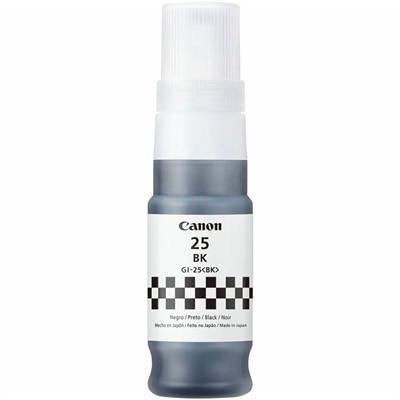
A black pigment-based ink bottle delivering sharp, smudge-free text with keyed, squeeze-free filling for MegaTank printers.

$16.99

Home Office Printer Ink

Home office printer ink supports the everyday work that still needs a clear, readable page, from signed forms and shipping labels to meeting notes, school assignments, and client presentations. The right match depends first on the printer model and the ink cartridge or refill number specified for that machine. Cartridges with similar shapes or names are not necessarily interchangeable, and compatibility can vary even among printers in the same family. Home office ink is designed for inkjet printers; laser printers use toner, which is a different printing material and cannot replace liquid ink. Within inkjet systems, some printers accept replaceable cartridges, while others use refillable tanks filled with designated ink bottles. Those formats have different fittings and delivery systems, so the printer’s exact requirements matter more than the appearance of the package. Cartridge designs also differ: some include a printhead, while others deliver ink to a printhead that remains inside the printer. These differences affect installation and maintenance, making the manufacturer’s compatibility information an important reference. For a remote employee printing contracts, dependable black text may be the main priority. A freelancer preparing visual proposals may need both readable type and consistent color, while a shared household printer may handle everything from a return label to a child’s illustrated project. Home office printer ink therefore covers more than one kind of workload. Black cartridges, color cartridges, coordinated multipacks, and designated tank refills serve different printer configurations and printing habits. A multipack can group compatible colors together, but its contents still need to match the printer’s required cartridge numbers. Matching the ink format to the equipment helps support clean output without treating cartridges or bottles as universal supplies. The most useful comparison begins with the complete model designation, then considers whether the household mainly prints brief documents, longer reports, graphics, or photographs. That combination of mechanical fit and intended use gives home office printing a more dependable foundation.

Printing volume helps distinguish standard-capacity ink from high-yield formats. High-yield cartridges generally contain more usable ink than their standard-capacity counterparts for the same compatible printer and are intended to produce more pages under comparable conditions. They do not necessarily change the appearance of a printed page, and a larger yield designation does not make a cartridge compatible with additional printer models. Standard-capacity formats can suit a desk where printing happens occasionally, while higher-capacity formats can reduce replacement interruptions during regular document work. Published page yields are estimates based on defined test conditions, not a promise that every household will print the same number of pages. A short letter with generous margins uses ink differently from a full-page photograph, a dense spreadsheet, or a presentation with colored backgrounds. Cleaning and maintenance cycles can also consume ink, so actual results depend on both document coverage and printer behavior. Color configuration adds another consideration. Some printers use a combined color cartridge, while others use separate cartridges for individual colors. Separate cartridges allow an exhausted color to be replaced individually; with a combined cartridge, one depleted color can require replacing the whole cartridge. Whether a printer can continue with an empty cartridge depends on its design. For presentations, charts, and creative documents, Color Printer Ink Cartridges help distinguish information that might be difficult to follow in black and white alone. A blue line and an orange line on a project chart, for example, need enough separation to remain recognizable on paper. Ink chemistry and paper choice both influence that result. Pigment inks use suspended particles and are often associated with crisp document text, while dye-based inks use dissolved colorants and can produce smooth color transitions. Neither description guarantees a particular finish, water resistance, or lifespan; performance depends on the specific formulation, printer, and paper working together.

Day-to-day print quality also reflects how ink is handled between printing sessions. Unopened cartridges generally benefit from remaining sealed in their original packaging, away from direct sunlight, excessive heat, and freezing temperatures. Package dates and manufacturer recommendations provide a better basis for shelf-life expectations than a single timeline applied to every ink format. Once installed, ink performance depends partly on printing frequency and the condition of the printer’s ink-delivery system. Long periods without use can contribute to dried ink or blocked nozzles in some inkjet printers, while the printer’s recommended maintenance routines can help address missing lines or uneven output. Repeated cleaning cycles are not a substitute for following the equipment’s instructions, and they use ink themselves. During replacement, keeping fingers away from electrical contacts and ink outlets helps protect the connection and limits mess. For refillable systems, the designated bottle opening and filling procedure matter because spills, mixed formulations, or incorrect colors can affect operation. Paper deserves similar attention. Plain office paper is practical for drafts, forms, and everyday correspondence, while compatible coated paper can better support detailed images and richer color. More ink does not automatically produce a better page: an unsuitable paper setting can leave a sheet overly wet, slow drying, or allow fine lettering to lose definition. Freshly printed pages may need drying time before stacking, highlighting, signing, or placing them in a document sleeve. Durability matters most when pages will be handled repeatedly, mailed, or kept for reference. Resistance to fading, moisture, and smudging varies, so important records benefit from an ink-and-paper combination with documented performance for the intended purpose. For ordinary home office work, the goal is straightforward: legible text, useful color, and predictable results from a compatible printing system. Responsible handling continues after replacement, with empty cartridges and bottles directed to manufacturer or local recycling programs that explicitly accept them. These practical details help printer ink fit comfortably into a working household, whether the next page is a time-sensitive form, a carefully prepared proposal, or a checklist for the week ahead.

FAQs:

Add the products you would like to compare, and quickly determine which is best for your needs.

Add the products you would like to compare, and quickly determine which is best for your needs.