$1549.99
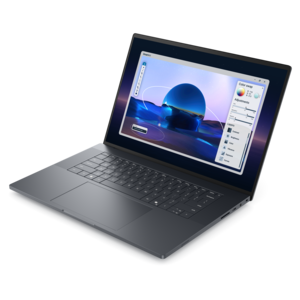
An AI-ready laptop with a spacious display, designed for creators and developers seeking high performance.
Elevate your AI projects with our expertly curated selection of laptops for AI development, designed to meet the demands of modern developers and data scientists. These powerful machines offer the performance and reliability necessary to handle complex algorithms, extensive datasets, and intensive computing tasks. Whether you're building sophisticated neural networks or deploying machine learning models, our range of laptops provides the optimal blend of speed, efficiency, and versatility to accelerate your AI initiatives. Discover cutting-edge technology that empowers innovation and transforms your ideas into reality.
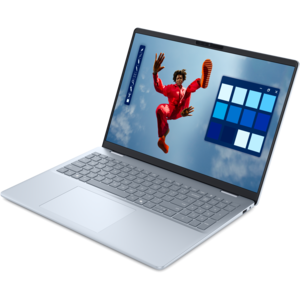
An AI-ready laptop with a spacious display, designed for creators and developers seeking high performance.
An AI-powered laptop with a spacious display and Intel Arc graphics for creators and developers.
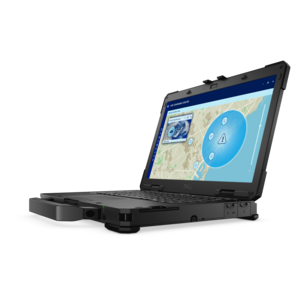
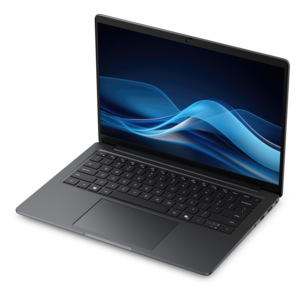
A lightweight semi-rugged laptop with Intel Core Ultra processors delivering AI performance for demanding fieldwork.
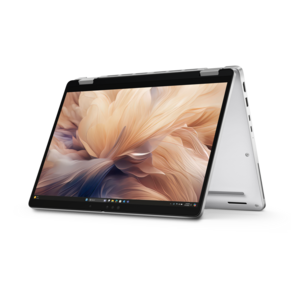
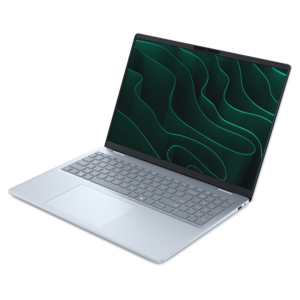
A secure, scalable commercial AI PC with a sleek, durable aluminum body for versatile multitasking.
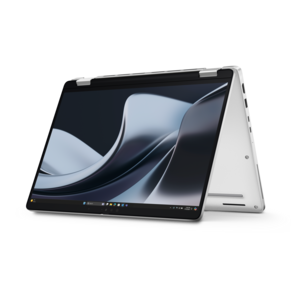
A secure, scalable commercial AI laptop featuring a durable aluminum design and productivity-focused display.
Laptops for AI development are designed for more than writing code in a browser or running a handful of office applications. They give developers the processing power, memory, graphics capability, and fast storage needed to prepare datasets, build applications, test machine learning workflows, and move between demanding tools without constant slowdowns. A high-performance multi-core processor is an important starting point because AI development often involves several tasks at once: compiling code, transforming data, running development environments, managing containers, and monitoring a local application. Processor families built for advanced computing can help keep these workloads responsive, while newer AI-accelerated processors may assist with select on-device features and development tools. Memory is equally important. While 16GB can support lighter programming and cloud-first workflows, 32GB is a practical minimum for serious AI development, especially when working with large codebases, local vector databases, notebooks, browsers, and communication tools at the same time. Developers who expect to run multiple virtual machines, larger datasets, or local language models may appreciate 64GB or more, provided the laptop supports that configuration. For a closer look at how these specifications fit different workloads, explore What Laptop Specs Are Ideal for AI Development and Machine Learning?.
Graphics hardware becomes especially important when development involves local model training, fine-tuning, image generation, computer vision, or other workloads that can take advantage of parallel processing. A laptop with a dedicated graphics processor and generous video memory can accelerate compatible frameworks and reduce the time spent waiting for experiments to complete. More graphics memory is useful when handling larger models, higher-resolution inputs, or several workloads together, though the ideal amount depends on whether the laptop will train models locally or connect primarily to cloud-based platforms and application programming interfaces. Cloud-first developers may place greater emphasis on a strong processor, ample system memory, reliable Wi-Fi, and battery life, since much of the intensive computation happens remotely. Developers who want to experiment offline, protect sensitive datasets, or avoid sending every test to an external service should prioritize dedicated graphics and higher video memory. Fast NVMe solid-state storage helps projects open quickly, speeds dataset loading, and makes software installation and compilation feel more immediate; 512GB is a useful starting point, while 1TB or more gives room for development environments, datasets, model files, and creative assets. It is worth remembering that model files can grow quickly, and a laptop that feels spacious on the first day may become crowded after several projects. Expandable storage, high-speed external connectivity, and a well-organized file strategy can extend its usefulness.
The right laptop also needs to remain comfortable and dependable through long sessions. Effective thermal design matters because processors and graphics hardware may run at high output for extended periods, particularly during training or repeated testing. A sturdy chassis, responsive keyboard, accurate trackpad, and clear display can make a noticeable difference when tracing code, reviewing logs, or studying lines of data late into a work session. A higher-resolution screen can provide more room for terminals and notebooks, while a larger panel may suit developers who keep documentation, code, and monitoring windows visible together. Port selection is another practical consideration: connections for external displays, storage, wired networking, and accessories can be valuable in a home office, classroom, lab, or shared workspace. Battery capacity and charging flexibility matter for people moving between meetings, classrooms, libraries, and workstations, although demanding local AI workloads typically use more power than ordinary web browsing. Security features, a comfortable webcam, a strong microphone, and dependable wireless connectivity also support collaborative development and remote learning. These laptops can suit software developers, data science students, researchers, engineers, educators, and creative professionals exploring generative tools. They can also make a thoughtful gift for a student beginning a computer science program or a working developer building a portable experimentation system, particularly when the configuration leaves room for more memory and storage over time. During warmer days spent working from a patio or the cooler months when a quiet desk becomes a favorite retreat, a capable laptop can bring an entire development environment wherever ideas take shape. Choose specifications according to the balance between local computation and cloud services, then consider comfort, portability, upgrade options, and the kinds of projects that are likely to fill the screen over the years ahead.
Add the products you would like to compare, and quickly determine which is best for your needs.