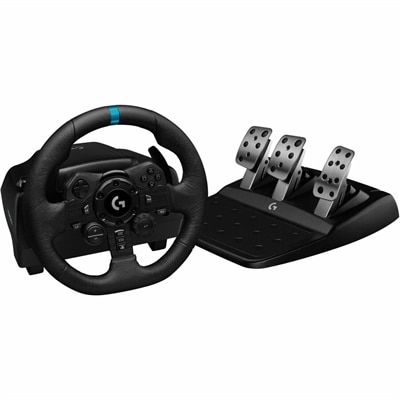
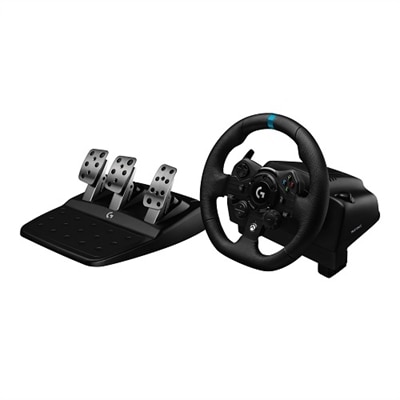
Racing Game Wheels
Racing game wheels deliver an immersive driving experience for gamers looking to elevate their virtual races. Designed for precision and control, these accessories transform any gaming setup into a realistic cockpit, making every turn and straightaway more engaging. Whether you're a casual player or a dedicated enthusiast, racing game wheels are the perfect addition to enhance gameplay and bring the excitement of the track into your home. Explore a wide selection to find the ideal fit for your racing style and gaming platform.
This product is not available
Check out the following recommendations.




Racing Game Wheels
Racing game wheels bring the physical rhythm of driving to a gaming setup, replacing thumbstick movements with a steering rim, responsive controls, and, in many configurations, separate accelerator and brake pedals. They suit everything from relaxed laps on a familiar circuit to focused practice in racing simulations, where small steering corrections and controlled braking help keep a car balanced through a corner. The biggest difference between wheel types is how they generate steering resistance and communicate what the virtual car is doing. Basic designs may use spring resistance or vibration, while force-feedback wheels use a motor to reproduce steering forces supported by the game. Gear-driven systems transmit that force through gears, creating distinct feedback that can feel notched and produce audible mechanical noise. Belt-driven systems use belts to transfer motor power and generally offer smoother movement, though their response depends on the overall design. Direct-drive systems attach the steering rim directly to the motor shaft, allowing detailed, responsive feedback without an intervening gear or belt transmission. Direct drive is not automatically the right fit for every room or player: motor strength, mounting requirements, software support, and comfort matter alongside the drive mechanism. Stronger feedback can make steering feel more substantial, but a manageable setting that preserves subtle sensations is often more useful than maximum resistance. A light change in steering weight as the front tires lose grip can communicate more than constant heavy force. Steering rotation also shapes the experience. A broad rotation range can suit road cars and driving simulations, while a smaller configured range may feel more natural for certain race cars or arcade-style games. Adjustable rotation and sensitivity make it easier to match the wheel to different driving styles. For casual players, the appeal may be the simple pleasure of steering through a sweeping bend; for dedicated racing enthusiasts, it may be the repeatability of practicing the same braking point and corner exit over several sessions.
Compatibility and physical fit determine how comfortably a racing wheel becomes part of an existing gaming space. Support for a gaming PC or console must be confirmed for the exact wheel system, since a USB connection alone does not establish compatibility. The wheel base, steering rim, pedals, and optional shifter may also have connection requirements within a particular accessory ecosystem. Game support matters separately: a title might recognize steering inputs without supporting every button, display, or force-feedback feature. On a computer, drivers, firmware, and configuration software can affect setup and operation. A wheel intended for a desk needs a clamp that fits the desktop thickness and clears any lip, drawer, or support underneath. A rigid surface helps prevent the base from shifting when steering forces build through a fast corner. More powerful systems may work best with a sturdy wheel stand or cockpit and appropriate hard-mounting hardware. Seating deserves the same attention as the wheel itself. With shoulders relaxed, the rim should sit within comfortable reach, and the pedals should allow full travel without forcing the driver to stretch or lock a knee. An office chair that rolls backward under braking can make consistent inputs difficult, especially with a firm brake pedal. Pedal grip, a secure mounting plate, and a stable seat help keep the driving position repeatable. Two-pedal layouts cover accelerator and brake inputs for many racing games, while a clutch pedal can support manual shifting when the game and other controls allow it. Some brake pedals measure pedal movement; load-cell designs measure applied force, which can support consistent pressure-based braking with practice and a stable setup. Paddle shifters keep gear changes close to the fingertips, while a separate shifter or handbrake can add useful controls for compatible driving disciplines. Related Simulator Wheels provide another way to explore this category, with platform support, mounting style, and pedal configuration remaining important points of comparison. For a shared desk, the practical details also include cable routing, space to move the keyboard, and how easily the equipment can be attached and removed.
Materials and construction influence how a racing game wheel feels during both short sessions and longer evenings at the track. Molded grips can be straightforward to wipe clean, while leather, synthetic leather, and suede-like coverings each have different textures and care requirements. A textured grip may feel reassuring during quick corrections, but its comfort depends on hand size, seam placement, and how tightly the driver holds the rim. Round rims allow hands to move freely during large steering inputs, which can be useful for rally driving or road-car simulations. Shaped rims can place controls within convenient reach for circuit racing, although their profile may be less comfortable when frequent hand-over-hand steering is needed. Rim diameter and weight also affect leverage and the sensation of feedback, so a larger or heavier rim is not inherently better. Metal pedal faces, sturdy mounting points, and well-supported shafts can contribute to a solid feel, but durability depends on the complete assembly rather than any single visible material. Clamps, connectors, paddle mechanisms, and pedal hinges all experience repeated use. Care usually starts with disconnecting power before cleaning, removing dust with a soft cloth, and following the manufacturer's instructions for the grip surface. Excess moisture, harsh cleaners, and unapproved lubricants can damage finishes or internal components. Cables need enough slack for normal adjustment without hanging where a chair wheel or foot can catch them, and ventilation openings should remain unobstructed. Mechanical noise and vibration are worth considering in apartments or shared rooms, where a desk can transmit steering and pedal movement beyond the immediate setup. Moderate feedback settings and secure mounting can make sessions more comfortable without removing the sense of connection to the car. As a gift, a racing wheel can suit a motorsport fan, a regular racing-game player, or someone building a dedicated simulation space, provided the recipient's platform, favorite games, and available room are known. The most satisfying setup is one that fits the player's routine: easy enough to use for a few quick laps, comfortable enough for extended practice, and stable enough that attention stays on the next corner rather than the equipment.
FAQs:
When choosing a racing wheel, consider features such as force feedback for realistic road feel, ergonomic grip for comfort during long sessions, and responsive pedals for accurate control. Additional elements like paddle shifters, customizable buttons, and adjustable mounting options can further enhance your experience.
Many racing wheels are designed to work with multiple platforms, but it’s important to check the compatibility details before purchasing. Some models are tailored specifically for PC or certain consoles, while others offer broader support for various gaming systems.
Force feedback technology simulates the physical sensations of driving, such as road texture, tire grip, and collisions. This feedback provides a more immersive and realistic experience, helping players feel more connected to the game and react more naturally to on-track events.
Absolutely! Steering wheel setups are user-friendly and can make racing games more accessible and enjoyable for newcomers. Many models offer adjustable sensitivity and customizable controls, allowing beginners to find settings that match their skill level and comfort.
To keep your racing wheel performing well, regularly clean the wheel and pedals to remove dust and debris, check for firmware updates from the manufacturer, and store the equipment in a cool, dry place when not in use. Periodically inspect cables and connectors to ensure everything stays in optimal working order.