RTX 40 Series
Discover the cutting-edge performance and innovative technology of the RTX 40 series, designed to elevate your gaming and creative experiences to new heights. As the latest evolution in graphics processing, these GPUs offer unparalleled power and efficiency, making them an ideal choice for enthusiasts and professionals alike. Whether you're diving into the most demanding games or tackling complex creative projects, the RTX 40 series delivers exceptional visual fidelity and responsiveness. Explore our selection to find the perfect match for your setup and unlock a world of possibilities with this advanced graphics solution.
This product is not available
Check out the following recommendations.

RTX 40 Series
RTX 40 series graphics bring advanced visual processing to gaming desktops, performance laptops, and compatible desktop upgrades. This family of consumer graphics processors uses the Ada Lovelace architecture, with dedicated hardware for ray tracing and artificial intelligence alongside the processing resources used for conventional rendering. Third-generation ray tracing cores accelerate lighting effects such as reflections, shadows, and indirect illumination, while fourth-generation Tensor Cores support AI-assisted graphics and other compatible workloads. In a game that supports these features, the difference can appear in a rain-soaked street reflecting nearby signs, sunlight filtering through a window, or shadows that give a room a more convincing sense of depth. Results depend on the game, graphics settings, and the capabilities of the particular configuration; not every title uses the same rendering techniques. Support for DLSS 3 includes AI-powered upscaling and frame generation in compatible games, helping increase displayed frame rates while balancing image quality and rendering demands. Upscaling reconstructs a higher-resolution image from a lower-resolution input, while frame generation creates additional frames between traditionally rendered ones. These features serve different purposes, and generated frames do not replace the importance of a responsive underlying frame rate. Latency-reduction technology in supported games can help improve responsiveness, although the overall experience still depends on the processor, display, settings, and input devices. Beyond gaming, RTX 40 series graphics can accelerate supported video editing, 3D rendering, animation, and creative applications. Hardware support for AV1 encoding can also benefit compatible recording and streaming workflows, with results depending on software settings and platform support. These capabilities make the category relevant to players building an immersive home setup, students working with visual media, and creators moving between an editing timeline and a rendered preview. The practical appeal is not simply more elaborate effects, but having graphics resources suited to the activities that fill an ordinary evening or a demanding project day.
The right balance of graphics performance depends on the screen, the software, and the way a computer will be used. A fast-paced game on a high-refresh-rate 1080p monitor places different demands on a system than a richly detailed adventure running at 4K. Higher resolutions generally increase graphics workload, while texture quality, ray tracing, and complex scenes can raise video memory requirements. Video memory holds resources used by the graphics processor and is separate from the computer’s main system memory; both matter, but adding more of one does not substitute for the other. For creative work, a short social video with a few effects is a different task from a layered, high-resolution project with color adjustments and noise reduction. Application support matters as much as the presence of dedicated graphics, since acceleration varies by program and operation. Desktop graphics cards and laptop graphics processors within the RTX 40 series also should not be treated as interchangeable performers. Laptop power limits, cooling designs, and chassis dimensions can produce meaningful differences, even when graphics naming looks similar. A desktop generally offers more room for cooling and future component changes, while a laptop combines the display, keyboard, and computing hardware in a portable form. For a setup that travels between a desk, a classroom, and a shared workspace, GeForce RTX Laptops bring this graphics category into a format built around mobility. Battery runtime and graphics performance vary with workload and power settings, and demanding gaming or rendering often works best with the laptop connected to its specified power adapter. Display resolution, refresh rate, color characteristics, and external monitor connections help shape the experience just as directly as graphics capability. A balanced configuration also includes a suitable processor, sufficient system memory, and enough local drive capacity for large applications and project files. For someone receiving a computer as a graduation or birthday gift, that balance can matter more than an isolated graphics specification: a machine should fit the recipient’s games, coursework, creative interests, and everyday workspace.
Physical fit, construction, and care are especially important when dedicated graphics become part of a long-term setup. Desktop graphics cards vary in length, height, thickness, and connector placement, so compatibility involves more than an open expansion slot. A case needs clearance around the card, room for its cooling assembly, and space for power cables without forcing sharp bends or pressing connectors against a side panel. Some designs occupy several expansion slots, and heavier cards may require the support hardware specified by the manufacturer. Power supply requirements depend on the graphics card and the rest of the computer rather than a single rule for the entire RTX 40 series. The specified wattage, required connectors, and installation directions should match the complete configuration, with power connections fully seated as directed. Cooling assemblies commonly combine metal heatsinks, heat pipes or vapor chambers, and fans to move heat away from the graphics processor. Their effectiveness depends on the surrounding airflow as well as their size, which is why an unobstructed desktop intake or a laptop resting on a firm, flat surface matters during a long gaming session. Laptop chassis materials and hinge construction also influence everyday portability and durability, although the graphics family alone does not establish how sturdy a computer will be. A protective carrying sleeve, careful handling of charging cables, and a workspace that leaves vents uncovered support routine use. Periodic cleaning according to the manufacturer’s instructions helps limit dust buildup, while appropriate graphics driver and application updates can address compatibility issues and improve supported features. Noise and heat are practical considerations too: a compact computer rendering a complex scene may be more noticeable in a quiet room than during a game played with headphones. For shared spaces, external keyboards, pointing devices, and monitors can make positioning more comfortable without crowding ventilation openings. Whether the intended use is competitive gaming, detailed digital artwork, weekend video editing, or a mix of work and recreation, the strongest fit comes from graphics capability working together with the rest of the computer. That combination gives RTX 40 series systems their everyday value: visual detail, responsive interaction, and acceleration for supported tasks in a form that suits the space and the person using it.
FAQs:
Upgrading to an RTX 40 Series GPU offers significant improvements in gaming and creative workloads, including faster frame rates, enhanced ray tracing, and AI-powered features like DLSS 3. These advancements deliver more realistic graphics, smoother performance, and the ability to handle demanding applications with ease.
Gamers, content creators, engineers, and professionals working with 3D modeling, video editing, or AI applications can benefit greatly from a 40 Series GPU. Students in STEM fields and anyone who values high-performance computing for multitasking or immersive entertainment will also appreciate the power and versatility these graphics cards provide.
The RTX 40 Series delivers substantial performance gains over previous generations such as the GeForce 3070 RTX and 3070 Super Ti. Users can expect higher frame rates, improved ray tracing, more VRAM, and advanced AI features, making it a worthwhile upgrade for both gaming and professional use.
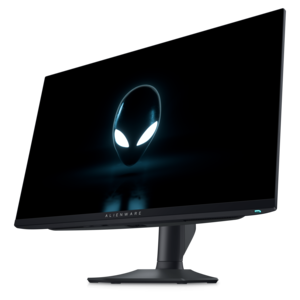
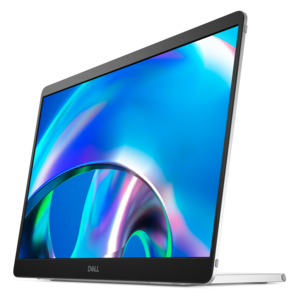
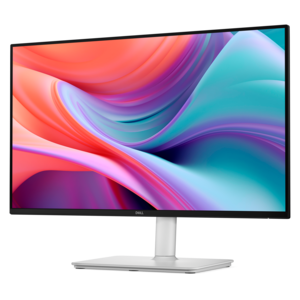
When choosing a system with a 40 Series GPU, consider factors like display refresh rate, cooling capabilities, processor compatibility, and memory capacity. Matching your GPU with a high-quality monitor and reliable accessories can help you get the most out of your setup.
Yes, RTX 40 Series GPUs are available in a variety of laptops, offering high-performance graphics in portable, energy-efficient designs. These laptops are ideal for users who need powerful computing on the go, whether for gaming, creative work, or professional applications.