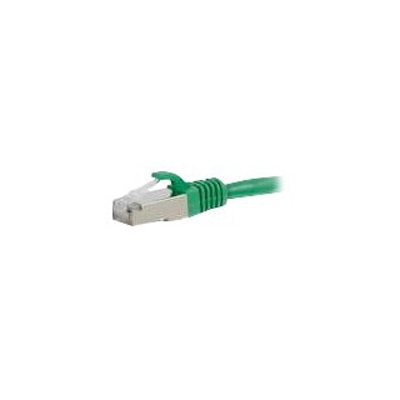
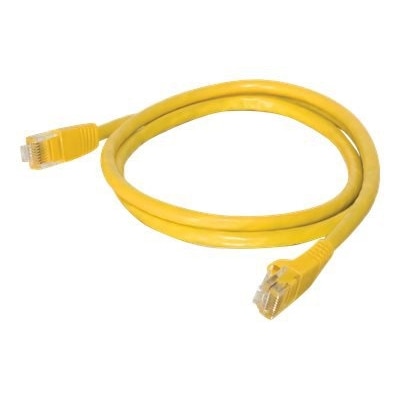
Unshielded Twisted Pair Cables
Unshielded twisted pair cables are an essential component for creating reliable and efficient network connections in both home and office environments. These versatile cables are designed to support a wide range of networking applications, making them a popular choice for everything from internet browsing to complex data transfers. With their simple yet effective design, unshielded twisted pair cables help minimize interference and ensure smooth communication between devices. Whether you're setting up a new network or upgrading an existing one, these cables provide the flexibility and performance needed to keep your systems running smoothly. Explore our selection of unshielded twisted pair cables to find the perfect solution for your networking needs.
This product is not available
Check out the following recommendations.
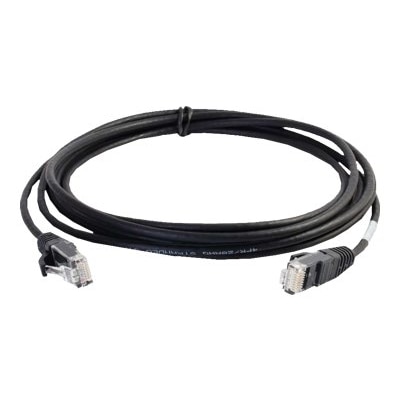
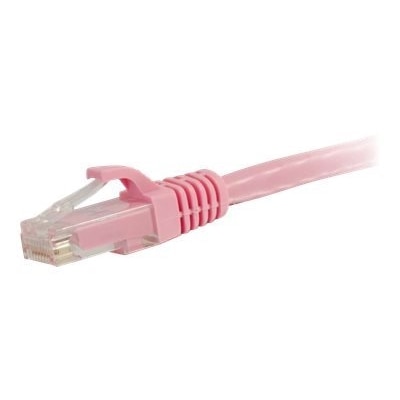
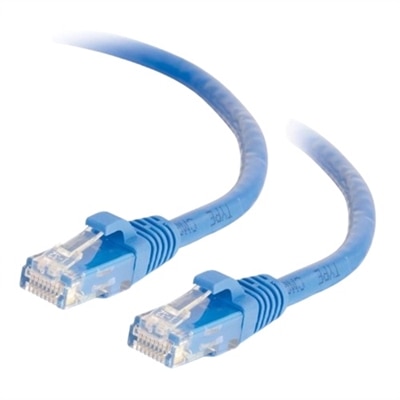
Unshielded Twisted Pair Cables
Unshielded twisted pair cables are copper communication cables made with pairs of insulated conductors twisted together inside a protective outer jacket, without an added metallic foil or braided shield. Commonly called UTP cables, they provide a wired connection for compatible laptops, desktops, docking stations, and other everyday computer accessories. A typical Ethernet UTP cable contains four twisted pairs, with each pair arranged to help reduce electromagnetic interference and crosstalk between conductors. The twisting works with the connected equipment’s balanced signaling to limit unwanted noise; it does not make the cable immune to interference. Because there is no separate shielding layer, UTP construction can offer a relatively lightweight, flexible profile that fits comfortably into ordinary home and office workspaces. Behind a desk, that flexibility helps a cable follow the edge of a tabletop or pass through a cable-management opening without adding unnecessary bulk. Its intended role is practical: carrying data between compatible devices over a physical connection, whether a desktop stays in a dedicated study or a laptop connects to a workstation each morning. A wired connection can be useful during video meetings, large file transfers, online coursework, and gaming, although actual performance depends on the connected equipment, the cable specification, and the wider connection. UTP describes the cable’s shielding construction, not its speed rating, connector quality, or suitability for every setting. Those distinctions matter when comparing cables that look similar from the outside. An ordinary indoor workspace generally presents different demands from a route beside powerful motors or other sources of substantial electrical noise. For a computer accessory that may remain tucked behind furniture for years, a clearly identified category, appropriate jacket material, and well-finished connectors matter more than appearance alone. The result should be a connection that suits both the device and the physical space, with enough flexibility for normal adjustments and enough protection for the route it follows.
Cable category, conductor construction, length, and connector fit are central considerations for unshielded twisted pair cables. Category markings describe defined performance requirements rather than a guaranteed internet speed. Category 5e commonly supports Gigabit Ethernet over a standards-compliant channel of up to 100 meters, while Category 6A supports 10 Gigabit Ethernet over that same maximum channel length. Category 6 can support 10 Gigabit Ethernet over shorter distances, with the usable distance depending on installation conditions and interference. These channel limits include connecting cords and any fixed cabling, so a single cord should not be considered independently of the complete connection. For everyday desktop and laptop use, matching the cable specification to the capabilities of the connected devices avoids assuming that a higher category alone will make applications or downloads faster. Many ready-to-use Ethernet cords have eight-position modular plugs commonly called RJ45 connectors. A laptop without a built-in Ethernet port needs a compatible adapter or docking station, and that accessory’s supported connection speed also affects performance. Connector dimensions deserve attention around recessed ports, closely spaced sockets, and slim docking stations, where an oversized protective boot may be awkward to grip or position. Cable length is equally practical: a cord should reach its destination with a little slack, without stretching across a walkway or leaving a large coil beneath a chair. Conductor material and construction also influence suitability. Copper conductors are the standard choice for standards-compliant Ethernet cabling; copper-clad aluminum should not be assumed to provide equivalent electrical or mechanical performance. Stranded copper conductors are commonly used in flexible patch cords that move with a laptop or desk accessory, while solid conductors are often used for fixed installation. The outer jacket provides another layer of differentiation. Common jacket materials include PVC and other compounds selected for particular flexibility, environmental, or fire-performance requirements. A flexible indoor cord is not automatically appropriate for outdoor exposure, burial, or concealed building spaces. Any cable used inside walls or air-handling spaces needs the appropriate listed rating and must meet applicable local requirements.
Durability depends as much on everyday handling as on the materials inside an unshielded twisted pair cable. At a workstation that changes throughout the week, the most vulnerable areas are often where the cable enters the plug and where it bends around furniture. A molded strain-relief boot can help spread bending stress, while a snag-resistant design can protect the connector’s retaining tab as the cord passes through a crowded desk opening. Neither feature makes a cable crushproof or suitable for repeated sharp bends. A gentle curve behind a monitor stand is preferable to a tight fold against the wall, and a route clear of chair casters helps protect the jacket and conductors. Following the manufacturer’s minimum bend radius is especially important with thicker cables, which may feel less pliable than shorter, lighter cords. Reusable hook-and-loop straps can keep spare length tidy without pinching the jacket when applied loosely. During routine cleaning, a soft, dry cloth is generally sufficient for the exterior; moisture and cleaning fluids should stay away from connector contacts. Disconnecting by the plug rather than pulling on the cable helps preserve the termination, and a damaged latch, split jacket, or persistent connection interruption warrants inspection. Placement also matters because UTP lacks the additional interference protection provided by a metallic shield. Keeping the route away from strong electrical-noise sources can help preserve reliable operation. For environments that require additional shielding, Shielded Ethernet Cables provide a related construction to consider, although shielding works properly only as part of an appropriately designed and grounded connection. UTP has no cable shield that requires a separate grounding connection, which simplifies that particular aspect of installation without removing other electrical or building-code requirements. Students connecting a study desk, remote workers arranging a home office, and gamers keeping a stationary desktop connected may all value a neatly routed cord that stays out of the way. For these everyday settings, the most suitable cable combines compatible connectors, an appropriate performance category, sensible length, and construction matched to how often the equipment moves.
FAQs:
Unshielded twisted pair cable is most commonly used for Ethernet networks in homes and offices, as well as for telephone wiring and other data transmission applications. Its design makes it ideal for environments with minimal electromagnetic interference, providing reliable and cost-effective connectivity.
Unshielded twisted pair cable minimizes electromagnetic interference and crosstalk through the twisting of its wire pairs. This twisting helps cancel out noise from external sources and from other pairs within the cable, allowing for clear and stable data transmission without the need for additional shielding.
Unshielded twisted pair cables are a great choice for students setting up dorm rooms, remote workers building home offices, gamers seeking low-latency connections, and small businesses expanding their networks. They’re also a practical gift for anyone upgrading their tech setup or moving into a new space.
Unshielded twisted pair cables are especially effective in low-interference environments, such as residential spaces, classrooms, and standard office settings. Their slim, flexible design makes them easy to install along walls, under carpets, or behind furniture.
Shielded Ethernet cables are recommended for environments with high electromagnetic interference, such as areas with heavy electrical equipment or industrial machinery. For more information, visit the Shielded Ethernet Cables page.