XBOX One Simulation Games
Explore a wide selection of Xbox One simulation games designed to immerse you in realistic, engaging experiences. Whether you enjoy building, driving, managing, or exploring new worlds, these titles offer something for every gaming enthusiast. Discover popular genres and find the perfect addition to your collection with Xbox One simulation games that deliver hours of entertainment and creativity.
This product is not available
Check out the following recommendations.




XBOX One Simulation Games
Xbox One simulation games bring everyday activities, specialized skills, and complex systems into interactive worlds where decisions have visible consequences. The category spans driving, agriculture, construction, vehicle maintenance, business management, and city building, with experiences ranging from quiet, open-ended routines to demanding tests of precision. Rather than focusing only on quick reactions, simulation gameplay often rewards observation, planning, and a willingness to adjust an approach after seeing the results. A carefully positioned road can ease congestion across a growing neighborhood, while a poorly timed turn can leave a loaded truck struggling for traction on a muddy slope. These details give the genre its appeal: progress feels connected to understanding how something works. Vehicle-focused simulations may emphasize weight transfer, braking distance, road surfaces, and the difference between an empty vehicle and one carrying a heavy load. Agricultural experiences can revolve around preparing fields, working through seasonal tasks, and coordinating equipment across a larger operation. Management simulations shift the perspective outward, asking players to balance resources, organize workflows, and keep interconnected services functioning as demand changes. The degree of realism varies considerably. Some games simplify technical details so that players can settle into a satisfying rhythm, while others introduce layered controls, tighter resource constraints, or consequences that take time to emerge. Visual realism and mechanical depth are not always the same thing; a stylized environment can contain a sophisticated economic model, and a detailed vehicle cockpit may still offer forgiving assistance settings. That variety makes simulation games appealing to different personalities, including patient problem-solvers, transportation enthusiasts, creative builders, and players who enjoy turning an untidy process into an efficient routine. For some, the reward is completing a difficult delivery without damaging the cargo. For others, it is watching a small settlement become a functioning community or finishing a carefully organized day of fieldwork. The common thread is purposeful play, with room to experiment, learn a system, and take satisfaction in incremental improvement.
The character of a simulation experience depends as much on its structure as on its subject. Career modes often introduce equipment, responsibilities, or locations gradually, giving each completed assignment a place within a longer progression. Sandbox modes, where included, can provide more freedom to build, test ideas, or explore without following a prescribed sequence of objectives. A player with twenty minutes to spare might enjoy completing a maintenance task or making a short delivery, while someone settling in for a longer evening may prefer redesigning a transport route or expanding a complex production chain. Save options matter in these situations, particularly when a single job involves several stages or a management decision needs time to show its effects. Difficulty settings, tutorials, control assists, and adjustable interfaces can also shape how approachable a game feels. Clear text and readable menus are especially useful when playing from a couch, where small labels on a dashboard or dense financial panels may be harder to follow than they would be at a desk. Sound can provide practical feedback as well as atmosphere: an engine laboring uphill, tires losing grip, or a machine changing pace can help communicate what is happening beyond the on-screen indicators. Depending on the title, play may be entirely solo or include cooperative tasks, shared environments, or competitive challenges. Online multiplayer and local multiplayer are distinct features, so a game suited to friends playing from separate homes may not support two people sharing one screen. Content ratings and descriptions help establish suitability for the intended player, since a calm-looking setting does not necessarily mean that its systems are simple or its content is appropriate for every age. For players who also enjoy structured competition and recreating familiar athletic activities, Xbox Sports Games offers a related category to explore. Simulation remains distinctive for the way it turns practice, preparation, and small adjustments into the central pleasures of play, whether the setting is a busy workshop, an open field, or a growing urban landscape.
As game software, these products are better understood through platform compatibility, format, controls, and intended use than through physical materials or sizing. An edition must explicitly support the intended console; a familiar name or similar cover image is not enough to establish compatibility across console generations. Physical copies require a compatible disc drive, while digital copies depend on account access and the applicable redemption or download requirements. Installation space, updates, and any internet requirements also affect the experience, particularly when preparing a game as a gift or setting up a console in a room with limited connectivity. Additional content can have separate requirements, and an expansion is not necessarily a standalone game. Standard controllers are central to many console simulations, but supported driving wheels, pedals, or other specialized controls can change the feel of particular experiences. Compatibility must extend to both the console and the individual game, since a peripheral designed for one setup may not function as expected with another. For supported driving accessories, physical fit becomes important: a stable mounting surface, comfortable pedal placement, and enough clearance for steering movement help create a usable setup without crowding a shared room. Adjustable sensitivity and button assignments, when offered, can make repeated actions more comfortable during longer sessions. Durability and care primarily concern physical discs and accessories rather than the software itself. Returning discs to their cases, handling them by the edges, and keeping playing surfaces free of fingerprints help protect them from avoidable wear. Controllers and peripherals benefit from careful cable routing and cleaning according to their manufacturers’ directions, especially around frequently used buttons and moving parts. Long-term enjoyment depends more on the depth of the activities than on physical construction: varied objectives, meaningful customization, and flexible play modes can give players reasons to return. As birthday or graduation gifts, simulation games can connect naturally with an interest in cars, machinery, design, or organization, provided the recipient’s console, preferred pace, and experience level are considered. A newcomer may appreciate guided tasks and forgiving settings, while an experienced enthusiast may value detailed systems that leave room for sustained practice and experimentation.
FAQs:
Simulation games on Xbox One are video games that aim to replicate real-world activities or systems, such as flying airplanes, managing cities, farming, or running businesses. These games focus on realistic gameplay and immersive experiences.
Many Xbox One simulation games offer multiplayer modes, allowing you to collaborate or compete with friends online or locally. Always check the game's description for specific multiplayer features.
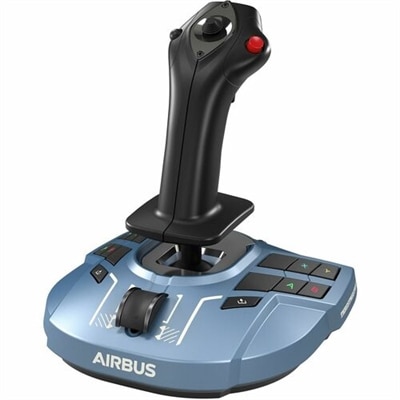
Most simulation games can be played with a standard Xbox One controller. However, some titles may support or recommend additional accessories like steering wheels, flight sticks, or keyboards for enhanced realism.
Yes, the Xbox One offers a wide variety of simulation game genres, including life simulations, vehicle simulators (such as flight or racing), city-building, farming, and business management simulations.
Many simulation games on Xbox One offer downloadable content (DLC) such as new vehicles, maps, scenarios, or features. These add-ons can enhance your gameplay experience and provide additional challenges.