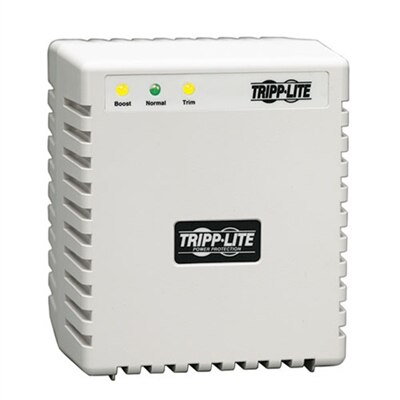
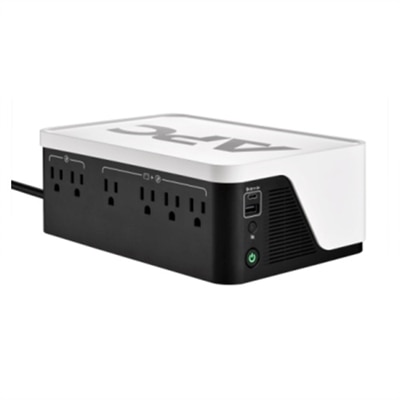
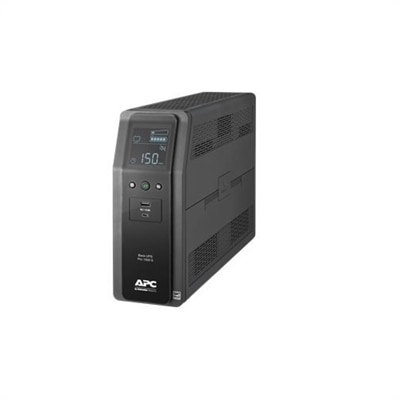
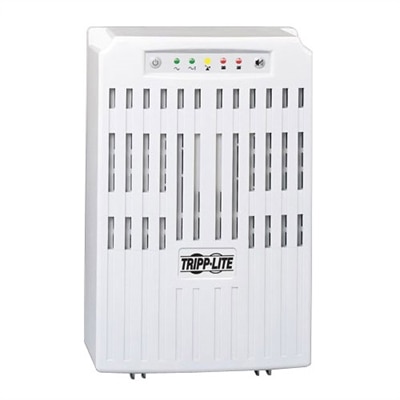
120V UPS
120v UPS solutions provide reliable backup power and peace of mind for your essential electronics and devices. Whether you’re protecting computers, networking equipment, or home entertainment systems, a 120v UPS helps ensure uninterrupted performance during unexpected outages or fluctuations. Explore a wide selection designed to support both home and office environments, making it easy to find the right fit for your power protection needs.
This product is not available
Check out the following recommendations.




120V UPS
A 120V uninterruptible power supply, or UPS, provides temporary battery backup for compatible electronics when utility power fails, giving a desktop computer and monitor time to stay running while important work is saved. Designed for nominal 120-volt electrical systems used in the United States, these power accessories fit naturally into home offices, study spaces, and everyday computer setups. Many consumer models connect to a standard grounded household outlet and combine battery-backed receptacles with surge protection, although plug type and circuit requirements vary by capacity. Unlike a basic surge protector, a UPS contains a battery that supplies power during an interruption; surge protection alone cannot keep a computer operating after the lights go out. That distinction matters during an afternoon video project, a nearly finished spreadsheet, or a brief flicker that would otherwise restart a desktop. Backup time depends on the connected load, battery condition, and UPS design, so a runtime figure is meaningful only when paired with the power demand used to calculate it. A heavily loaded unit may provide only a few minutes, while the same unit supporting a lighter load may run considerably longer. The intended role is usually to bridge short interruptions or allow an orderly shutdown, not to keep an entire workspace operating through an extended outage. For remote workers, students, creative professionals, and people using a desktop for household tasks, that short window can prevent an abrupt interruption from becoming lost progress. A laptop already has its own battery, but a UPS can also support a compatible external monitor or other essential desk accessories within its limits. The most useful arrangement keeps the equipment needed to finish a task on battery-backed outlets, rather than treating every device on the desk as equally important. A computer that remains on while its only display goes dark, for example, may be harder to shut down manually unless automatic shutdown has been configured.
The defining specifications for a 120V UPS are its input and output voltage, volt-ampere capacity, watt capacity, outlet configuration, and runtime at a stated load. Voltage describes electrical compatibility; it does not indicate how much equipment the battery can support or how long that equipment will run. Both the VA rating and the watt rating matter, and connected equipment must remain within both limits. Actual power consumption also changes with use: a desktop handling email may draw substantially less power than the same computer rendering video or running a demanding game. A computer power supply’s maximum rated wattage is not necessarily its everyday draw, making measured consumption or reliable equipment specifications more useful for estimating a practical load. Capacity headroom allows for changing demand, but a larger VA number alone does not guarantee a particular runtime. Manufacturer runtime charts offer a clearer comparison because they show backup duration at different loads. For smaller desktop arrangements, the 750VA UPS category provides another capacity range to consider alongside the required watt rating and desired backup time. Output waveform is another meaningful distinction. Pure sine wave output more closely resembles the waveform of utility power and may be preferred or required for some computer power supplies, including certain designs with active power factor correction. Simulated sine wave output can work with many everyday electronics, but compatibility depends on the connected equipment rather than a blanket rule about basic or advanced devices. Automatic voltage regulation, commonly called AVR, can correct certain low- or high-voltage conditions without switching to battery operation, reducing unnecessary battery use during routine fluctuations. Transfer time also varies by UPS design and can matter for equipment that is particularly sensitive to interruptions. Outlet counts deserve similar attention: a housing with many receptacles may divide them between battery backup with surge protection and surge-only protection. Widely spaced outlets can accommodate bulky adapters, while clear labeling makes it easier to distinguish which connections remain powered during an outage.
Physical fit, construction, and battery care shape how well a 120V UPS works in a lived-in workspace. Compact housings can sit beside a desk, while upright tower designs may tuck underneath it, provided ventilation openings stay clear and the location meets the manufacturer’s placement requirements. Rugged molded enclosures are common in smaller units, and some larger designs use metal housings, but enclosure material alone does not establish durability or electrical performance. Weight is another practical consideration because the internal battery can make a small unit surprisingly heavy. A stable, dry position away from foot traffic helps protect the housing and connected cords, and enough clearance around the unit allows heat to dissipate. Under a desk, that means room beyond the chair’s rolling path and space where a bag or stack of papers will not cover the vents. A grounded wall connection that matches the specified plug and circuit requirements is essential; daisy-chaining a UPS with power strips or other backup units can create hazards and conflict with manufacturer instructions. High-draw appliances and equipment such as laser printers generally do not belong on battery-backed outlets unless the UPS manufacturer explicitly permits that use. Daily usability comes from details such as accessible power buttons, readable status indicators, audible alerts, and a display that shows load or estimated runtime. Supported USB communication and compatible shutdown software can help a computer close down safely when nobody is at the desk, though operating-system support and setup requirements vary. Batteries are consumable components, and heat, age, and repeated discharge affect their useful life. Many consumer units use sealed lead-acid batteries, while other battery chemistries appear in some designs; replacement procedures and maintenance requirements depend on the unit. User-replaceable batteries can extend the working life of the enclosure and electronics when approved replacements are installed correctly. Routine attention includes keeping vents free of dust, checking status warnings, and following the specified testing schedule rather than repeatedly unplugging the unit to test it. Spent batteries require appropriate recycling. Together, suitable capacity, compatible output, sensible placement, and ongoing battery care make a UPS a practical accessory for protecting everyday computer work from unexpected power interruptions.
FAQs:
A 120V UPS is ideal for computers, monitors, networking equipment like routers and modems, external hard drives, and other essential electronics that require uninterrupted power. It can also be used with home entertainment systems, smart home hubs, and select peripherals to ensure they remain protected during outages and voltage fluctuations.
To select the right VA and wattage rating, add up the power requirements of all devices you want to connect to the UPS. The total wattage should not exceed the UPS’s maximum supported load. Choosing a UPS with a slightly higher capacity than your current needs allows for future expansion and ensures optimal performance.
Battery backup outlets provide both power protection and backup power during an outage, allowing critical devices to continue operating. Surge-only outlets offer protection from power spikes but do not supply battery power during outages, making them suitable for less essential equipment like printers or desk lamps.
Automatic Voltage Regulation (AVR) helps maintain a consistent voltage level to your connected devices, correcting minor fluctuations without drawing on the UPS battery. This feature reduces wear on both your electronics and the UPS battery, extending their lifespan and providing more reliable protection.
Yes, a 120V UPS is versatile and well-suited for both home and office settings. It’s a valuable addition to any workspace where reliable power is essential for productivity, data integrity, and equipment protection, whether you’re working remotely, studying, or managing a small business.