45U Server Racks
45U server racks provide a reliable and efficient solution for organizing and securing your IT infrastructure. Designed to accommodate a variety of servers, networking equipment, and accessories, these racks are ideal for data centers, server rooms, and growing businesses. With ample vertical space, 45U server racks help maximize floor space while supporting optimal airflow and cable management. Explore options that can enhance the performance and scalability of your technology environment.
This product is not available
Check out the following recommendations.



45U Server Racks
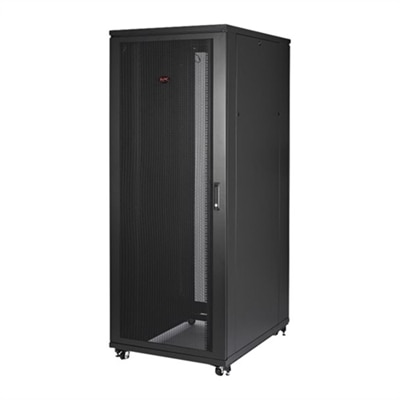
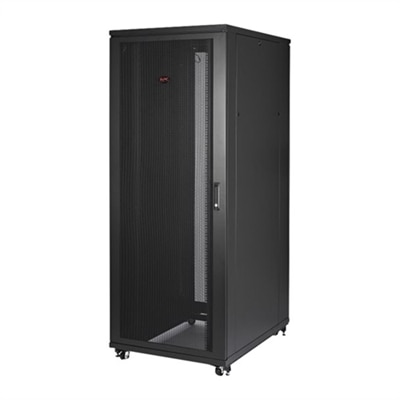
A 45U rack cabinet is a tall, structured enclosure designed to organize rack-mount electronics in a vertical footprint. The “U” designation refers to one rack unit, equal to 1.75 inches, so a 45U model provides approximately 78.75 inches of usable mounting height before allowing for cabinet framing, casters, leveling feet and other construction details. That generous capacity makes these cabinets a practical choice for offices, laboratories, production environments, educational facilities and technology rooms that need room to expand without spreading equipment across multiple enclosures. Depending on the design, a cabinet may feature an enclosed frame with doors and removable side panels or an open-frame structure that leaves equipment easy to reach from several sides. Enclosed models can help limit casual access and keep installed components separated from busy shared spaces, while open-frame designs are often valued for their accessibility, visibility and straightforward cable management. When comparing options, begin with the available floor area and the path the cabinet must take to reach its final location. A cabinet that fits comfortably in a dedicated room may be difficult to move through a narrow doorway, around a corner or into an elevator. Check the overall height, width and depth, then account for ceiling clearance, door swing, wall clearance and the space needed to work behind the cabinet. A tall cabinet can be especially useful when floor space is limited, but it should stand on a stable, level surface and be positioned where its weight and height will not create an obstacle.
Depth is one of the most important measurements to verify before choosing a 45U rack. Measure the deepest equipment from front mounting points to the rear edge, including handles, connectors, power cords and any required cable bend radius. A shallow cabinet can work well for compact components, patch panels and other low-profile hardware, while a deeper enclosure provides more room for larger chassis and rear connections. It is wise to leave additional clearance rather than selecting a cabinet that accommodates equipment only by a few inches. Extra depth can make installation more comfortable, reduce strain on plugs and cables, and leave room for future components with different dimensions. Width also deserves close attention. Standard rack layouts are commonly around 24 inches wide, while wider cabinets can offer more room for vertical cable pathways, power distribution and side-to-side routing. A wider design may simplify maintenance, particularly when several cable bundles enter from different directions, but it also requires more floor space. Review the mounting rail adjustment range, the spacing between rails and the cabinet’s internal usable width. Some rails can be repositioned to suit different equipment depths, which can be helpful in a mixed installation. Confirm the mounting-hole pattern and the included hardware before installation, especially when equipment comes from several manufacturers. A clear plan for labeling cables and identifying each rack position can save considerable time later; simple labels, consistent naming and an orderly layout make it easier to locate a connection when the room is dim and the cabinet is full.
Airflow, access and load capacity should guide the rest of the selection process. Heat-producing electronics generally perform more reliably when air can move through the cabinet without being blocked by tangled cords, blank spaces or closely packed components. Look for vented doors, perforated panels or an open-frame design that matches the cooling needs of the equipment being installed. Keep front and rear paths clear, and avoid pushing the back of a cabinet directly against a wall when service access or ventilation is required. A locking front door and side panels may be appropriate for a shared office, classroom or workshop where equipment needs an additional layer of physical control. Removable panels and swing-out rear doors can make routine maintenance less disruptive, especially when a technician needs to reach a connector without removing every item above it. Casters can help with positioning during setup, while leveling feet and anchoring provisions can provide greater stability once the cabinet is in its final location. Check the rated weight capacity and distribute heavier equipment toward the lower portion of the cabinet to help maintain a stable center of gravity. Before purchasing, consider the accessories that will complete the installation, including shelves for non-rack-mount components, cable managers, blanking panels, grounding hardware and power distribution equipment. A 45U cabinet is most useful when its layout leaves enough room for service, expansion and safe cable routing rather than filling every available position. For installations that need less vertical capacity, 24U Server Racks may provide a more compact alternative. Whether the setting is a small business, a classroom, a studio or a dedicated equipment room, choosing the right height, depth, airflow pattern and access features can turn a crowded collection of electronics into a cleaner, easier-to-manage installation.
FAQs:
A 45U server rack provides a centralized and efficient way to organize servers, networking devices, and accessories. It helps maximize vertical space, improves airflow for better cooling, simplifies cable management, and allows for easier access during maintenance or upgrades. This organization reduces clutter, enhances security, and supports future expansion as your IT needs grow.
Yes, a 45U server rack is versatile enough to be used in both business settings and advanced home labs. In businesses, it’s ideal for housing enterprise-grade equipment, while in home environments, it’s popular among tech enthusiasts who manage multiple servers, media centers, or networking devices.
When selecting a 45U server cabinet, consider features like adjustable mounting rails, perforated doors for optimal airflow, integrated cable management, and lockable panels for security. Tool-less rail systems and removable side panels can also enhance convenience and accessibility during equipment installation or maintenance.
A 45U server rack often includes built-in cable management features such as vertical and horizontal organizers, grommets, and dedicated pathways. These elements help keep power and data cables neatly arranged, reducing the risk of tangling, improving airflow, and making it easier to identify or replace cables when needed.
Absolutely. A 45U server rack offers generous vertical space, making it ideal for organizations or individuals planning to expand their IT infrastructure over time. Its scalable design accommodates additional servers, storage, or networking equipment as your requirements evolve, minimizing the need for frequent upgrades to larger enclosures.