$59.74
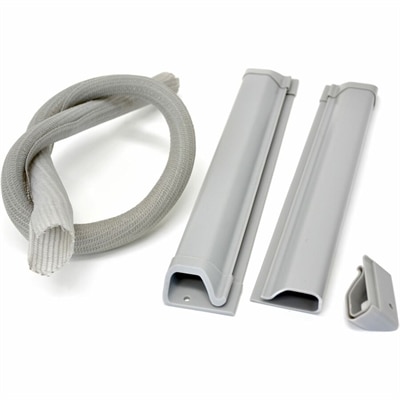
A grey cable management kit organizing equipment wiring for safer, tidier workspaces and easy access.
Tame the chaos of tangled wires and streamline your workspace with our selection of cable organizers. Whether you're managing a home office, setting up an entertainment center, or simply looking to tidy up your charging station, these essential tools offer a practical solution to keep cords neat and accessible. Explore an array of designs to suit any environment, ensuring that your cables are always organized and easy to find. Embrace the simplicity and functionality of cable organizers to enhance both the aesthetics and efficiency of your space.
A grey cable management kit organizing equipment wiring for safer, tidier workspaces and easy access.
A pack of 50 reusable black hook-and-loop cable ties with eyelets for organizing and securing wires.
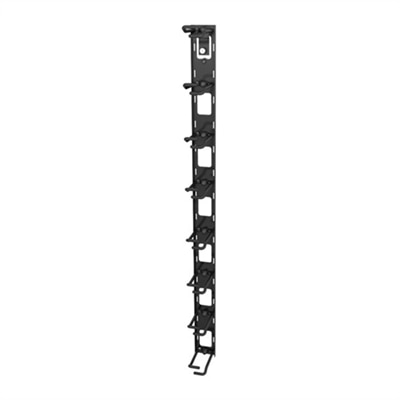
Cable organizers bring a little order to the parts of a workspace that are easy to overlook: the charging lead slipping behind a nightstand, the monitor cord crossing a desk, or the handful of accessory cables tangled at the bottom of a laptop bag. Their purpose is straightforward, but the right arrangement can make everyday routines feel noticeably smoother. Keeping a connector within reach means less bending behind furniture, while separating frequently used cords makes it easier to unplug a laptop without disturbing the rest of a desktop setup. Cable management accessories take several forms, including clips that hold individual leads, sleeves that gather multiple cords, reusable wraps for loose lengths, and trays that support cables beneath a work surface. Each serves a slightly different role. A small clip can keep a phone charger near the edge of a desk, while a flexible sleeve can give the cords behind a monitor a more unified appearance. For a workspace with several peripherals, Cable Management Racks offer another format to consider for supporting and routing cords, with dimensions and mounting requirements that should match the intended furniture and layout. The most comfortable setup usually leaves everyday connections accessible rather than hiding every inch of wiring. A charging cable used throughout the day benefits from a convenient resting place; a monitor cable that rarely moves can follow a more discreet path. These distinctions matter in home offices, study spaces, shared workstations, and gaming setups, where the same surface may hold a laptop, display, keyboard, headset, and other accessories. A tidy cable path can also leave more usable room for a notebook, an open textbook, or a mouse moving across a generous stretch of desk. The result is less about creating a perfectly staged surface and more about making the space easier to use, reset, and clean after a busy day.
Materials and construction shape how cable organizers feel, how they attach, and how well they suit different routines. Flexible silicone and rubber designs can cushion cords and accommodate small movements, although the opening still needs to suit the cable’s thickness. Molded plastic channels provide more structure along a fixed route, while fabric sleeves and braided wraps can gather several leads without making the bundle completely rigid. Metal trays offer firm support beneath a desk, with finished edges that help prevent cords from rubbing against rough surfaces. Material alone does not establish strength: the design, mounting method, and stated load limit all matter, particularly when an organizer supports more than lightweight cables. Fit involves both the diameter of the cord and the size of its connector. A narrow charging lead may sit neatly in a small slot, but a thicker display cable or a wide connector housing may need a larger opening or a design that opens along its length. Enough room for natural curves helps avoid tight bends, especially near plugs and reinforced connector ends. At an adjustable-height desk, the routing also needs sufficient slack for the full range of movement, without pulling against a laptop port or leaving a long loop near moving parts. Attachment deserves similar attention. Adhesive-backed organizers generally need a clean, dry, compatible surface, and textured finishes or dusty undersides can affect their hold. Adhesives may also leave residue or affect delicate finishes, so the furniture surface and removal instructions are worth considering. Clamp-mounted designs depend on desktop thickness and edge clearance, while screw-mounted options require a suitable mounting surface and permission to modify it. For glass desks, rounded edges, narrow shelves, and furniture with shallow undersides, those measurements can be as important as the organizer’s overall size. A well-matched accessory feels integrated into the space, rather than becoming another object to work around.
Intended use helps distinguish a portable cable organizer from one meant to stay in place. Someone who carries a laptop between home and an office may appreciate reusable wraps or a compact cable pouch that keeps charging leads separate from a mouse and other small accessories. A permanent workstation benefits from routing that stays consistent when a chair moves, a drawer opens, or a computer is disconnected at the end of the day. In a shared household, separate loops or writable identification tabs can help distinguish similar-looking cords without repeatedly tracing them behind furniture. For students setting up a study corner, remote workers refreshing a desk, or gamers organizing several wired accessories, cable organizers can also make practical gifts when the recipient’s workspace and equipment are familiar. Neutral colors tend to blend into furniture and monitor stands, while contrasting colors can make frequently used connections easier to identify. Durability shows up in ordinary handling: a reusable closure should continue to fasten securely, a sleeve should resist fraying at its openings, and a clip should retain its shape through repeated cable removal. Organizers that open easily are useful when accessories change, since adding a new cord should not require dismantling the entire arrangement. Care is generally uncomplicated, but it depends on the material and any nearby electronics. Dust can collect inside channels and along fabric wraps, and occasional cleaning helps keep those hidden areas manageable. Follow the organizer’s care instructions, disconnect equipment as appropriate before working around connections, and keep moisture away from plugs and electrical components. Cable organizers are not a remedy for damaged cords, and a concealed bundle should still be accessible for inspection. Power adapters and power strips need the clearance and ventilation specified by their manufacturers; gathering cables should not mean tightly enclosing equipment that produces heat. Cords routed near a walkway also require more consideration than a decorative wrap alone can provide. Within a desk or accessory setup, thoughtful organization balances a clean appearance with easy access, gentle cable bends, and room for change. That balance keeps the charger ready when a battery runs low and makes the next workspace adjustment a simpler task.
Add the products you would like to compare, and quickly determine which is best for your needs.