$10.99
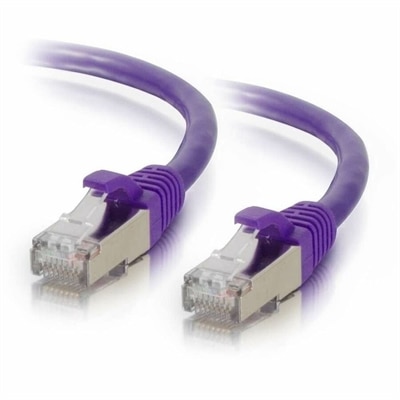
A purple shielded Cat6 network patch cable designed to reduce electromagnetic interference and crosstalk.
Cat6 network cables are essential for creating a reliable and high-speed wired internet connection in both home and office environments. Designed to support advanced networking needs, these cables ensure seamless data transfer and connectivity for all your devices. Whether you're setting up a new network or upgrading an existing one, Cat6 network cables provide the performance and dependability required for today's demanding digital landscape. Explore our selection to find the perfect solution for your networking requirements.
A purple shielded Cat6 network patch cable designed to reduce electromagnetic interference and crosstalk.
Cat6 network cables are twisted-pair Ethernet cables designed to connect wired devices with dependable speed and consistent performance. They are commonly used between a computer and a router, a game console and a network switch, a television and a wired connection point, or a wall jack and a desktop workstation. Each cable contains four pairs of copper conductors that are carefully twisted to help reduce crosstalk, which is unwanted interference between adjacent signals. Standard RJ45 connectors fit the Ethernet ports found on many computers, routers, switches, printers, streaming devices and other connected electronics, making Cat6 a practical choice for both new installations and upgrades from older cable standards. Cat6 supports Gigabit Ethernet over distances up to 100 meters, or approximately 328 feet, when the complete installation meets the appropriate specifications. It can also support 10-Gigabit Ethernet over shorter runs, commonly up to 55 meters, although the actual result depends on cable construction, installation conditions and the equipment at both ends. Cat6 cable is rated for up to 250 MHz of bandwidth, while some products may list higher performance figures based on their construction or testing methods. It is backward compatible with Cat5 and Cat5e connections, so choosing Cat6 does not require every component in an existing setup to be replaced at once. For a compact connection behind a desk, entertainment center or home office shelf, 3 Ft Cat6 Patch Cables can help keep the installation short and orderly without leaving a long coil of unused cable on the floor.
The right length is one of the most important details to consider before choosing a cable. Measure the route from one device to the other, following the path the cable will actually take around furniture, along a wall or through a cable-management channel rather than measuring in a straight line. Add a little room for gentle bends and movement, but avoid choosing an unnecessarily long cable that must be bundled beside power cords. Short lengths work well for connecting equipment on the same desk, while medium lengths can span a media cabinet, standing desk or nearby shelving unit. Longer runs may be useful for moving a wired connection from one room to another, though permanent in-wall installations require cable designed and rated for that purpose as well as attention to local building requirements. Indoor patch cables are generally intended for finished living spaces, offices and equipment areas. Outdoor, direct-burial or exposed installations need purpose-built cable with suitable protection against moisture, sunlight and temperature changes. Construction details also affect everyday handling. A flexible jacket is easier to route behind furniture, while molded strain-relief boots can help protect the area where the cable meets the connector, especially when a cable is plugged and unplugged often. Slim cables can be convenient in crowded spaces, but standard round cables may offer a more familiar balance of durability and organization. Look for clearly identified Cat6 labeling, secure connector clips and copper conductors from a reputable source. Copper-clad aluminum cable may be less suitable for demanding or permanent connections because it can have different electrical and mechanical characteristics from solid copper conductors. A cable does not create faster internet service by itself; the achieved speed is limited by the internet plan, router, switch, network adapter and other components in the connection. It can, however, provide a stable physical link and help a compatible setup reach the performance it was designed to support.
Cat6 cables are useful in homes, apartments, dorm rooms, classrooms, small offices and entertainment spaces where a wired connection can offer steadier performance than a wireless link. A home office worker may use one to connect a desktop computer directly to a router, reducing dependence on wireless signal strength during video meetings or large file transfers. A student might use a short cable to connect a computer at a desk, while a family may use wired connections for streaming equipment, printers or game consoles positioned near a central cabinet. In an office, matching lengths can make rows of desks look neater and simplify future maintenance, particularly when cables are routed through trays or labeled at both ends. Wired connections can also be helpful in rooms with thick walls, crowded wireless channels or devices that remain in one place for most of the day. When installing a cable, keep the bend radius gradual, avoid crushing it under furniture and do not pull on the connector itself. Separate network cables from electrical cords where practical, and avoid tightly wrapping excess length into sharp loops. Labeling both ends is a small step that saves time later, especially when several cables run behind a desk or entertainment center. Cat6 cables can be a thoughtful practical gift for someone setting up a home office, moving into a new apartment, assembling a gaming area or organizing a media room; the most useful choice is usually based on the recipient’s device locations and the distance between connection points. Choosing the correct length, intended environment, connector fit and construction quality helps create a cleaner setup today while leaving room for faster compatible equipment in the future.
Add the products you would like to compare, and quickly determine which is best for your needs.