$1099.00
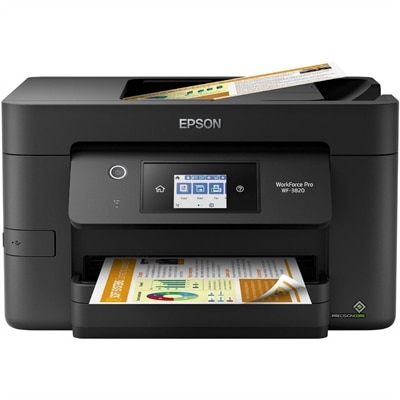
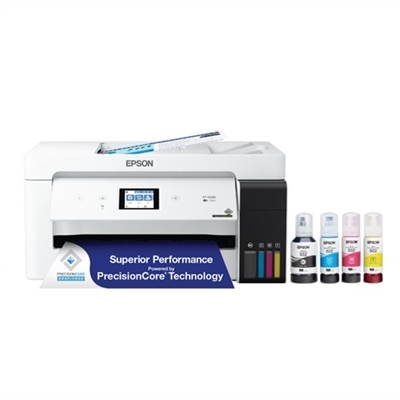
A color large-format inkjet printer with an integrated scanner and cartridge-free, high-capacity ink tanks.
Large format color printers offer an ideal solution for producing vibrant, high-impact visuals on a grand scale. Perfect for businesses, creative professionals, and educational environments, these printers are designed to handle everything from posters and banners to detailed technical drawings. Explore options that deliver impressive results for your projects, presentations, and marketing materials with large format color printers that combine efficiency and versatility for all your wide-format printing needs.
A color large-format inkjet printer with an integrated scanner and cartridge-free, high-capacity ink tanks.
Large format color printers, also called wide-format printers or plotters, are designed for work that needs more room than a standard desktop printer can provide. Instead of limiting output to letter- or legal-size sheets, these printers can produce technical drawings, architectural plans, posters, retail graphics, maps, photographs, fine art reproductions and other visual materials on large sheets or continuous rolls. Common print widths include 24, 36, 44 and 64 inches, although the best size depends on the space available, the media being used and the largest finished print your work requires. A compact 24-inch model may fit comfortably in a small design studio, classroom or home office while still handling blueprints and presentation boards. Wider models are better suited to agencies, sign shops, photographers, artists and organizations that regularly create exhibition graphics or oversized marketing materials. When comparing options, consider the difference between occasional large-format printing and production-oriented work. A printer intended for architectural line drawings may prioritize crisp fine lines, fast output and economical ink use, while a model built for photography or graphic arts may emphasize a broader color range, smooth tonal transitions and accurate skin tones. Print resolution, color-management tools and compatibility with professional design software can all affect the final result, especially when a subtle gradient in a photograph or a precise line in a floor plan must remain clear at full size. For an overview of available categories and configurations, browse Large Format Graphic Printers.
Media handling is another central consideration because the paper or specialty material often shapes the workflow as much as the printer itself. Roll-fed systems can simplify long banners, panoramic images and repeated poster runs, while sheet-fed capabilities may be useful for heavyweight fine art paper, presentation stock or rigidly sized documents. Automatic cutters help separate finished prints cleanly, and a take-up reel can keep longer output organized as it leaves the printer. Look for support for the media types your work calls for, including coated paper, matte paper, glossy photo paper, canvas and other specialty stocks. Ink technology also deserves close attention. Dye-based inks can produce lively color and smooth photographic results, while pigment-based inks are often selected for improved water resistance, longevity and resistance to fading, making them a strong fit for archival prints, gallery displays and graphics that may spend time near windows or in changing conditions. Many large format color printers use multiple ink channels to extend the color gamut and improve detail in shadows, highlights and neutral tones; additional black, gray or specialty color inks may help create more natural monochrome images and refined transitions. The printer’s footprint, stand, front-loading design and maintenance routine matter in everyday use as well. A roll printer may be physically narrower than expected but still need clearance for loading media and collecting finished pages. In a busy shared workspace, enclosed paper paths, clear status notifications and accessible ink cartridges can reduce interruptions. Automatic nozzle checks, printhead maintenance and simple calibration tools are useful for keeping output consistent when a project moves from a proof to a final display.
Connectivity and workflow features can make a noticeable difference when several people share a printer. Wi-Fi and Wi-Fi Direct can support flexible placement and direct printing from compatible computers, while Gigabit Ethernet is useful for a dependable wired connection in a studio, classroom or office network. Before choosing a printer, confirm that its drivers work with the operating systems and design applications used by your team, and check whether it supports the file formats common to your projects. Built-in displays, job previews and queue controls can help users catch an incorrect paper size or orientation before consuming valuable media. Think about volume as well: a home user printing an occasional oversized photograph has different needs from a design firm producing dozens of presentation boards or a commercial studio creating exhibition graphics throughout the day. Speed specifications are typically measured under defined conditions, so actual output times can vary with print quality, image complexity, media type and drying requirements. Total ownership cost includes more than the initial purchase. Factor in replacement ink, specialty media, cutting components, maintenance supplies and the cost of space in your work area. For someone who enjoys photography, illustration or hands-on creative projects, a large format color printer can turn a carefully edited image into a wall-sized statement piece; for an architect, engineer or interior designer, it can make plans and color boards easier to review around a table. Marketing teams may use one to create event signage and campaign mockups, while educators, museums and community organizations can produce maps, educational displays and visual materials that invite people to stop and look. Choosing the right combination of print width, ink system, media support, connectivity and duty capacity helps ensure that the printer feels like a natural part of the workflow rather than a specialized device used only when a project becomes unusually large.
Add the products you would like to compare, and quickly determine which is best for your needs.