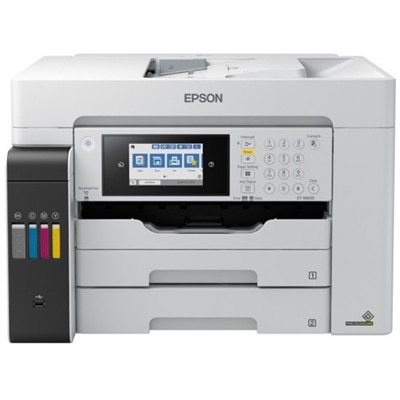
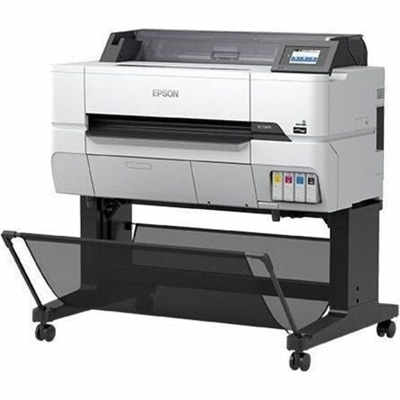
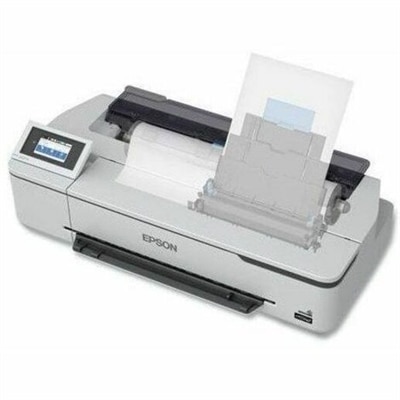
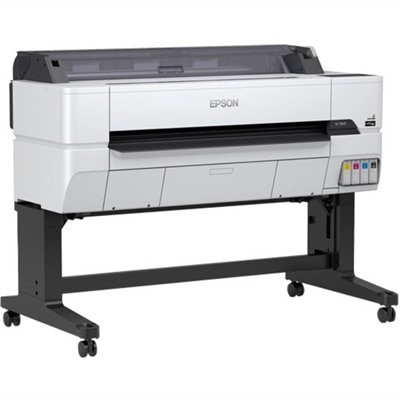
Wide Format Inkjet Printers
Discover the perfect solution for your large-scale printing needs with wide format inkjet printers, designed to deliver stunning quality and impressive versatility. Whether you're a professional photographer, a graphic designer, or a business owner seeking to create eye-catching posters and banners, these printers provide the flexibility and precision you need to bring your creative visions to life. With their ability to handle a variety of media sizes and types, wide format inkjet printers offer an ideal blend of performance and reliability, making them an essential tool for anyone looking to make a big impact with their prints.
This product is not available
Check out the following recommendations.



Wide Format Inkjet Printers
Wide format inkjet printers, also called large format printers or plotters, are designed to produce crisp, detailed prints on media that extends well beyond the dimensions handled by a typical office printer. Print widths commonly range from about 18 inches to 100 inches, with 24-, 36-, 44- and 64-inch formats serving many professional and creative applications. A compact wide format printer can fit into a design studio, classroom or small office while producing architectural drawings, presentation boards and posters at an impressive scale. Larger models are suited to print rooms, photography studios, marketing departments and graphics businesses that regularly create expansive visual materials. When browsing this category, begin with the largest media size you expect to use rather than choosing based only on the printer’s footprint. A 24-inch model may be practical for floor plans and classroom displays, while a 36- or 44-inch printer can provide more flexibility for exhibition graphics, detailed maps and oversized artwork. Printers supporting widths of 60 inches or more are often selected for wall graphics, banners, gallery pieces and other applications where a broad, uninterrupted image makes a strong impression. The right choice depends on more than maximum width, however. Consider the space required for roll loading, printed output and routine maintenance, along with the type of files you plan to print and the volume you expect to handle. A design professional may value precise line rendering and consistent scaling, while a photographer or artist may place greater emphasis on smooth tonal transitions, rich color and the ability to print on specialty media. If several people will use the printer, straightforward controls, clear status information and dependable connectivity can make everyday work much easier.
Ink technology is another important consideration when comparing wide format inkjet printers. Pigment-based inks are often chosen for technical drawings, fine art and display graphics because they can offer excellent longevity, fade resistance and water resistance when paired with compatible media. Dye-based inks can produce vivid, saturated color and an attractive finish for certain photo and graphic applications. Color configuration also affects the final result. In addition to standard cyan, magenta, yellow and black inks, some wide format printers use extra colors to create more gradual transitions, richer skin tones or a broader range of shades. For line drawings and schematics, look for sharp text, accurate thin lines and reliable handling of vector-based files. For photography and fine art, examine the printer’s resolution, color management support and compatibility with archival photo paper, fine art paper or canvas. Media handling can have an equally noticeable effect on productivity. Roll-fed designs are useful for long prints and continuous production, while sheet-feed support can simplify smaller posters, proof sheets and individual art prints. Automatic cutters help separate finished work cleanly, and dual-roll systems can reduce the need to change media when switching between sizes or finishes. Some users need glossy paper to bring out luminous color in photographs; others prefer matte paper, coated stock, adhesive media, banner material or canvas for a softer appearance. Always confirm supported media types, core sizes, maximum roll diameter and drying requirements before choosing a printer. A print may look different under bright studio lighting than it does in a hallway or storefront, so matching ink and media to the intended viewing environment is part of achieving a dependable result. For additional browsing context, explore Large Format Graphic Printers to compare solutions intended for oversized visual work.
Wide format inkjet printers support a broad range of users, from architects and engineers to photographers, educators, sign makers, interior designers and small creative businesses. An architecture team can print a floor plan large enough for several people to review around a conference table, with room for notes in the margins and details that remain legible without constant zooming. A photographer can turn a carefully edited image into a dramatic wall print, where subtle changes in shadow and color become visible across a much larger surface. A school or community organization may use one to create maps, timelines, educational displays and stage backdrops, while a retail or hospitality business can produce posters, menus, window graphics and directional signs in-house. Wide format printing can also help independent artists and designers maintain more control over color, paper choice and production timing. Instead of sending every oversized file to an outside print provider, they can review a proof, adjust the layout and produce a finished piece in the same workspace. Before purchasing, consider print speed alongside image quality, particularly if the printer will be used for repeated sets of posters or long technical drawings. Check the manufacturer’s recommended duty cycle, ink yield, replacement supply availability, software compatibility and warranty coverage. A printer with a compact design may be appropriate for occasional work, while a higher-capacity model can be a better fit for a busy studio with multiple projects moving through it each day. Network and wireless connectivity may be useful in shared offices, and direct file support can streamline workflows from design and photography applications. Because wide format printers are substantial creative tools rather than casual household accessories, they are usually selected for a workspace, studio or organization instead of given as a conventional gift. They can, however, be a meaningful addition to a new photography business, art practice, design classroom or home-based creative studio. With the right width, ink system, media support and workflow features, a wide format inkjet printer can transform a blank roll of paper or canvas into a precise drawing, polished presentation, vibrant photograph or memorable graphic.
FAQs:
Wide format inkjet printers are engineered to support a broad range of media, including glossy photo paper, matte paper, canvas, vinyl, and specialty substrates. Many models can also print on heavyweight materials and rolls, making them suitable for both indoor and outdoor applications such as banners, signage, and fine art prints.
Wide format inkjet printers are popular among professionals such as graphic designers, architects, engineers, photographers, artists, and marketing teams. They are also valuable for print shops, educational institutions, and businesses that require high-quality visual communications or detailed technical drawings.
Pigment-based inks are known for their exceptional color accuracy, fade resistance, and durability. These qualities make them an excellent choice for wide format printing, especially when producing artwork, photographs, or signage that needs to maintain its vibrancy and detail over time.
Important features to consider include high-capacity ink tanks, automatic roll switching, built-in cutters, touchscreen controls, and support for various media types. These features enhance productivity, streamline workflows, and offer greater flexibility for creative or technical projects.
Absolutely. While they are essential tools for many professionals, wide format inkjet printers are also suitable for personal projects, such as creating custom posters, art prints, or educational displays. Their versatility and high-quality output make them a valuable addition to any creative workspace.