2U Rack UPS
2U rack UPS provide reliable power management solutions designed to fit seamlessly into standard server racks and data centers. Ideal for businesses seeking efficient use of space and dependable backup options, these units help protect critical equipment from unexpected outages. Explore a range of 2U rack UPS that support your IT infrastructure, enhance system uptime, and contribute to a secure, organized environment for your essential hardware.
This product is not available
Check out the following recommendations.



2U Rack UPS
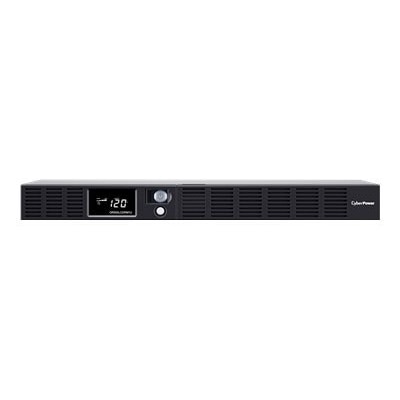
A 2U rack UPS is an uninterruptible power supply designed to occupy two rack units, or 3.5 inches of vertical mounting space, in a compatible equipment rack. Its main purpose is to provide temporary battery power when utility power fails, giving connected electronics time to keep operating through a brief interruption or shut down properly during a longer outage. For a desktop computer, monitor, and essential accessories, that extra time can mean saving an unfinished design, closing a large spreadsheet, or ending a recording without an abrupt loss of power. The rackmount format places battery backup in a dedicated enclosure rather than leaving another device beside a chair or beneath a desk. It can be a practical fit for a home office with a rack-equipped workstation, a creative studio, or a shared workspace where organized cabling matters. Although the 2U designation defines vertical space, it does not establish power capacity, battery runtime, chassis depth, or total weight. Many units are designed for standard 19-inch racks, but compatibility still depends on the enclosure, mounting hardware, and support requirements. A shallow rack may not accommodate a deeper chassis, and a mounting position needs enough clearance behind the unit for plugs and cable bends. Metal housings provide a sturdy exterior, while supported rails or shelves carry the weight according to the mounting design; front mounting ears alone should not be assumed to provide adequate support. Access to the front display, battery compartment, and rear connections also affects everyday convenience. Where vertical space is especially limited, the Rackmount 1U UPS category offers a lower-profile format to compare, though a smaller chassis does not by itself establish equivalent output or runtime. The most useful fit brings together physical compatibility, accessible connections, and enough battery-backed capacity for the electronics that need protection, without blocking ventilation or making routine maintenance unnecessarily difficult.
Power capacity and battery runtime describe different aspects of a 2U rack UPS, and both matter when matching backup power to a computer setup. Capacity is commonly expressed in volt-amperes, abbreviated VA, and watts. Connected equipment must remain within both ratings; a VA rating alone does not tell how many watts the unit can support. Actual power consumption also changes with activity. A desktop handling email may draw considerably less power than the same computer rendering video or running a graphics-intensive application, so a realistic load estimate includes demanding workloads as well as ordinary use. Monitors and any essential powered accessories contribute to that total. Leaving capacity headroom helps accommodate changing demand, but it does not guarantee a particular number of minutes on battery. Runtime depends on the connected load, battery capacity, battery condition, temperature, and the UPS design. Manufacturer runtime charts are therefore more useful than assuming every 2U enclosure provides a similar backup window. A lightly loaded setup may remain powered substantially longer than one operating near the unit’s output limit. For many desktop users, the priority is enough time to save work and complete an orderly shutdown rather than continue working through an extended outage. Power conditioning is another distinction. Line-interactive designs often use automatic voltage regulation to correct certain input-voltage variations without switching to battery, while online double-conversion designs continuously convert incoming power during normal operation. Output waveform deserves attention as well: pure sine wave battery output is often a suitable match for modern computer power supplies, including those with active power factor correction, but compatibility should still be confirmed against the connected equipment’s requirements. Transfer time, input-voltage range, and supported operating modes can affect suitability. Outlet configuration is equally important because some designs separate battery-backed outlets from surge-only outlets. A monitor needed to save and close work belongs on a supported battery-backed connection, not merely a connection that provides surge protection. Input plug type, required electrical circuit, and output receptacles must also match the intended installation.
Everyday usability often becomes clear during the first unexpected interruption: the room goes quiet, the overhead lighting disappears, and the computer still needs a controlled path to shutdown. A readable status display can help show whether the UPS is operating on battery, how heavily it is loaded, and whether attention is required. Audible alerts provide another indication, although their behavior and adjustment options vary by design. For a desktop that may be left unattended, compatible USB communication and shutdown software can support an automatic response when battery power runs low. Operating-system compatibility and configuration matter here; connecting a cable alone does not necessarily establish automatic shutdown. In a quiet workspace, fan noise and alarm volume may influence placement as much as enclosure dimensions. Some designs use cooling fans continuously, while others change fan behavior with operating conditions. Ventilation openings need unobstructed airflow, and a cool, dry location within the specified environmental limits supports dependable operation. Battery backup equipment is heavy for its size, so secure mounting and compliance with rack load limits are important, especially when batteries are concentrated in a compact chassis. Durability depends on more than the exterior housing. Internal batteries age even when outages are infrequent, and elevated temperatures or repeated discharge cycles can shorten their useful life. Replaceable batteries can make long-term upkeep more practical, but replacement procedures, approved battery types, and service requirements vary. A user-replaceable battery is not automatically a battery that can be changed while connected equipment remains powered. Periodic self-tests, attention to warning indicators, and occasional checks of the connected load help reveal changes before an interruption makes them urgent. Cleaning should follow the manufacturer’s directions, with liquids kept away from openings and electrical connections. High-draw appliances and laser printers generally should not share battery-backed outlets unless the UPS documentation expressly supports them. For writers, designers, students, and other desktop users, a well-matched 2U rack UPS serves a straightforward purpose: preserving a short, useful window to protect active work while keeping backup power neatly integrated into the workspace.
FAQs:
A 2U rack UPS is versatile and can support a wide range of electronics commonly found in home offices, creative studios, and small businesses. Typical devices include desktops, laptops, monitors, network equipment, and essential accessories that require reliable backup power and surge protection.
A rack mount UPS provides uninterrupted power to connected devices when the main power source fails. This allows you to save work, safely shut down equipment, and avoid data loss or hardware damage, ensuring that productivity is maintained even during unexpected outages.
Yes, the 2U UPS is suitable for a variety of settings, from small business server rooms to home offices and creative workspaces. Its compact design and flexible installation make it a practical choice for anyone needing consistent power protection for their electronic devices.
When selecting a dell rack mount UPS, consider features such as LCD status displays, hot-swappable batteries, multiple outlet configurations, and network management capabilities. These features can enhance usability, monitoring, and maintenance, making your power management more efficient.
A UPS rack helps protect electronic equipment from power surges, voltage fluctuations, and outages. By providing clean and consistent power, it reduces wear and tear on sensitive components, ultimately extending the lifespan of your devices and minimizing downtime.