$2649.99
AI Graphics Cards
Unlock the future of visual computing with AI graphics cards, designed to elevate your digital experience to new heights. These cutting-edge components harness the power of artificial intelligence to deliver unparalleled performance and efficiency for a wide range of applications, from gaming and creative work to data science and machine learning. Whether you're a professional seeking to enhance your workflow or an enthusiast looking to push the boundaries of what's possible, AI graphics cards offer the advanced capabilities you need. Explore our selection and find the perfect solution to transform your computing environment.
AI Graphics Cards
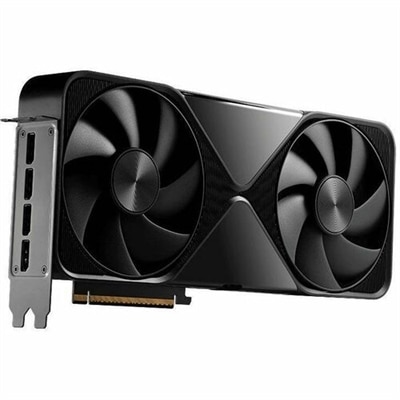
AI graphics cards are specialized graphics processing units designed to accelerate the calculations behind artificial intelligence, machine learning, creative software and other demanding visual workloads. Unlike a standard processor, a GPU contains many parallel processing cores that can work on large numbers of calculations at the same time, making it well suited to training smaller models, running AI applications locally and generating images, video, audio or text. When comparing AI graphics cards, begin with the type of work you expect to do. A card used for image generation, local language models, computer vision, 3D rendering or video enhancement may need a different balance of memory, speed and software support. Graphics cards are often described by their compute capability, but raw performance is only part of the decision. Video memory, or VRAM, is especially important because AI models and their working data need to fit into memory while they run. If a model is too large for the available VRAM, performance may slow substantially, additional memory techniques may be required, or the model may not run at all. More VRAM can also help when working with higher-resolution images, longer prompts, larger batches or multiple applications at once. Memory type and bandwidth matter as well, since faster access can reduce bottlenecks when moving data through intensive workloads. For everyday experimentation, a graphics card with a sensible amount of VRAM and strong software compatibility can provide a smoother experience than a more powerful card with limited memory. For demanding professional projects, additional memory, higher sustained performance and robust cooling may be worth prioritizing. Anyone building or upgrading a desktop should also check the card’s physical dimensions, power requirements, available expansion space and display connections before making a choice. A compatible power supply and good airflow help the card maintain consistent performance during long rendering or model-processing sessions.
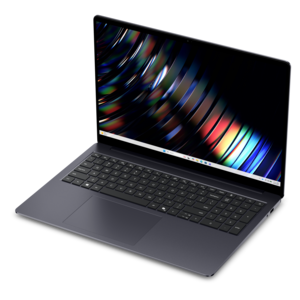
AI graphics cards can serve a wide range of users. Students and curious beginners may use them to explore machine learning concepts, experiment with image-generation tools or learn how local AI software works without relying entirely on an online service. Developers can use a capable GPU to test models, build prototypes, evaluate code and shorten the wait during repeated runs. Photographers, illustrators, video editors and 3D artists may benefit from AI-assisted editing, image enlargement, object removal, animation, scene creation and other creative features. A graphics card can also make a meaningful difference for people who enjoy customizing their computers and trying new software in a home workspace. The right choice depends on whether the priority is training, inference or a combination of both. Training teaches a model from large collections of data and generally places sustained demands on compute resources and memory. Inference is the process of running an already trained model to produce an answer, image or other result, and it can often be performed locally with more modest hardware, depending on the model’s size. Users working with large language models should pay close attention to model size, quantization options and VRAM capacity. Those creating AI images should consider output resolution, generation speed and whether they plan to process several images simultaneously. Video workflows may benefit from both AI acceleration and strong traditional graphics performance, particularly when applying effects, enhancing footage or working with high-resolution timelines. Software support is another practical consideration: drivers, application compatibility, programming frameworks and operating system support can influence the experience as much as specifications on a product page. People who prefer a portable setup can compare desktop graphics cards with Laptop GPUs, keeping in mind that mobile designs balance performance with battery life, heat and portability.
When choosing among AI graphics cards, consider the complete computer rather than focusing on one specification in isolation. A fast GPU paired with insufficient system memory, an older processor or a crowded thermal layout may not deliver the experience expected from its headline specifications. For a desktop upgrade, confirm the available slot, card length, connector placement and power capacity, then allow room for airflow around the card. For a laptop, look at the graphics configuration alongside display quality, memory, processor performance, battery expectations and weight. A larger amount of VRAM can extend the useful life of a system, especially as creative applications and AI models become more capable, but it should be balanced against budget and actual workload. People primarily using browser-based tools or occasional AI features may not need the same hardware as someone generating images every evening, developing software locally or editing high-resolution video. It can also be helpful to consider noise levels and sustained performance: a card that runs quietly and consistently may be more comfortable in a shared room or home office than one that becomes distracting under extended load. AI graphics cards can be a thoughtful gift for a creative professional, computer enthusiast, student or developer, particularly when the recipient already has a compatible desktop and a clear interest in local experimentation. Before giving one as a gift, verify compatibility and the intended software, since a graphics card is a component rather than a standalone computer. During the warmer part of the year and through cooler months spent indoors, these cards can support everything from learning a new technical skill to refining a personal creative project. By comparing VRAM, processing capability, software support, power needs, cooling, form factor and the tasks that matter most, shoppers can select an AI graphics card that feels responsive today and remains useful as their projects grow.
FAQs:
When selecting an AI graphics card for deep learning or machine learning, focus on features like high VRAM capacity (12GB or more for large models), Tensor Cores for accelerated AI computations, and compatibility with popular AI frameworks. Also consider the card’s support for parallel processing and its integration with software ecosystems commonly used in AI development.
AI GPUs are valuable for data scientists, researchers, engineers, content creators, and students working with artificial intelligence, machine learning, or AI-powered creative applications. These specialized graphics cards accelerate model training, inference, and rendering, making them ideal for anyone looking to enhance productivity or creativity in AI-driven tasks.
Yes, there are portable options available in the form of high-performance laptop GPUs. These allow users to access AI acceleration and advanced graphics capabilities on mobile workstations, making it easier to work on AI projects while traveling or moving between locations. Learn more about portable solutions by exploring Laptop GPUs.
VRAM capacity is crucial for AI performance, especially when working with large datasets or complex models. More VRAM allows the graphics card to store and process larger amounts of data simultaneously, reducing bottlenecks and enabling faster training and inference times in AI workloads.
Absolutely. AI graphics cards are widely used in creative fields for tasks such as AI art generation, video editing with AI-powered effects, and real-time rendering of complex visuals. Their specialized hardware accelerates the processing of creative applications that rely on artificial intelligence, enabling smoother workflows and innovative results.