$1492.00
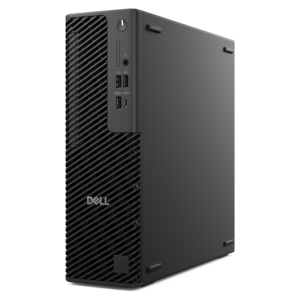
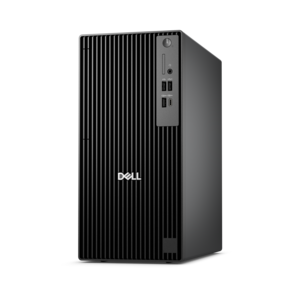
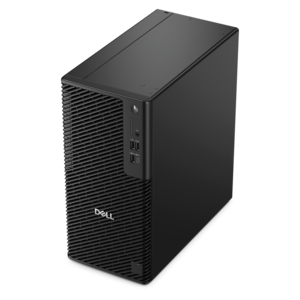
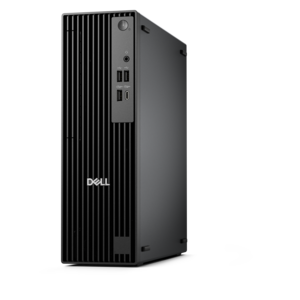
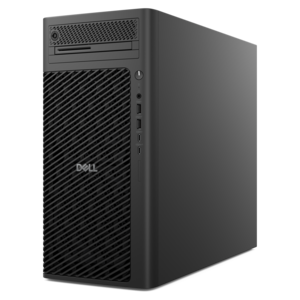
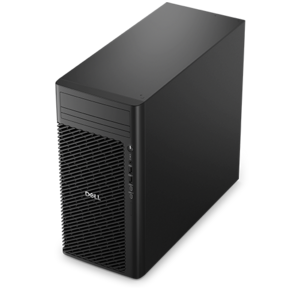
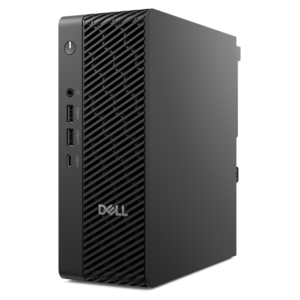
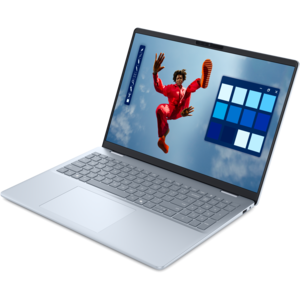
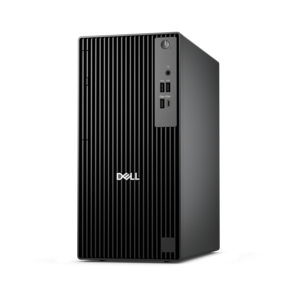
A business-ready tower desktop with AI-enhanced productivity, robust security, seamless manageability, and expandable performance.
Deep learning workstations are engineered to meet the rigorous demands of modern artificial intelligence, data science, and machine learning projects. Designed for professionals and researchers seeking reliable performance, these powerful systems deliver the computing capabilities needed for complex model training and data analysis. Explore a range of deep learning workstations to find the ideal solution for accelerating your workflows and unlocking new possibilities in AI innovation.
A business-ready tower desktop with AI-enhanced productivity, robust security, seamless manageability, and expandable performance.
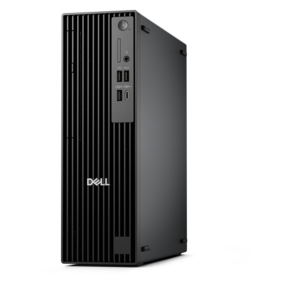
A slim desktop delivering exceptionally fast CPU and GPU performance for demanding professional workloads.
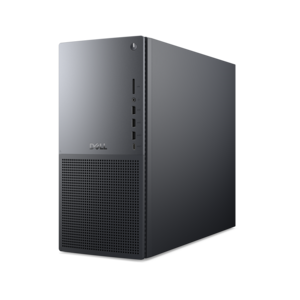
A high-performance AI-ready business desktop with security, seamless manageability, and expandable capabilities for demanding tasks.
A reliable workstation desktop delivering excellent performance with professional graphics for demanding productivity and creative workloads.
A compact, high-performance desktop with AI PC options, robust security, and streamlined manageability for demanding workloads.
A scalable desktop delivering the world’s fastest single-threaded performance for demanding professional workloads.
A powerful desktop featuring advanced graphics and expansive upgradeability for creative workloads, gaming, and demanding tasks.
A compact, high-performance AI-ready desktop delivering secure, manageable performance for demanding business workloads.
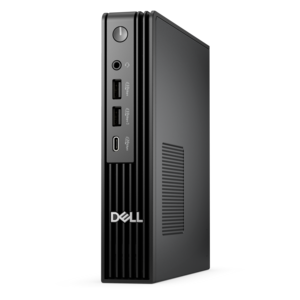
An ultracompact AI-ready desktop delivering robust business performance with exceptional security and seamless manageability.
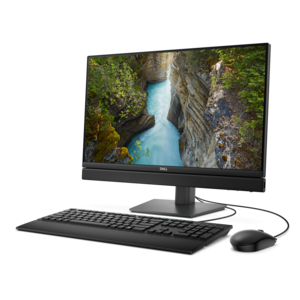
An AI-ready all-in-one desktop with space-saving design, robust security, and streamlined manageability.
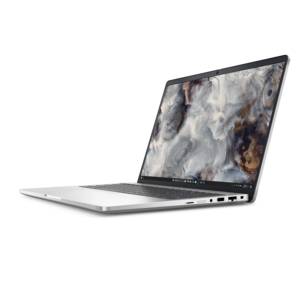
A secure, scalable AI laptop with durable aluminum construction and a spacious productivity-focused display.
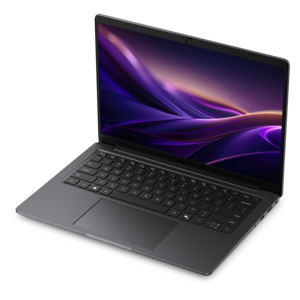
A powerful Copilot+ PC combining Intel CPU, GPU, and NPU performance to enhance productivity.
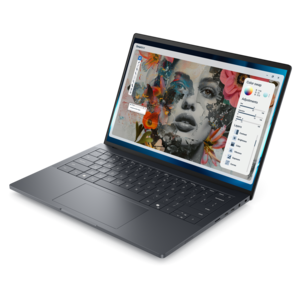
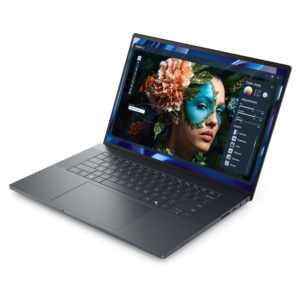
A sleek workstation delivering exceptional performance with advanced on-device AI and exuberant style.
A high-performance desktop combining Intel Xeon 6 processors and advanced graphics for demanding professional workloads.
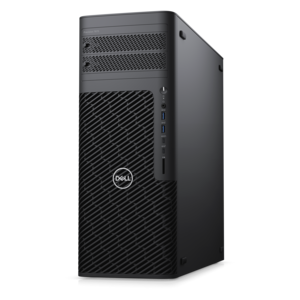
A scalable tower workstation delivering reliable, outstanding performance for demanding multi-threaded applications.
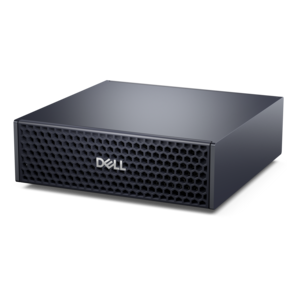
A compact AI accelerator delivering powerful local inferencing, AI development, and versatile edge performance.
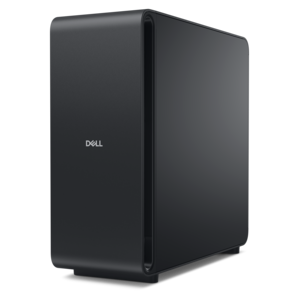
An AI-focused desktop delivering exceptional local performance with NVIDIA Grace Blackwell Ultra and MaxCool technology.
Deep learning workstations are high-performance computers designed to develop, train, fine-tune, and run artificial intelligence models locally. Their value comes from balancing graphics processing, processor performance, memory capacity, and cooling around demanding computational work rather than everyday office tasks alone. For a researcher testing image recognition models, that can mean comparing experiments without tying up a primary laptop. For an engineer, it can mean examining sensor readings, adjusting a neural network, and reviewing predictions at the same desk. Data scientists, graduate students, software developers, and creative professionals may use these systems for computer vision, language processing, generative modeling, and other workflows that benefit from accelerated computation. The graphics processing unit, or GPU, is often the central component because it performs many mathematical operations in parallel. GPU memory, also called VRAM, holds model parameters, intermediate calculations, and portions of the working data during processing. Its capacity can determine whether a workload fits on a particular graphics card at all. A configuration suited to a compact image classifier may not accommodate a large language model using the same settings. Model size, numerical precision, input dimensions, and batch size all influence memory requirements, while training typically needs more working memory than inference, the process of generating predictions from an already trained model. Fine-tuning requirements vary considerably depending on whether the process updates all model parameters or uses a more memory-efficient approach. GPUs with 16GB or 24GB of VRAM can serve many development workloads, but those capacities are not universal thresholds for large models. More demanding projects may require substantially greater capacity or changes to the workload itself. Dedicated hardware for matrix calculations and high GPU memory bandwidth can also contribute to performance when supported by the software. The most meaningful fit is therefore a workstation matched to representative experiments, not simply the configuration with the largest number in one specification. A short prototype, an overnight training run, and an interactive demonstration place different demands on the same machine.
A well-balanced workstation for deep learning also needs a capable central processing unit, or CPU, and enough system memory to keep the workflow moving. The CPU handles tasks such as preparing examples, decoding images, applying transformations, and coordinating work sent to the GPU. If those steps cannot keep pace, a powerful graphics processor may spend time waiting rather than computing. Multiple processor cores can help with parallel preparation, although some applications still depend heavily on the speed of individual cores. System memory supports active datasets, development tools, background processes, and work that does not reside in GPU memory. Capacities such as 64GB or 128GB may suit substantial data science workflows, but actual requirements depend on dataset handling, application behavior, and the number of tasks running together. System memory and VRAM serve different roles; adding more of one does not automatically resolve a shortage of the other. Software compatibility matters just as much as the hardware balance. The operating system, graphics drivers, acceleration libraries, and deep learning framework must work together, and support can differ across versions and GPU architectures. A workstation intended for an established research project should accommodate that project's software environment, especially when reproducibility is important. Expansion deserves similar attention. Multiple GPUs can support separate experiments or appropriately designed distributed workloads, but their memory does not automatically become one shared pool for every application. Physical clearance, expansion connections, power delivery, cooling capacity, and software support all affect whether additional graphics hardware is practical. A spacious desktop chassis may offer greater flexibility for future changes, while a compact system can fit more comfortably beside a monitor in a shared office. For professionals who need to carry development work between a lab, classroom, and home workspace, High-End Workstation Laptops for Data Science Projects offers a related category to consider. Portable and desktop workstations serve overlapping purposes, but sustained performance, component access, weight, and mobility create meaningful differences in everyday use.
The physical design of a deep learning workstation becomes particularly important when experiments run for hours rather than minutes. Sustained computation generates heat, so the cooling system needs to manage the installed components under extended load. Effective airflow, appropriately sized fans, and unobstructed vents help maintain operating conditions that support consistent performance. A machine that feels quiet while editing code may sound noticeably different during a long training session, making acoustics relevant in bedrooms, shared studios, and small offices. Chassis dimensions and ventilation clearance also affect placement: a tower tucked tightly into a closed desk cabinet may have less access to cool air than the same system positioned in an open space. Construction materials, panel rigidity, and accessible internal layouts contribute to how a workstation holds up to routine handling and maintenance, though metal construction alone does not establish durability. For portable systems, hinge stability, chassis stiffness, and protection during travel matter alongside computational capability. Regular care generally includes keeping exterior vents clear, removing dust according to the manufacturer's directions, and avoiding liquids near the computer. Internal cleaning or component changes should follow the system's service documentation and electrical safety precautions. Intended use helps bring these practical details into focus. A student developing a first neural network may prioritize a manageable footprint and room to grow, while a professional running repeated experiments may place more weight on sustained cooling, memory headroom, and predictable software behavior. Someone demonstrating an interactive model to colleagues may value responsive inference and a comfortable display setup more than maximum training throughput. High-resolution monitors can make it easier to compare code, charts, and experiment logs without constantly switching windows, while a comfortable keyboard and pointing device support long sessions of analysis. Local computation can also help keep sensitive project data on a controlled computer, although privacy still depends on permissions, encryption, application settings, and organizational practices. Ultimately, suitable deep learning workstations combine computational capability with a workspace-friendly design, supporting both the intensive calculations and the careful observation that meaningful model development requires.
Add the products you would like to compare, and quickly determine which is best for your needs.