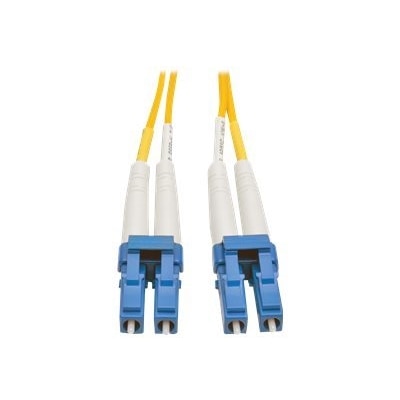
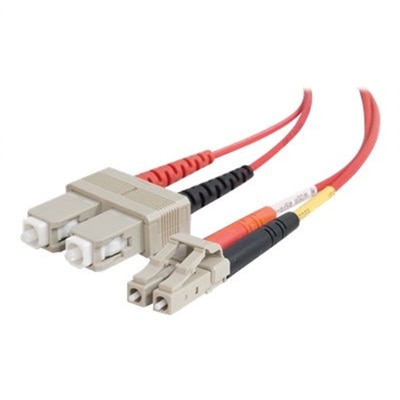
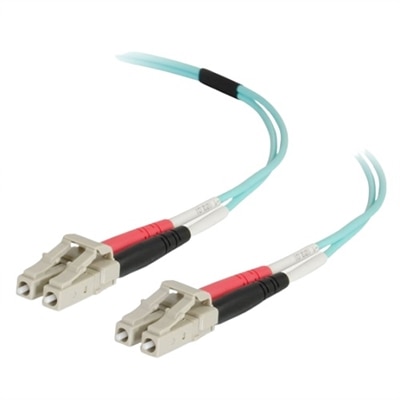
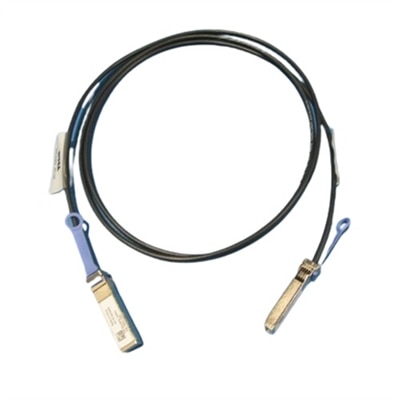
A 3-meter multi-mode fiber OM4 breakout cable for seamless connectivity in qualified platforms.
Fiber Optic Breakout Cables
Fiber optic breakout cables are essential components for efficient and reliable data transmission in modern networking environments. Designed to support a wide range of applications, these cables help streamline connections between devices, making them a popular choice for both commercial and residential installations. Whether you’re upgrading your current setup or building a new network from the ground up, fiber optic breakout cables offer the versatility and performance needed to keep your systems running smoothly. Explore a variety of options to find the right solution for your connectivity needs.
A 5-meter multi-mode fiber cable with MPO to 4xLC connectors for high-speed, long-distance networking.
A 5-meter SMF MPO to 4xLC breakout cable offering reliable communication with superior BER performance.
A 7-meter multi-mode fiber cable with MPO to 4xLC connectors for high-speed, long-distance networking.
An active optical breakout cable offering 100GbE to 4x25GbE connectivity up to 10 meters.
An active breakout cable offering 40GbE to 4x 10GbE connectivity over a 10-meter range.
A multi-mode OM4 fiber optic cable with MPO to 4xLC connectors for high-speed network connections.
A 5-meter active optical cable offering 200GbE connectivity, ideal for qualified Dell platforms.
An active optical cable offering 10GbE connectivity with an 8x SFP+ breakout over 10 meters.
A 200GbE active optical cable offering up to 15m connectivity for qualified platforms.
An active fiber optical cable offering 40GbE connectivity up to 10 meters for qualified platforms.
Fiber Optic Breakout Cables
Fiber optic breakout cables are an essential component for anyone seeking to streamline and future-proof their data connectivity solutions, whether in a bustling office, a home lab, or a dynamic educational environment. These cables stand out for their unique construction: multiple individually jacketed fiber strands, each encased in its own ruggedized sheath, are bundled together within a single, durable outer jacket. This design allows for easy separation—or "breakout"—of each fiber, making direct termination and distribution to various devices both practical and efficient. Unlike traditional distribution cables where fibers are tightly packed and require additional patch panels or fanout kits, breakout cables are ready to handle demanding scenarios such as short plenum or riser runs, installations inside conduits, or direct connections to high-port-density switches. Their robust double-jacketed structure, often reinforced with strength members like Kevlar, provides the durability needed to withstand the rigors of factory floors, data closets, and even the occasional reconfiguration during seasonal upgrades or office moves in the winter months.
Selecting the right fiber optic breakout cable involves considering the environment and the specific connectivity requirements. For professionals managing high-speed links—such as splitting a 100G Ethernet port into four 25G connections—breakout cables offer a straightforward, cost-effective solution that simplifies network layouts and increases port density. This can be especially useful in settings where space is at a premium or where minimizing cable clutter is a priority. The easy separation of individually jacketed fibers means that installations can often bypass the need for patch panels, reducing both setup time and long-term maintenance. IT specialists, network engineers, and audio-visual technicians frequently turn to breakout cables for their reliability and flexibility, whether setting up a new conference room, upgrading a campus network, or integrating specialized equipment like the griffin prospeaker breakout cable for dell laptops. Even tech-savvy hobbyists and students working on STEM projects can benefit from the straightforward deployment and ruggedness these cables provide, making them a thoughtful gift for anyone interested in networking or digital infrastructure.
As technology continues to evolve and the demand for higher bandwidth grows, fiber optic breakout cables remain a smart investment for those looking to keep their systems versatile and up to date. Their ability to support modern data needs, from 40G/100G Ethernet to direct device connections, makes them a cornerstone of efficient, scalable network design. For those exploring options beyond breakout cables, or seeking to complement their setup with additional connectivity solutions, Dell offers a comprehensive selection of Multi Mode Fiber Cables to further enhance performance and reliability. No matter the season or the scale of your project, the right fiber optic breakout cable can make all the difference in achieving a seamless, future-ready network environment.
FAQs:
Fiber optic breakout cables offer several advantages, including simplified installations, improved durability, and increased flexibility. Their individually jacketed fibers allow for direct connections to multiple devices, reducing the need for patch panels and minimizing cable clutter. This design is especially useful in environments with high port density or where frequent reconfiguration is required.
Fiber optic breakout cables are commonly used by IT professionals, network engineers, audio-visual technicians, and educational institutions. They are ideal for anyone managing high-speed network infrastructure, such as in offices, data closets, campus networks, and home labs. Enthusiasts and students working on networking or technology projects may also find these cables beneficial for their ease of use and versatility.
Breakout cables support network scalability by allowing a single high-bandwidth connection to be split into multiple lower-bandwidth connections. This makes it easy to upgrade or expand a network without extensive rewiring, supporting future growth and evolving technology needs. Their robust design also means they can be reused or reconfigured as network demands change.
Yes, fiber optic breakout cables are suitable for a variety of installation lengths, making them adaptable for both short plenum or riser runs and more complex conduit installations. Their rugged construction ensures reliability and performance in different environments, whether connecting devices across a room or spanning multiple areas within a building.
Fiber optic breakout cables are often used with high-density switches, routers, and audio-visual equipment. Accessories like fanout kits can provide additional protection and organization for the separated fibers. For specialized setups, such as connecting audio equipment to laptops, options like the griffin prospeaker breakout cable for dell laptops can further enhance the user experience.