Multi Mode Fiber Cables
Enhance your network's performance with multi mode fiber cables, the ideal solution for reliable and efficient data transmission over short distances. Perfect for both commercial and residential applications, these cables offer seamless connectivity and are designed to support high-speed data transfer with ease. Whether you're setting up a new network or upgrading an existing one, multi mode fiber cables provide the flexibility and bandwidth needed to keep your connections running smoothly. Explore our selection to find the perfect fit for your networking needs and experience the difference in speed and reliability that these cables can bring to your setup.
This product is not available
Check out the following recommendations.


Multi Mode Fiber Cables
Multi-mode fiber cables are designed for fast, dependable connections across relatively short distances, making them a practical choice for offices, educational facilities, studios, laboratories and other spaces where equipment is located within the same building or nearby rooms. Unlike copper cables, which carry electrical signals, fiber optic cables transmit information as pulses of light through a glass core. Multi-mode fiber uses a comparatively large core—most commonly 50/125 microns or 62.5/125 microns—so multiple light paths can travel through the cable at the same time. This design supports efficient short-range communication while helping keep installation costs manageable. It also works with affordable light sources such as LEDs and VCSEL lasers. When browsing multi-mode fiber cables, consider the distance between connection points, the required transmission speed, the fiber category, the connector style and the construction of the cable itself. A short patch cord may be ideal for linking equipment within a rack or workstation area, while a longer cable may be more suitable for runs between rooms. Measuring the route before purchasing can prevent excess slack, sharp bends or the need to join multiple cables. Fiber is sensitive to tight bends, crushed sections and contamination at the connector, so a cable with an appropriate length and protective jacket can make installation easier and help preserve signal quality over time.
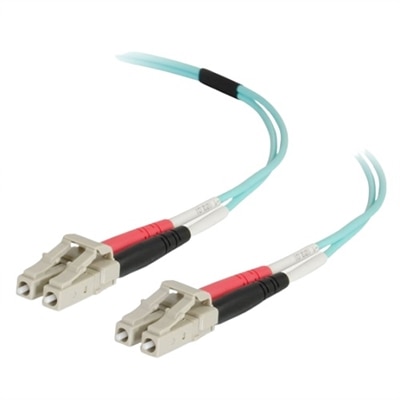
The OM designation is one of the most important details to check when comparing multi-mode fiber cables. OM1 and OM2 are older multi-mode categories commonly associated with 62.5/125-micron and 50/125-micron fiber, respectively. They may suit legacy equipment and basic 1G connections, but compatibility should be confirmed before selecting them for an existing installation. OM3 and OM4 use laser-optimized 50/125-micron fiber and are widely chosen for higher-speed short-distance connections, including 10G, 40G and 100G applications when the connected equipment and transceivers support those rates. For a closer look at one of the commonly selected options, explore OM4 Fiber Optic Cables. OM5 is also based on a 50/125-micron core and is designed for wideband applications that use multiple wavelengths. Jacket colors can provide a helpful visual clue during installation: OM1 and OM2 cables are often orange, OM3 and OM4 are commonly aqua, and OM5 is frequently lime green. Color alone should not determine compatibility, however, because jacket conventions can vary by manufacturer or cable construction. Read the specifications for the exact OM category, core and cladding dimensions, bandwidth rating, wavelength support and maximum distance. A cable rated for a particular speed over one distance may support a different speed over another, so matching the cable to the full connection—not just the connector shape—is essential.
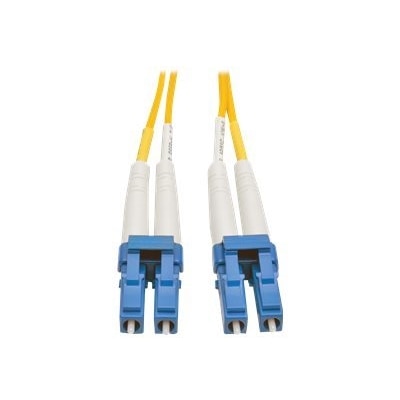
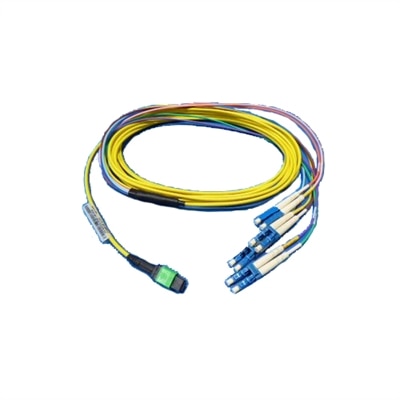
Connector type is another practical consideration. LC connectors are compact and common where space is limited, while SC connectors have a larger push-pull design that can be convenient for straightforward installation. ST connectors may appear in older systems, and multi-fiber connections can use MPO-style connectors where several optical channels are handled through one interface. The two ends of a cable do not always use the same connector, so check whether the required configuration is LC-to-LC, LC-to-SC, SC-to-SC or another combination. Duplex cables carry signals in both directions through two fibers and are frequently used for conventional transmit-and-receive connections; simplex cables use a single fiber and may fit more specialized applications. Polarity also matters, particularly when connecting transceivers or equipment that expects transmit and receive paths in a specific arrangement. Look for details such as duplex or simplex construction, connector polish, insertion loss, return loss, bend performance and jacket rating. For permanent runs, verify whether the jacket is suitable for the environment, including indoor pathways, areas with increased foot traffic or spaces that require plenum-rated materials. For a temporary setup or a tidy desktop connection, a shorter, flexible patch cable may be more convenient. Keeping dust caps on unused ports, avoiding contact with connector end faces and storing spare cables in broad loops rather than tight coils can support reliable performance. Multi-mode fiber cables are useful for IT teams, small businesses, classrooms, creative workspaces and home users who need a clean, high-bandwidth connection over a limited distance. They can also be a thoughtful practical gift for someone assembling a home lab, refreshing a media workspace or organizing equipment in a new office, provided the recipient knows the required fiber category and connector type. Careful matching at the time of purchase helps create a neat installation that performs consistently through everyday use, from transferring large project files to supporting high-speed communication between nearby devices.
FAQs:
Multi mode fiber cables have a larger core size, allowing multiple light modes to travel simultaneously, which makes them ideal for short-distance, high-bandwidth connections within buildings or campuses. Single mode fiber, on the other hand, has a much smaller core and is designed for long-distance transmission with a single light mode, often used for telecommunications and connections between buildings or cities.
Multi mode fiber cables typically use connectors such as LC, SC, and MTP/MPO. LC connectors are popular for their compact size and high-density applications, SC connectors are known for their durability and ease of use, and MTP/MPO connectors are favored in environments that require high-density, multi-fiber connectivity, such as data centers.
Multi mode fiber cables are beneficial for IT professionals, educators, small business owners, and anyone managing local area networks within offices, schools, or campus environments. They are also useful for tech enthusiasts upgrading home networks for faster data transfer and higher reliability.
The jacket color of a multi mode fiber cable indicates its type and performance capabilities. For example, OM1 and OM2 typically have orange jackets, OM3 and OM4 are usually aqua or violet, and OM5 is lime green or aqua. These color codes make it easier to identify and manage cables in complex network environments.
Multi mode fiber optic ethernet cables are commonly used for connecting switches, routers, and other networking equipment within data centers, enterprise LANs, classrooms, and office buildings. They are ideal for high-speed data transfer over short to medium distances, supporting applications such as video conferencing, cloud computing, and collaborative workspaces.