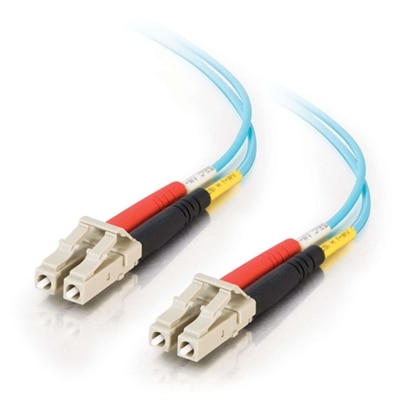
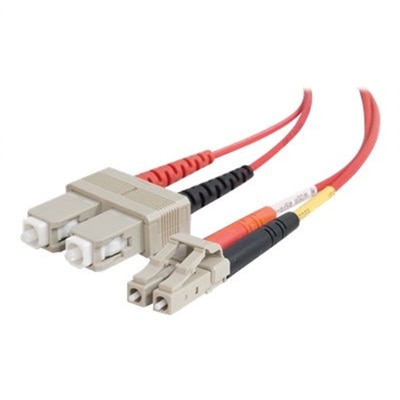
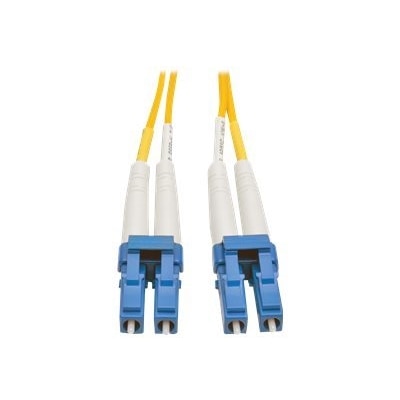
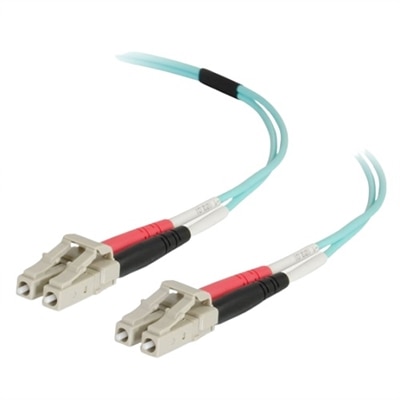
MPO To LC Fiber Cables
Upgrade your network infrastructure with high-performance MPO to LC fiber cables, designed to support reliable and efficient data transmission. Ideal for data centers, enterprise networks, and high-density environments, these cables provide a streamlined solution for connecting multiple devices and ensuring seamless communication. Explore a wide selection of MPO to LC fiber cables to find the right fit for your connectivity needs and help optimize your system’s performance.
This product is not available
Check out the following recommendations.
Related Products
MPO To LC Fiber Cables
MPO to LC fiber cables are breakout assemblies designed to bring high fiber density and practical access together in one organized connection. An MPO connector carries multiple optical fibers through a single compact interface, while the LC end separates those fibers into individual simplex or duplex connectors for connection to compatible optical modules, panels or equipment ports. This arrangement can make a crowded cabinet easier to understand and maintain: one trunk enters the assembly, then a neatly arranged fanout presents the individual LC connections where they are needed. These cables are commonly used in telecommunications rooms, laboratories, broadcast environments, industrial facilities and business installations that require dependable high-bandwidth optical links without filling every available cable path. They can also be useful during an equipment refresh, when an existing high-density fiber layout needs to connect with components that use individual LC ports. As you compare options, begin with the fiber type, connector configuration, length and polarity rather than choosing by appearance alone. A cable that fits physically may still be unsuitable if its optical characteristics or connector orientation do not match the rest of the installation.
Multimode fiber is generally selected for shorter-distance connections where compatible optical components are already designed for multimode transmission. OM3, OM4 and OM5 are common designations, with OM4 and OM5 often considered for higher-bandwidth applications and installations that may need additional performance headroom. For a closer look at related options, browse Multi Mode Fiber Cables. Singlemode OS2 fiber is typically chosen for longer-distance links and applications that require the characteristics of singlemode transmission. The choice should match the optical modules and the specifications of the equipment at both ends; mixing fiber categories without confirming compatibility can lead to disappointing performance or a link that does not establish properly. Connector details matter just as much. MPO assemblies may use different key orientations and polarity arrangements, and an incorrect polarity can place transmit and receive paths out of sequence. LC connectors may be simplex, with one fiber per connector, or duplex, with paired connectors held together for two-way communication. Check whether the installation calls for a particular MPO fiber count, such as 8, 12 or 24 fibers, and verify how many LC connectors appear in the breakout. It is also worth checking whether the assembly uses male or female MPO connectors, whether guide pins are required, and whether the connector polish and interface type are compatible with the mating hardware.
Length is another practical consideration that is easy to underestimate. Measure the actual route, including the distance from the cable pathway to each connection point, and leave enough room for gentle routing, service loops and future maintenance. Fiber should not be bent sharply or compressed beneath covers, doors or heavy bundles. A slightly longer cable can be easier to install than one pulled tight across a cabinet, while excessive slack can make an otherwise orderly layout difficult to trace. Jacket rating should match the installation environment and local building requirements. Plenum-rated cable is intended for spaces used to circulate air and may be required in certain commercial construction areas, while riser-rated cable is used in approved vertical or non-plenum pathways. Confirm the applicable code requirements before ordering, particularly when cabling will pass through walls, ceilings or shared building pathways. A durable jacket, clear labeling and a fanout designed to reduce strain can make a noticeable difference during installation and later service work. These assemblies are often chosen by IT professionals, telecommunications technicians, integrators, laboratory teams and facilities staff, but they can also be a thoughtful practical gift for someone building a home lab or learning fiber installation. The best choice is one that matches the fiber standard, connector count, polarity, jacket rating and route length already present in the setup. With those details confirmed, an MPO to LC fiber cable can provide a clean transition between dense multi-fiber infrastructure and the individual LC connections people need to access, helping a carefully planned installation remain orderly, adaptable and easier to troubleshoot over time.
FAQs:
MPO to LC fiber cables are primarily used to connect high-density MPO backbone cabling to standard LC interface devices, such as switches, patch panels, and transceivers. This makes them ideal for data centers, enterprise networks, and other environments that require efficient, high-speed connections between core network infrastructure and endpoint devices.
Network engineers, IT professionals, and organizations managing large-scale data centers or office networks benefit most from MPO to LC fiber cables. They are also useful for tech enthusiasts and small business owners looking to upgrade or streamline their networking setups for better performance and scalability.
Choosing between single mode and multimode MPO to LC fiber cables depends on your application. Single mode cables are best for long-distance runs and are commonly used in campus or metropolitan area networks, while multimode cables are ideal for shorter distances, such as within a data center or building. Understanding the difference between single mode and multimode fiber will help ensure optimal performance for your specific needs.
Yes, MPO to LC fiber cables are versatile and can be used for both new installations and upgrading existing networks. Their design allows for easy integration with current infrastructure, making them a practical choice for expanding network capacity or transitioning to higher-speed connections.
Yes, accessories such as cable management panels, fiber enclosures, and breakout cables like the griffin prospeaker breakout cable for Dell laptops can complement MPO to LC fiber cables. These accessories help organize and protect your cabling, ensure compatibility with various devices, and enhance the overall efficiency of your network setup.