$1094.00
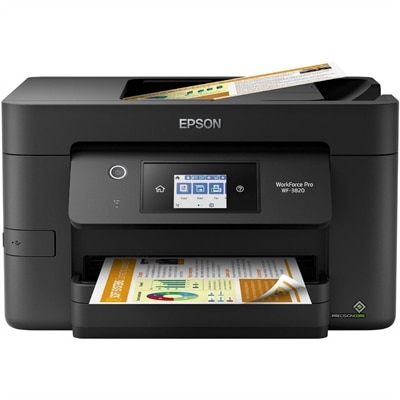
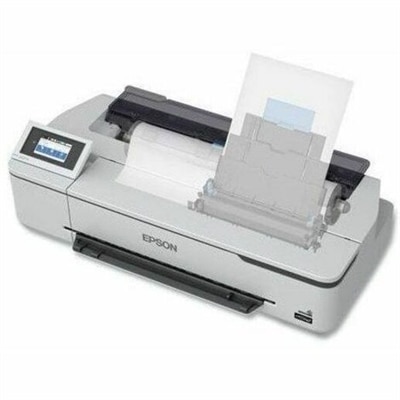
A compact wireless inkjet printer producing vibrant, durable blueprints, line drawings, and posters with pigment inks.
Discover a wide selection of wireless large format printers designed to meet the needs of professionals and businesses seeking efficient, high-quality printing solutions. Whether you’re producing vibrant posters, detailed architectural plans, or eye-catching marketing materials, these printers offer the flexibility and convenience of wireless connectivity for seamless integration into any workspace. Explore options that help streamline your workflow and bring your creative projects to life with outstanding precision. Find the ideal wireless large format printer to support your business goals and elevate your productivity.
A compact wireless inkjet printer producing vibrant, durable blueprints, line drawings, and posters with pigment inks.
Wireless large format printers make it easier to produce oversized documents, presentation materials and creative work without connecting a computer directly to the printer. Depending on the design, “large format” can describe printers that handle tabloid-size 11 x 17-inch pages, super tabloid or 13 x 19-inch sheets, and dedicated plotters that print on 24-, 36- or even 44-inch rolls. Wireless connectivity adds flexibility across each size category, allowing people to send files from laptops, desktops, tablets and phones through a home or office Wi-Fi network. Some models also support Wi-Fi Direct, which creates a direct connection between a compatible device and the printer without requiring a traditional network. This can be convenient in a shared studio, temporary workspace or classroom where several people need to print without moving files to a single computer. When comparing options, begin with the largest media size you expect to use rather than choosing based only on the printer’s compact appearance. An 11 x 17-inch printer may be well suited to office reports, worksheets, menus and marketing layouts, while a roll-fed plotter is better equipped for architectural drawings, construction plans, engineering diagrams, maps and full-size design proofs. Sheet-fed models can be practical for occasional oversized pages and finished pieces that need crisp edges, while roll-fed designs are useful when long documents or continuous output are part of the workflow. For an overview of related printing options, explore Wide Format Inkjet Printers and compare the supported paper dimensions, loading method and wireless features before choosing a fit.
A wireless large format printer can serve very different people, so the right choice depends on the work taking place around it. A small architecture or interior design practice may use one to print floor plans, elevations and presentation boards, with the ability to send a revised drawing from a workstation while the printer is positioned elsewhere in the office. A photographer, illustrator or craft professional may prioritize accurate color, borderless printing and compatibility with heavyweight matte paper, glossy media, fine art stock or canvas-like materials. A school, nonprofit organization or community group may need an accessible way to produce classroom displays, event signage, educational charts and oversized handouts without outsourcing every project. In a home office, a tabloid-capable printer can give business owners more room for invoices, schedules, visual proposals and folded brochures than standard letter-size equipment. Designers and marketers may value the ability to review a poster or packaging concept at a more realistic scale, where spacing, type size and image placement are easier to judge. These printers are not usually an impulse gift, but they can be a thoughtful addition to a new creative workspace, home studio or small business when the recipient already has a clear need for oversized output. Before purchase, consider the printer’s footprint, clearance for open trays or roll holders and the path through which it will be carried into the workspace. A printer that fits neatly against a wall may still require extra room at the front and rear for loading media, collecting pages and replacing supplies. Wireless setup is another practical detail: look for straightforward mobile configuration, stable network performance, multiple user access and support for common desktop and mobile printing systems. Ethernet can be helpful when a wired connection is preferred for a stationary office installation, while wireless printing is particularly useful when the printer is shared across rooms or placed near a worktable rather than beside a primary computer.
Print quality, operating cost and media handling deserve equal attention. Inkjet systems designed for large format work may use dye-based ink, pigment ink or a combination of ink types, and that choice can affect color appearance, drying time, water resistance and the longevity of printed material. Pigment-based systems are often considered for technical drawings, art reproductions and pieces intended for extended display because they can offer strong resistance to fading when paired with suitable media and storage conditions. Dye-based systems can produce vivid color and smooth photographic transitions, making them appealing for images and presentation graphics. Review the number of ink colors, the availability of replacement supplies and whether the printer can continue producing certain jobs when one color is depleted. High-capacity ink tanks may be useful for studios, classrooms and offices with steady print volume, while cartridge-based systems may suit users who print less frequently or prefer a familiar replacement process. Some wide-format all-in-one designs combine printing with scanning and copying, which can simplify workflows involving marked-up drawings, signed forms or oversized artwork. Resolution is important, but it should be considered alongside print speed, line accuracy, color management and the type of media being used. A technical drawing benefits from clean, consistent lines and reliable scaling, while a photographic print depends heavily on tonal detail and color control. Check whether the printer supports borderless output, custom paper sizes, roll paper, cut sheets and automatic media cutting if those capabilities matter to the work. Also review maximum print length, paper thickness limits, drying requirements and the controls available for adjusting margins or scaling. A well-matched wireless large format printer can turn a cluttered sequence of file transfers and outside print orders into a smoother routine: a plan can be reviewed at its intended scale, a classroom display can be prepared before the day begins, or a creative print can move from screen to paper while the idea is still fresh.
Add the products you would like to compare, and quickly determine which is best for your needs.