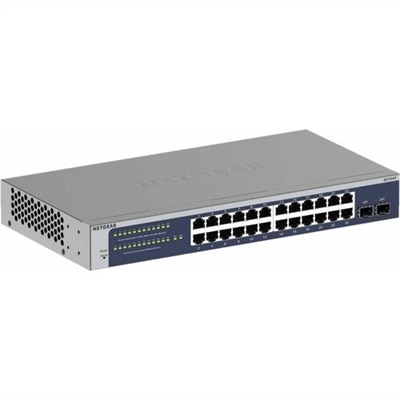
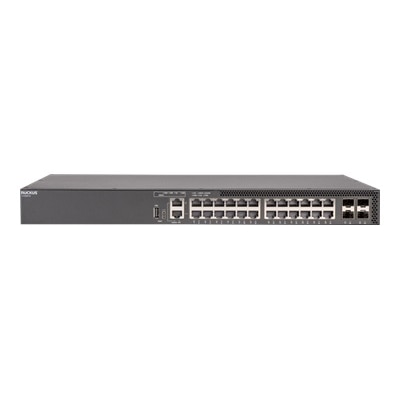
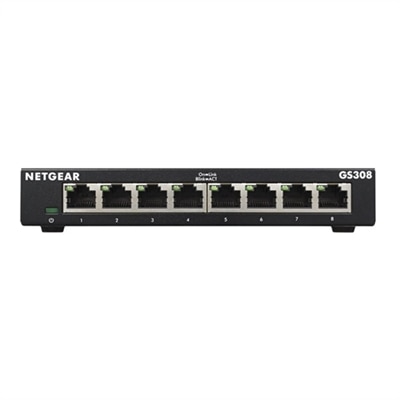
An intelligent, scalable edge switch with up to 8x 25 GbE ports, PoE++, and advanced L2/L3 features.
Modular Network Switches
Modular network switches offer a flexible and scalable solution for growing network environments, making them an ideal choice for businesses and organizations seeking to optimize connectivity. Designed to adapt to changing demands, modular network switches allow for easy expansion and efficient management of network resources. Explore a wide selection of modular network switches to find the right fit for your networking needs.
A stackable managed switch offering 16x10G ports, seamless stacking, and advanced high availability features.
A compact, fanless black switch offering stackability, multigigabit support, and silent operation for enterprise networks.
A sleek, black rack-mountable switch designed for seamless AV over IP with advanced configuration options.
An intelligent, scalable Ethernet switch with up to 8x 25 GbE ports, PoE++, and advanced L2/L3 features.
A compact 8-port switch with 2.5G speed, PoE++ support, and advanced network management features.
An 8-port gigabit switch with cloud management, PoE support, and silent desktop or wall operation.
A black rack-mountable Ethernet switch offering 48 multigigabit ports and 90 watts PoE per port.
A versatile enterprise switch offering up to 48 multigigabit ports and 90W PoE for Wi-Fi 6.
A rack-mountable switch offering seamless integration and security for Software Defined-Branch deployments.
A 16-port unmanaged switch with high-power PoE+ support and a 260W power budget for flexible deployment.
A 16-port gigabit switch with intelligent management features and durable metal casing for optimal performance.
A feature-rich, rack-mountable switch ideal for small to medium businesses and SD-Branch deployments.
A rack-mountable switch offering high-speed connectivity and unified security for growing network demands.
A black metal gigabit switch with 8 ports for efficient, eco-friendly network expansion and fast file transfers.
An 8-port gigabit switch offering simple management, energy efficiency, and enhanced network security features.
A reliable, energy-efficient Ethernet switch with 8 ports, PoE support, and desktop wall-mountable design.
An advanced hardware controller offering centralized management for up to 130 devices and 1,000 clients.
A compact, fanless 16-port switch with flexible 76W PoE budget for versatile networking needs.
An energy-efficient, fanless switch with eight 2.5G ports, offering seamless plug-and-play connectivity.
A feature-rich desktop switch offering high-speed connectivity and unified security for growing networks.
A fanless, energy-efficient Ethernet switch with PoE+ support, plug-and-play setup, and flexible power allocation.
A fanless, energy-efficient Ethernet switch delivering reliable PoE+ connectivity for small business networks and devices.
A fanless, metal-cased switch with five 2.5G Multi-Gig ports and intuitive web-based management.
Modular Network Switches
When considering modular network switches for your organization, it’s important to look beyond just the immediate technical specifications and think about the long-term needs of your network. Modular switches, sometimes referred to as chassis switches, offer a unique blend of flexibility, scalability, and high availability that makes them a preferred choice for enterprise, data center, and even some industrial environments. The modular network switch design allows you to tailor your setup by adding or swapping out line cards, supervisor modules, and power supplies as your network grows or changes. This means you can start with a configuration that suits your current needs—perhaps a mix of copper and fiber ports, or specific support for high-speed uplinks—and then expand capacity or bandwidth down the line, all without having to replace the entire switch. This ability to scale and customize on demand is especially valuable during periods of rapid growth or when planning a data center refresh, which is a common project in the spring as organizations prepare for new business cycles and increased workloads. For those seeking bulk discounts on rackmount switches and modules for a data center refresh, modular network switches provide an economical path to future-proofing your infrastructure while maximizing the value of your initial investment.
The versatility of modular network switches makes them an ideal fit for a wide range of users and scenarios. In large enterprises, these switches serve as the backbone of campus networks, connecting multiple access switches and aggregating traffic from high-density server environments. Their high port density and robust performance capabilities ensure that even the most demanding applications—such as real-time collaboration, large-scale data analytics, or high-definition video streaming—run smoothly and reliably. Data centers, where uptime and speed are paramount, benefit from the hot-swappable components found in many modular switches, reducing downtime and simplifying maintenance. Industrial environments, too, can take advantage of ruggedized modular switches that withstand harsh conditions and support specialized protocols. Even within IT teams, the flexibility to configure ports and features means that network administrators can respond quickly to evolving business requirements without major overhauls. If you’re looking for a thoughtful gift for a tech-forward business owner, IT manager, or enterprise architect, a modular network switch can be a game-changer, empowering them to build a network that grows with their ambitions.
When comparing modular network switches to other options, it’s helpful to consider how they stack up against fixed configuration or stackable models. While fixed switches are often more cost-effective for smaller, stable environments, modular switches offer superior longevity and adaptability, albeit at a higher initial cost and with more advanced configuration needs. For those who want some of the scalability of modular systems but in a more compact form factor, Stackable Switches offer an alternative worth exploring. As you weigh your options, keep in mind that modular switches—whether you’re evaluating a cisco switch model or another leading design—are engineered for organizations that demand high performance, reliability, and the ability to evolve their networks without disruption. As spring ushers in a season of renewal and growth, upgrading to modular network switches can set the stage for seamless expansion, improved efficiency, and a network infrastructure that’s ready for whatever comes next.
FAQs:
Modular network switches offer significant advantages for enterprise environments, including scalability, flexibility, and high availability. Their design allows organizations to easily add or replace modules such as line cards and power supplies, which makes it possible to expand port density, increase bandwidth, or introduce new features without replacing the entire switch. This adaptability supports long-term growth and helps ensure continuous network uptime, which is critical for business operations.
Modular network switches are built to accommodate a variety of interchangeable modules, which can include both copper and fiber ports as well as specialized modules for additional functions like firewalls or wireless controllers. This means a single chassis can be customized to handle different types of network connections and services, making it a versatile solution for complex networking needs.
Modular network switches are most beneficial for organizations with large, dynamic networks such as enterprises, data centers, and industrial facilities. They are ideal for IT teams that anticipate network growth, require frequent upgrades, or need to ensure minimal downtime. These switches are also a smart choice for businesses that need to support diverse network requirements or plan for future expansion.
Yes, modular network switches are designed with high availability in mind. Many models feature hot-swappable components like power supplies, fans, and line cards, which allows IT staff to perform maintenance or upgrades without interrupting network operations. This capability is especially valuable in environments where continuous uptime is essential.
While both modular and stackable network switches offer scalability, they differ in design and application. Modular switches use a central chassis with interchangeable modules, providing greater flexibility and customization for large-scale deployments. Stackable switches, on the other hand, allow multiple units to be interconnected and managed as a single system, making them a practical option for growing networks that need to expand incrementally. For more information on stackable options, see Stackable Switches.