Stackable Switches
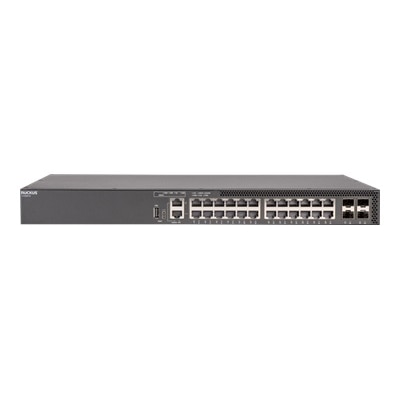
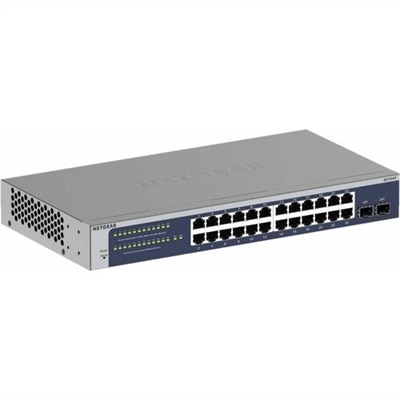
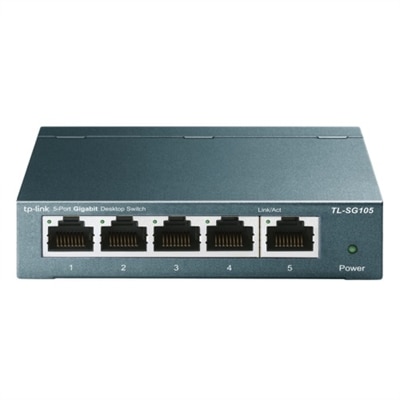
Stackable switches are an essential component for building a scalable and efficient network infrastructure, offering businesses and tech enthusiasts the flexibility to expand their network capabilities with ease. These versatile devices allow multiple switches to be interconnected and managed as a single unit, simplifying network management while enhancing performance. Ideal for growing enterprises and complex home setups alike, stackable switches provide a seamless solution to accommodate increasing data demands and evolving connectivity needs. Explore our range of stackable switches to find the perfect fit for your networking requirements, ensuring robust connectivity and streamlined operations.
This product is not available
Check out the following recommendations.




Stackable Switches
Stackable switches are designed for environments that need more wired connections without turning everyday management into a series of separate tasks. A single switch can operate on its own, while compatible units can be linked with dedicated stacking cables or interfaces to function as one coordinated system. Instead of treating each chassis as an isolated device, an administrator can often manage the stack through one logical interface and a shared IP address, making it easier to review port status, apply settings, monitor activity, and maintain a consistent configuration. This arrangement is useful for growing offices, classrooms, clinics, retail locations, laboratories, and other workspaces where computers, printers, phones, wireless access points, cameras, and other connected equipment may expand over time. It also suits a business that has outgrown a single switch but is not ready to redesign its entire equipment area. When evaluating a stackable switch, start with the number and type of ports needed today, then allow room for future additions. Consider a mix of connection speeds, uplink options, power delivery requirements, and compatibility with existing equipment. Some installations benefit from Power over Ethernet support for compatible devices, while others primarily need reliable high-speed connections for desktops and professional peripherals. It is also important to check whether the switch supports the intended stacking method, because stacking cables, dedicated rear-plane connections, and front-plane connections can differ in performance, installation requirements, and available features. Reviewing the manufacturer’s documentation for supported unit counts, cable length, firmware compatibility, and maximum stack bandwidth can help prevent an expensive mismatch.
A well-planned stack can simplify expansion while keeping an equipment area more orderly. With standalone switches, adding capacity may mean logging in to multiple interfaces, coordinating settings across separate devices, and tracing a web of interconnecting cables. A stackable design can reduce those steps by presenting linked units as one larger switching system. Depending on the model and configuration, connections between switches may use the front ports or dedicated back-plane ports with specialized stacking cables. Back-plane connections are commonly intended for high-speed communication between members of the stack, while front-plane links may use standard network ports and can be useful when a particular deployment calls for that approach. The distinction matters when planning throughput and physical layout, especially in a compact office where every cable and rack unit affects service access. Redundancy is another major consideration. Many stackable systems allow a primary or master unit to coordinate the group, with another member prepared to assume management responsibilities if the leading unit becomes unavailable. This can reduce disruption, but it should not be treated as a substitute for thoughtful configuration, tested backups, or a clear maintenance plan. A shared software image and centralized management can make updates more efficient, yet an incorrect firmware update or configuration change may affect multiple members at once. Before placing a stack into production, review upgrade procedures, recovery options, access controls, and monitoring tools. A simple labeled diagram showing each unit, stacking cable, uplink, power source, and connected area can be surprisingly valuable when an issue occurs during a busy workday. For additional context when planning the wider switching layout, explore Backbone Switches as another category to consider alongside an access-layer design.
Choosing the right stackable switch ultimately comes down to the people, devices, and physical space it needs to support. A small professional office may prioritize quiet operation, a manageable port count, straightforward configuration, and enough uplink capacity to accommodate growth without replacing the entire setup. A school or training facility may need dense connectivity, clear port labeling, dependable support for access points and classroom equipment, and controls that allow administrators to separate traffic between departments or user groups. A retail or service location may value compact installation, resilient operation, and room for point-of-sale systems, phones, security equipment, and employee workstations. Larger teams may look for advanced monitoring, traffic prioritization, authentication features, link aggregation, and detailed management tools that help keep voice, video, and business applications responsive. Power, cooling, rack depth, noise, and cable reach deserve attention as well; a switch that fits the technical specifications may still be inconvenient if it cannot be placed near an outlet or if its fans are distracting in a shared workspace. Stackable switches are generally purchased as practical infrastructure rather than as gifts, but they can be a thoughtful choice for someone building out a home studio, small business, community workspace, or technology lab when the need for dependable wired connections is clear. Think about the recipient’s current equipment, comfort with network administration, available mounting space, and plans for expansion before selecting a configuration. With compatible units, suitable stacking connections, sensible redundancy, and enough capacity for future devices, a stackable switch can provide a clean path from a handful of wired connections to a coordinated, easier-to-manage switching system.
FAQs:
Stackable switches offer simplified management, scalability, and high resiliency. By allowing multiple switches to be managed as a single unit, they reduce administrative complexity and make it easy to add more capacity as your network grows. They also provide redundancy, so if one switch fails, the network continues to operate smoothly.
Yes, stackable switches are designed to connect and manage a wide range of devices, including laptops, desktops, monitors, and other networked accessories. They provide the flexibility to support evolving office setups and ensure all devices have reliable, high-speed connectivity.
Adding a new switch to an existing stackable switch configuration is typically straightforward. Most systems allow you to connect the new switch using dedicated stacking cables, after which it is automatically recognized and managed as part of the stack. This minimizes downtime and makes network expansion quick and easy.
Absolutely. Many stackable switches are designed with user-friendly features, including single IP management and plug-and-play setup, making them ideal for small businesses with limited IT resources. Unmanaged or lightly managed options are especially accessible for teams without deep technical expertise.
When deciding between stackable ethernet switches and other types, consider your current and future network needs. Stackable switches are ideal if you anticipate growth or require simplified management and redundancy. They allow for easy expansion and centralized control, whereas standalone switches might be better suited for smaller, static networks.