1. GPU Model and Performance
2. Scalability and Expansion
3. CPU, Memory, and Storage
4. Cooling and Power Efficiency
Selecting the right server with GPU capabilities is essential for efficient and scalable AI training workloads. Here are the top aspects to consider when choosing a GPU server for AI applications.
1. GPU Model and Performance
2. Scalability and Expansion
3. CPU, Memory, and Storage
4. Cooling and Power Efficiency

A full-featured enterprise server delivering outstanding performance for the most demanding workloads.

A versatile 1U rugged edge server designed for high performance in telco, retail, and defense sectors.

A flexible rack server with 4th gen AMD EPYC processors for powerful data center performance.

A versatile rack server featuring a 4th gen AMD EPYC processor, PCIe Gen 5 slots, and DDR5 memory.

A 2U two-socket server with 4th gen AMD EPYC processors, PCIe Gen5 slots, and DDR5 memory.
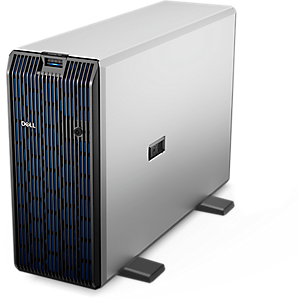
A versatile two-socket tower server designed for enterprise workloads beyond traditional data centers.

A powerful rack server equipped with a 4th gen AMD EPYC processor, PCIe Gen 5 slots, and DDR5 memory.

A 1U dual-socket rack server with AMD EPYC 9355 processor and 64GB DDR5 memory for performance density.

An efficient air-cooled rack server with AMD EPYC processor and 480GB SSD for scalable datacenter performance.

A compact, ruggedized 1U server designed to withstand dust, extreme temperatures, and environmental challenges.
When selecting a server with GPU for AI training, consider features such as high-performance GPUs (like NVIDIA A100 or H100), ample memory and storage, fast networking capabilities, scalability, and robust cooling systems to handle intensive workloads.
GPUs are designed for parallel processing, making them ideal for handling the large-scale computations required in AI training. They significantly accelerate tasks such as deep learning, neural network training, and data analysis compared to traditional CPUs.
The number of GPUs that can be installed in a server varies by model and chassis size. Many enterprise-grade servers support between 2 and 8 GPUs, while specialized systems can accommodate even more for large-scale AI workloads.
GPU servers excel at deep learning, machine learning, data analytics, natural language processing, computer vision, and other compute-intensive AI workloads that require high-speed parallel processing.
Yes, GPU servers are versatile and can be used for both training complex AI models and running inference tasks, providing accelerated performance for end-to-end AI workflows.




Add the products you would like to compare, and quickly determine which is best for your needs.


